
Drivers of Instability and Effects on our Democracies
Modern democracies are under growing strain. Technological acceleration, climate stress, and geopolitical conditions place increasing pressure on our institutions, while institutional capacity is declining and trust in knowledge, science, and governance is weakening. The potential results of this instability is the collapse of democratic capacity to face the challenges of the 21st century.
We organize our research around two linked questions:
What is driving instability in modern democracies?
How do those pressures affect our societies and institutions?

Lena River Delta, Russia | NASA
Drivers of Instability
We examine the structural forces pushing our societies toward instability, including:
Technological disruption, particularly AI and information systems
Environmental and climate pressures, resource stress, and degradation
Geopolitical shocks, conflict, migration, and demographic change
Effects on our Democracies
We look at how these pressures translate into stress on democratic capacity, including:
Weakened knowledge and information systems
Loss of trust in science and public institutions
Strain on courts, constitutions, and checks and balances
Fragility in governance and electoral systems
Together, these dynamics create a serious risk: Democracies losing the ability to know what is true, coordinate collective action, and respond coherently to large-scale challenges.
The GIE Foundation publishes well-researched, policy-focused Commentaries examining how key instability pressures are evolving and how they affect democratic capacity in practice - and providing recommendations on what democratic societies can do about them.
Topics include:
Demographic decline and its implications for governance and social cohesion
AI transparency and trust in public and institutional decision-making
Polarisation, tipping points, and fragility in democratic systems
Defence, security, and public communication in democratic societies
Environmental and resource pressures shaping political stability
We publish Commentaries on a rolling basis. Additional pieces will follow as new risks, pressures, and potential leverage points emerge.
European Resilience
Europe's democratic institutions were built for a different world. They now face simultaneous pressures - geopolitical competition, defence and security, the governance of new technologies, and the fragmentation of the information environment - that test their legitimacy, coherence, and capacity in ways their architects did not anticipate. Our European Resilience series examines these pressures across the domains where they are most acute. The question running through all of it is the same - whether and how European democratic institutions can adapt quickly enough, and on terms that preserve rather than erode the democratic foundations they rest on.
Check out our European Resilience series here, which explores the governance challenges facing European democratic institutions in changing geopolitical, environmental, and technological circumstances.
Commentaries
Below are GIE Foundation’s Commentaries in the main Drivers of Instability & Effects on our Democracies series. These Commentaries seek to identify a specific leverage point where intervention can materially improve an aspect of stability in our democracies, and provide directional policy recommendations.

Reclaiming Human Skills as Core Skills in the Age of AI
Democratic societies run on a set of human capacities that no industrial taxonomy has ever named accurately: Judgement, empathy, critical reasoning; the willingness to be persuaded by evidence and the courage to refuse to be persuaded by power. We have called these capacities 'soft' for fifty years, systematically underpriced and underrepresented them, and built institutions on the assumption that they can be added back in later if we need them.
AI adoption inside public institutions is now accelerating that error - removing human judgement from the front line of courts, benefits agencies, schools, and regulatory bodies, and calling the result an efficiency gain. The consequences are not merely labour-market consequences; there are dire ramifications for the stability and health of our democratic societies, and the policy response currently being constructed across the OECD is asking the wrong question.

When Nothing Is Trustworthy: AI, Transparency, and Democracy
AI-generated audio and video are now cheap, fast, and increasingly indistinguishable from reality. The immediate harms - fraud, manipulation, harassment - are already visible. Deepfakes and other generative content are already influencing the outcomes of elections, the fluctuations of markets, and the course of society. This is dire. But the deeper risk still is the erosion of trust in evidence itself. As synthetic media proliferates, our institutions are losing their ability to anchor a shared reality, and our democratic capacity will degrade.
Transparency standards - provenance, watermarking, and verification systems - are a serious part of the infrastructure needed to stabilize the information environment. Adoption, interoperability, and enforcement will determine whether they have any meaningful effect on institutional resilience, and ultimately, if we can use these tools to protect our democracies.
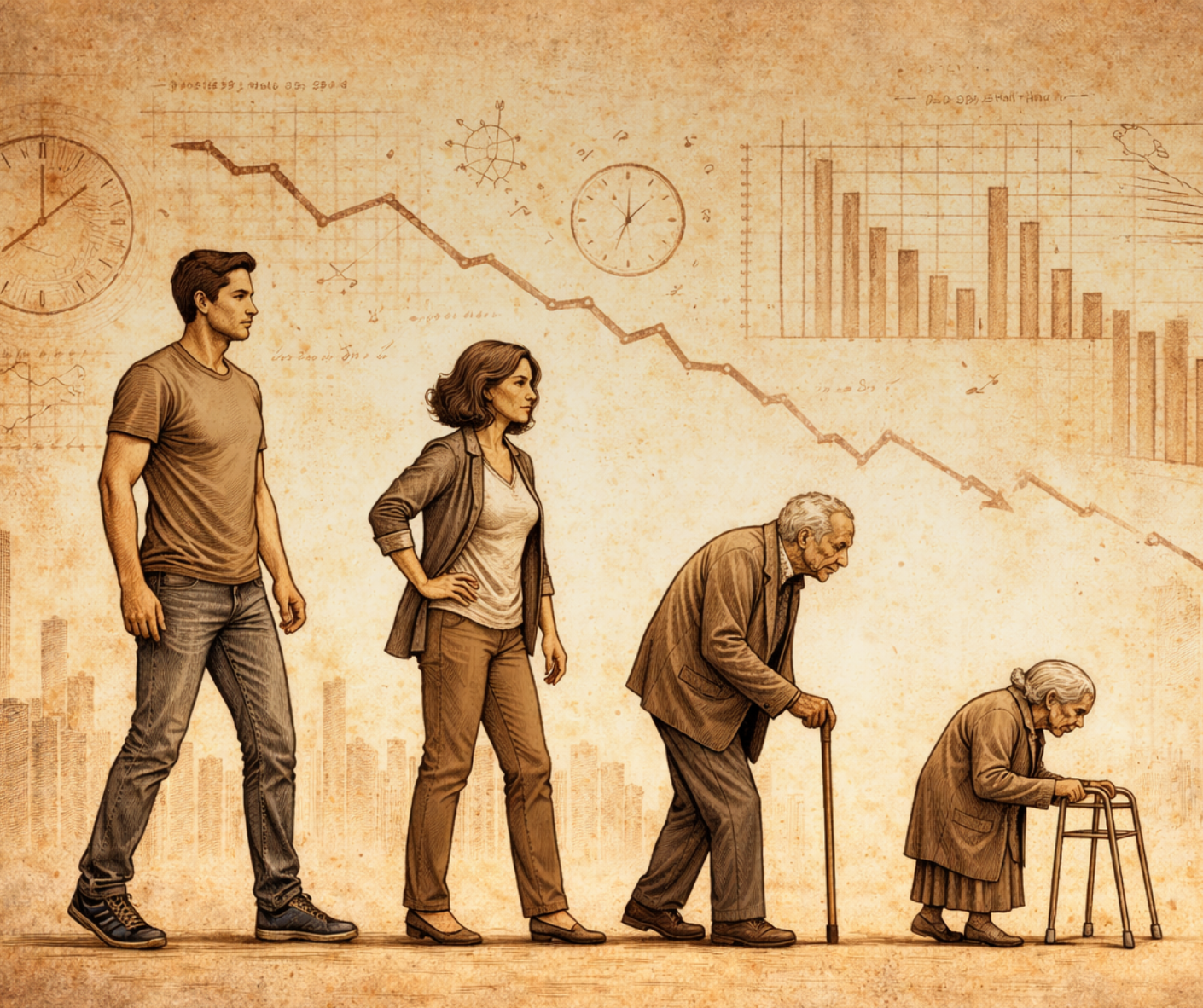
Shrinking Humanity
Human fertility is falling more widely and faster than previously recognized. Sustained demographic decline has the potential to destabilize the foundations on which modern democracies are built. Pension systems, urban planning, fiscal structures, labor markets, and innovation ecosystems all rely on stable or growing cohorts. When each generation is smaller than the last, age structures distort and dependency ratios rise, and geographic, wealth, innovation and economic imbalances will intensify. These pressures will strain the social contract and institutional legitimacy. Treating demographic decline as a secondary or distant issue risks embedding structural fragility into democratic systems. Governments and the UN should recognize sustained below-replacement fertility as a long-term stability challenge and respond with the same seriousness accorded to other global catastrophic risks.

Strong Democracies are a Necessity for Crisis Management
Democratic capacity determines whether societies withstand shocks or fracture under them. Systems with accountable leadership, strong legitimate institutional capacity, and real public participation objectively plan better, respond faster, and avoid the worst disaster outcomes. Where these foundations erode, crises escalate, recovery can falter, and instability ultimately compounds. In an era of catastrophic risks, democratic backsliding is a direct driver of societal fragility, and our democracies may not be able to adequately face the challenges of the 21st century without strengthening our democratic systems themselves.
From the Page to the Podcast: Our Contributors in Conversation
GIE Foundation is proud to partner with and sponsor L4T - The Podcast, hosted by Rosalia D'Agostino and Giacomo de Gregorio.
Following the publication of each new Commentary in our Drivers of Instability & Effects on our Democracies series, our researchers join L4T to discuss their findings, the policy implications, and the broader questions their work raises.
Watch our contributors on the podcast below.
Kareem Mathias and Bennett Iorio on L4T podcast discussing The Collapsing Credential: The AI Era Demands a New Model for Education
Sam Illingworth and Bennett Iorio on L4T podcast discussing Reclaiming Human Skills as Core Skills in the Age of AI
Brent van der Heiden and Bennett Iorio on L4T podcast discussing Who Owns the Map: Data Sovereignty is Required to Protect Democracy