
By Alejandro Trujillo Urien, in collaboration with the GIE Foundation
At a time when Europe's access to critical raw materials is increasingly uncertain, many of us could easily find one or two old mobile phones stored in our drawers. In the EU, an estimated 700 million unused and waste mobile phones are stored in households, and fewer than 5 per cent of these devices are collected (European Commission, 2023). But what would happen if we could reintroduce all of those unused materials into our production systems? Most probably, we would be discovering a new way of mining, one that avoids extraction and does far less environmental harm.
Today's unpredictable geopolitical developments raise a question for all of us about democratic resilience and geopolitical stability, a common concern among governments and citizens in our modern world. With the climate crisis adding to the equation, we very often seek solutions that can bring some certainty to the current situation. Major economic powers such as China have positioned the circular economy as a central pillar of their national strategy, formally embedding it within their Five-Year Plans and explicitly framing it as "an approach to tackling climate change and achieving carbon neutrality by 2060" (Chen, 2023, p. 6). This integration of circular economy objectives with climate targets demonstrates that major economies increasingly recognise resource circulation as essential to both environmental and economic resilience. However, China's experience also offers a cautionary tale: despite significant progress, only 23 per cent of Chinese provinces are relatively efficient in implementing circular economy policies, with the rest remaining inefficient (Fan and Fang, 2020, cited in Chen, 2023, p. 15). This uneven development underscores that ambitious national strategies alone are insufficient without robust mechanisms to ensure equitable implementation across regions. The United States had also begun to institutionalise circular economy principles at the federal level, though with a distinctly different approach: the Bipartisan Infrastructure Law (BIL) provided unprecedented funding, including $275 million for recycling infrastructure grants, $75 million for recycling education and outreach, and $25 million for battery collection best practices and voluntary labelling guidelines, while explicitly embedding equity through the Justice40 Initiative (EPA, 2022).
In Europe, political forces are searching for resilience-oriented strategies that can help solve the continent's existing resource dependency, with innovation and policy harmonisation becoming the keywords for a more resilient and adaptable Union. The forthcoming EU Circular Economy Act represents a watershed moment that will determine whether Europe can decouple its economic prosperity from unsustainable resource consumption. Originally scheduled for the third quarter of 2026 (European Commission, 2025b), the proposal has been pushed back several times after the Commission's own Regulatory Scrutiny Board gave a negative opinion on its impact assessment, finding too little attention to demand-side measures; it is now expected in December (Publyon, 2026). Current data shows that while the EU's circular material use rate (CMUR) has stagnated, reaching just 12.2 per cent in 2024 (EEA, 2025a), the bloc continues to consume resources at roughly double the sustainable level (van der Ven, Watkins and Bondi, 2023). According to the Circularity Gap Report, doubling the share of materials that are cycled back into the global economy, from 8.6 to 17 per cent, could help keep the planet on a trajectory well below 2°C of warming (Circle Economy, 2021). The EU, for its part, aims optimistically to reach a 24 per cent circularity rate by 2030 as one of its ambitions and, apparently, achievable goals (European Commission, 2025a), even though the European Environment Agency already judges that it is not on track to get there (EEA, 2025a).
This commentary sheds light on what the Act must contain if Europe is to reduce its overall consumption, rather than maintaining high material use while barely changing the input source, and so make the switch from a linear to a circular economic system.
Critical Juncture
The European Union stands at a critical juncture. The impending Circular Economy Act (CEA), a flagship initiative of the Clean Industrial Deal (European Commission, 2025a), promises to transform how Europe produces and consumes. But the evidence demands clarity: recycling alone cannot deliver a circular economy. The EU's circular material use rate increased from 10.7 per cent in 2010 to only 12.2 per cent in 2024 (EEA, 2025a), as Figure 1 shows. This slow progress exposes the limitations of existing policies that focus predominantly on waste management and recycling.
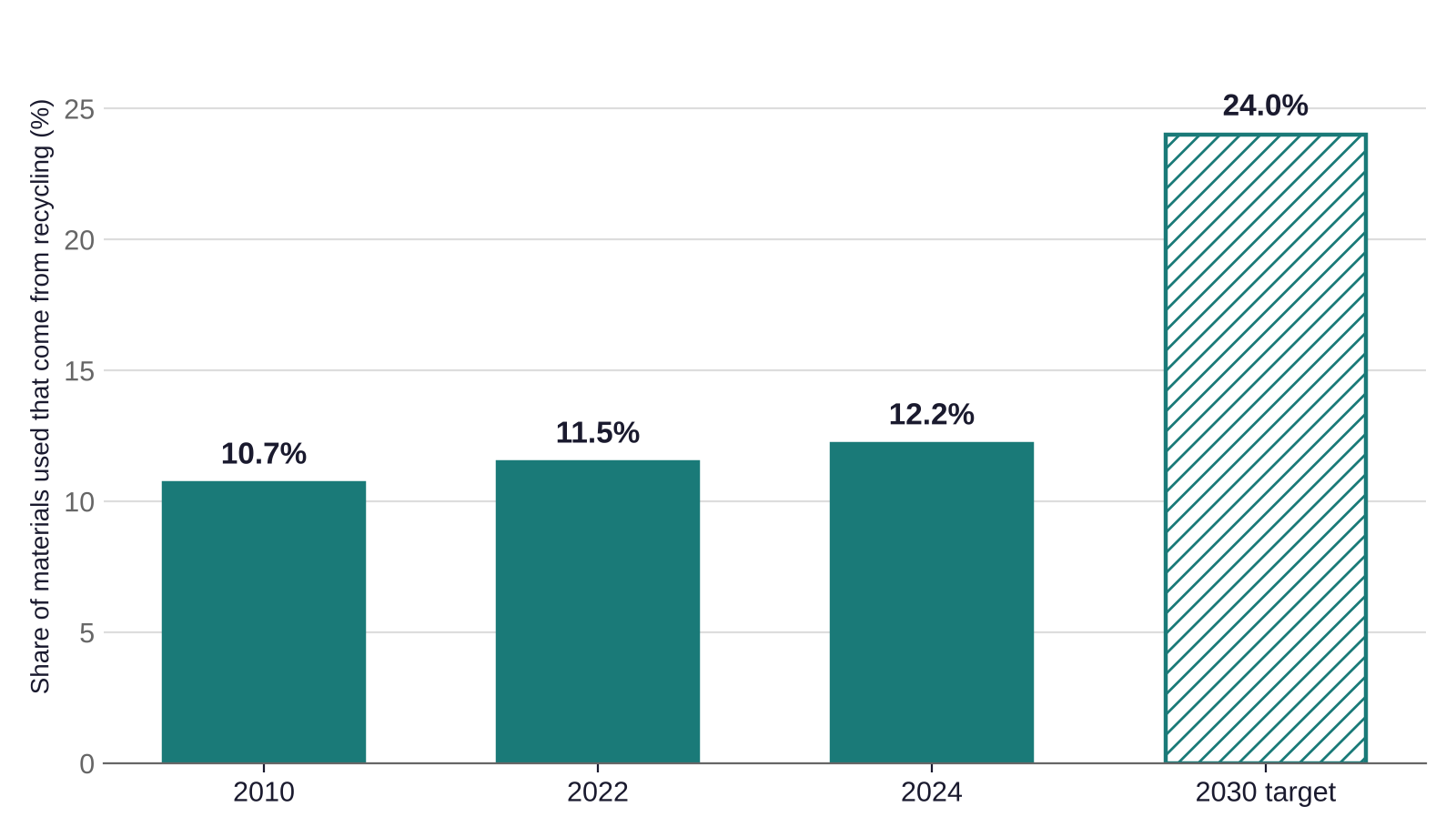
Figure 1: Circular material use rate in the EU-27 against the 2030 target
Source: European Environment Agency (2024; 2025a), based on Eurostat data. The 2030 target of 24 per cent is set out in the Clean Industrial Deal (European Commission, 2025a).
The current policy framing of the CEA reflects what the Ellen MacArthur Foundation (2026) describes as "a critical opportunity", with the Act expected to establish common rules for circular solutions across the single market. However, significant gaps remain. Unless the Act establishes concrete reductions in the EU's material footprint, meaning the amount of raw material extracted to produce the goods and services consumed in the EU, it risks becoming a "Recycling Act" (RREUSE, 2026) that maintains Europe's high-consumption economic model while merely changing the composition of its inputs.
The Council of the European Union has itself acknowledged that "progress on circular material use is too slow" and that the EU's material and consumption footprints "are still far beyond what is sustainable" (Council of the European Union, 2024). This commentary examines three system-changing interventions essential for the CEA to deliver real transformation: binding material consumption targets, a value-chain approach to circularity, and the reform of economic incentives that systematically favour virgin resources. It then considers the Act's reach beyond Europe, its relationship with nature, and who will carry its costs.
Reduction Has to Reach Consumption
The Commission's stated ambition to double the circular material use rate to 24 per cent by 2030, while important, cannot substitute for absolute reductions in resource consumption. The Clean Industrial Deal (European Commission, 2025a) set out this ambition, but circularity targets alone are insufficient. Although the EU's CMUR has increased slightly over the last decade, the EU's material footprint stood at 14.3 tonnes per capita in 2025, only 3.4 per cent below its 2010 level (EEA, 2026a), which shows that consumption habits have remained the same, or similar. This represents a fundamental systems failure: even if the EU achieves a 24 per cent circularity rate, this figure measures the proportion of recycled material in the economy, not the total volume of resources consumed. A country can recycle more and still consume more overall. As the European Environment Agency has warned, there must be a parallel reduction in overall resource consumption (EEA, 2024).
The historical trajectory is equally concerning. The EU's material footprint peaked at 18 tonnes per capita in 2007/2008, just before the financial crisis, and stood at 14.1 tonnes per capita in 2021 (van der Ven, Watkins and Bondi, 2023). While this represents a decline, it remains double the estimated sustainable consumption level of 6 to 8 tonnes per person (Figure 2). Globally, resource extraction has more than tripled in fifty years, from 30 to 106 billion tonnes a year, and is projected to rise by a further 60 per cent by 2060 (International Resource Panel, 2024). This global context underscores that the EU's circular economy transition is not merely a regional environmental initiative but a necessary contribution to keeping global material consumption within planetary boundaries.
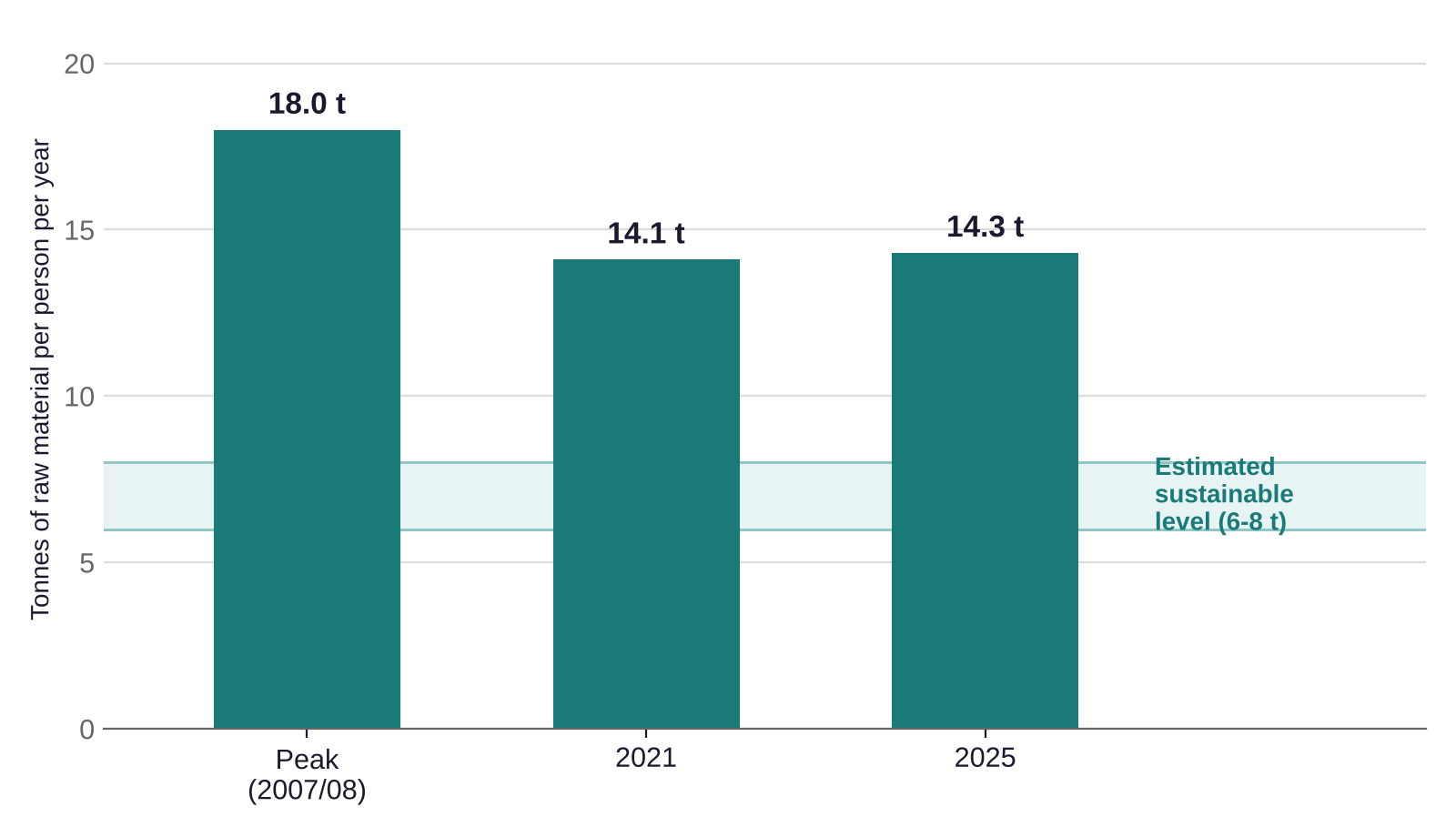
Figure 2: EU material footprint per person against the estimated sustainable level
Source: van der Ven, Watkins and Bondi (2023) for the 2007/08 peak, the 2021 value and the sustainable range (based on International Resource Panel estimates); European Environment Agency (2026a) for 2025.
A binding, time-bound material footprint reduction target would provide the directional clarity that existing policies lack. The Council's conclusions on the mid-term review of the 8th Environment Action Programme specifically invited the Commission to assess "science-based targets to keep material and consumption footprints within the planetary boundaries" (Council of the European Union, 2024). The Institute for European Environmental Policy (IEEP) recommends a binding per capita reduction target for 2040, with an indicative trajectory toward the sustainable consumption levels identified by the International Resource Panel (Oger, 2026). This would bring the EU into alignment with member states like Austria, Belgium, Finland and the Netherlands, which have already set national material consumption reduction targets (Watkins, 2025).
Beyond Take-Make-Waste
The emerging proposals concentrate too heavily on downstream waste management and recycling (ECOS, 2026) while underusing opportunities higher up the value chain. The R-ladder of circularity strategies (Figure 3) shows why: recycling sits below refusing, rethinking, reducing, reusing, repairing, refurbishing, remanufacturing and repurposing, because of its lower resource-optimisation potential, since recycled materials must be sorted and reprocessed before they can be reintroduced into production (Potting et al., 2017). The European Commission (2020) notes that up to 80 per cent of products' environmental impacts are determined at the design phase. Yet the CEA's current framing, as described by the Ellen MacArthur Foundation (2026) and ECOS (2026), focuses primarily on creating a market for secondary materials and harmonising end-of-waste and extended producer responsibility (EPR) rules, rather than tackling the problem from earlier stages in the product life cycle.
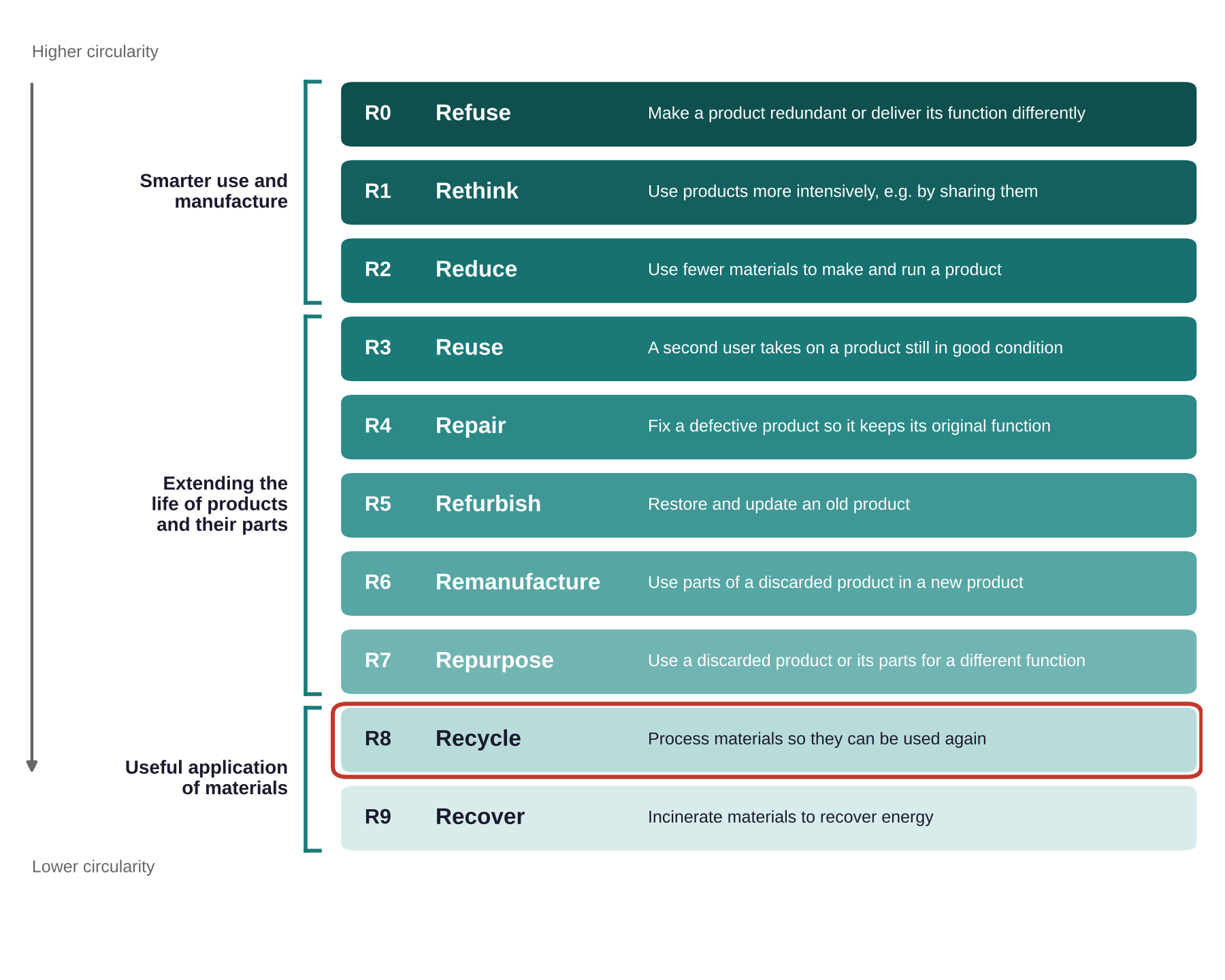
Figure 3: The R-ladder of circularity strategies, from highest to lowest priority
Source: Adapted from Potting et al. (2017)
This narrow focus on recycling represents a strategic error. Analyses from the European Environmental Bureau (EEB, 2026), RREUSE (2026) and the DUT Partnership (2025) have emphasised that real circularity requires a hierarchy of actions in which waste prevention, reuse, repair and remanufacturing take precedence over recycling. The Ecodesign for Sustainable Products Regulation (ESPR) provides a policy lever for upstream circularity, but how the CEA will connect with the implementation of the ESPR's product-by-product delegated acts remains unclear. The forthcoming Circular Economy Act must explicitly embed the waste hierarchy, establishing binding targets for reuse and preparation for reuse alongside recycling targets, while promoting an overall mindset shift among local organisations and citizens, which will contribute to a smoother and faster circular transition. As the DUT Partnership (2025) has highlighted, "the most circular building is the one not newly constructed", yet the CEA lacks mechanisms to prioritise such systemic prevention strategies.
Financing the Circular Transition
The circular economy will not advance if linear options remain cheaper. The price gap between virgin and recycled materials represents a fundamental market failure that the CEA must address. As the DUT Partnership (2025) puts it, "secondary materials are not too expensive; primary materials are too cheap because their externalities are excluded" from market prices.
Economic and fiscal coherence requires a comprehensive package of measures, in which creating a single market for secondary materials becomes a priority for tackling critical raw material scarcity. EPR schemes must be reformed to fully fund not just recycling but also prevention, reuse and repair activities (RREUSE, 2026), ideally as a harmonised effort by member states and, ultimately, by all major economies. The Clean Industrial Deal indicates that the CEA will aim to simplify, digitalise and expand EPR in a targeted manner (European Commission, 2025a; Watkins, 2025), but this intention requires concrete implementation mechanisms, ideally supported by a clear business case that gives member states a holistic understanding of the repercussions and benefits of applying these measures. Green public procurement also offers significant untapped potential: by setting well-targeted criteria, including recycled content requirements, public authorities can create stable markets for circular products (Watkins, 2025), helping them become as competitive as new products in terms of price and quality.
Taxation reforms could further accelerate the transition. The review of the VAT Directive's rules on the second-hand scheme offers an opportunity to reduce the cost of second-hand products and secondary raw materials (European Commission, 2025a; Watkins, 2025). The DUT Partnership (2025) has called for tax systems to be aligned across jurisdictions to support circular value chains, recognising that circularity will not scale if national fiscal incentives remain fragmented. Harmonisation is therefore needed at several legislative levels.
A Baseline for the Rest of the World
Europe does not legislate in a vacuum. EU product rules have repeatedly become reference points well beyond the single market, from the Ecodesign Regulation to the Batteries Regulation and the Carbon Border Adjustment Mechanism. Legal analysts expect the CEA to follow the same path: requirements on recycled content, recyclability, repairability and material data would apply to products placed on the EU market wherever they are made, turning the Act into "a market-access regime, not merely an EU environmental policy" (Eckert and Peyer, 2026). For manufacturers in China, India or Brazil, and for the European companies that source from them, the Act's definitions of waste, secondary materials and circular design are likely to become de facto standards.
This is why the Act's level of ambition matters beyond Europe. A CEA built around recycling would export a recycling standard. A CEA that also sets an absolute material footprint target would tell Europe's largest trading partners that consumption itself is now a matter for policy. The global stakes are considerable: the extraction and processing of resources account for more than 60 per cent of planet-warming emissions (International Resource Panel, 2024). The phones in our drawers are part of the same story. The world generated 62 million tonnes of electronic waste in 2022, of which only 22.3 per cent was documented as properly collected and recycled, and around 3.3 million tonnes moved from high-income to middle- and low-income countries through uncontrolled, undocumented shipments (ITU and UNITAR, 2024).
The EU has begun to close those routes. Under the revised Waste Shipment Regulation, exports of plastic waste to non-OECD countries are banned from 21 November 2026, and from May 2027 other waste may only be sent to non-OECD countries that can show they will manage it in an environmentally sound way (European Parliament and Council of the European Union, 2024). The CEA should build on this, so that keeping materials in circulation inside Europe does not simply relocate the burden of handling what is left over. Done well, the Act can become the baseline against which other economies, including those already building circular strategies of their own, such as China and the United States, measure their progress.
From Doing Less Harm to Regeneration
A circular economy is often presented as a way of doing less damage: less extraction, less waste, fewer emissions. Its stronger version aims further. The Ellen MacArthur Foundation describes how a shift from a linear to a circular economy moves "the focus from extraction to regeneration", building natural capital rather than degrading it, for example through farming practices that allow soils to recover and through returning organic materials to the land instead of losing them after use (Ellen MacArthur Foundation, n.d.).
The case for building this into the CEA is concrete. Biomass extraction and processing cause 90 per cent of land-related biodiversity loss and water stress worldwide (International Resource Panel, 2024), and biomass makes up almost a quarter of the EU's material footprint (EEA, 2025b). Yet the debate around the Act has centred on metals, plastics and electronics, with far less attention to the biological side of the economy: food and garden waste, timber, and textiles made from natural fibres. A material footprint target broken down by material category, with milestones for sectors such as food systems, as the IEEP proposes (Oger, 2026), would bring biomass into view alongside metals and minerals. Cities, which already collect bio-waste, can turn it into compost and other soil improvers that return nutrients to farmland, provided the Act treats these as secondary materials with a functioning market of their own.
Regeneration also gives practical meaning to the EU's long-term objective that, by 2050, people live well within planetary boundaries (European Parliament and Council of the European Union, 2022). Staying within those boundaries means consuming less; living well within them means restoring some of what has already been lost.
A Fair Transition
The costs and benefits of the circular transition will not be shared evenly unless the Act is designed to share them. The European Environment Agency warns that "a successful sustainability transition does not automatically produce fair social outcomes" (EEA, 2026b). Circular economy jobs in the EU grew by about 10 per cent between 2014 and 2023, to roughly 4.4 million, but many of the new roles in waste management, electronics repair and textile reuse are low-paid or insecure, while higher-skilled roles tend to go to groups that are already advantaged (EEA, 2026b).
Fairness also runs through prices. Low-income households rely more on reused and remanufactured goods (EEA, 2026b), which is why the VAT reform discussed above matters socially as well as economically: lowering the cost of second-hand goods benefits those who already depend on them. Measures that raise the price of virgin materials, if passed straight on to consumers, would fall hardest on the same households, and some MEPs have already warned that mandatory targets and eco-contributions could raise costs for consumers and smaller firms (Publyon, 2026). The answer is to pair price signals with targeted support, as the Council has already asked member states to identify "mechanisms to support the most vulnerable and negatively impacted by the process" (Council of the European Union, 2024).
The global dimension is sharper still. High-income countries use six times more materials than low-income countries and generate ten times the climate impacts (International Resource Panel, 2024), while much of the extraction behind European consumption takes place in resource-exporting regions with weaker environmental protections (Oger, 2026). More than half of the world's 121 to 142 million circular economy workers are informal, including an estimated 11 million waste pickers (EEA, 2026b). In Europe, the social enterprises that repair and resell goods, and the grassroots collectors the DUT Partnership (2025) asks cities to recognise, should have a guaranteed place in EPR governance and fair access to public procurement. A Circular Economy Act that shrinks Europe's footprint while ignoring who carries the remaining burden would leave the job half done.
Policy Recommendations
The recommendations below are grouped by the actors best placed to carry them out.
For the European Commission and co-legislators
Set a binding EU material footprint reduction target. The CEA should include an absolute, time-bound target to reduce the EU's material footprint per capita by 2040, with an indicative trajectory toward sustainable levels and a review clause allowing it to be strengthened, as the Council has already asked the Commission to assess (Council of the European Union, 2024; Oger, 2026). The 24 per cent circularity target should remain, but as one indicator among several.
Embed the waste hierarchy with binding reuse targets. Separate, mandatory targets for reuse and preparation for reuse should sit alongside recycling targets, and EPR schemes should be reformed to fund prevention, reuse and repair, with inclusive governance that gives social economy operators a seat at the table (RREUSE, 2026).
Prevent the burden from moving abroad. The Act should build on the Waste Shipment Regulation's restrictions on exports to non-OECD countries and on supply chain due diligence, so that higher circularity in Europe does not shift waste and extraction impacts onto resource-exporting countries (Oger, 2026).
For national governments and regulators
Conduct national self-assessments to identify streamlining mechanisms. Governments must evaluate their existing regulatory frameworks to identify where circularity can be integrated into short- and long-term economic objectives. This diagnostic step is essential before new legislation is enacted, ensuring that circular economy policies reinforce, rather than contradict, existing industrial and environmental goals.
Introduce fiscal benefits for low-resource-use goods and services. Tax systems currently favour virgin materials, whose environmental costs are excluded from their price (DUT Partnership, 2025). A reduced tax scheme for second-hand goods and recycled content would encourage product-based organisations to invest in secondary markets, in line with the EU's stated ambition to stimulate demand for circular products (Watkins, 2025). Such measures should be coupled with efforts to reduce extractive practices and dependence on critical raw materials, and with targeted support for the households least able to absorb higher prices.
Leverage public procurement to normalise circular practices. Public procurement represents a powerful demand-side lever. Governments should refocus procurement criteria to prioritise circular products and services, using their purchasing power to create stable markets for secondary materials and refurbished goods (Watkins, 2025). This approach transforms circularity from a niche market into a competitive advantage for suppliers.
Avoid excessive bureaucratic burdens. Excessive administrative complexity can hinder structural change in industry and organisations, making the transition more time-consuming and costly. Identifying opportunities to streamline reporting requirements, for example by combining climate and material resource reporting into integrated disclosures, is essential for governments everywhere, particularly if harmonisation efforts take place at the international level.
For regional and international bodies
Promote non-formal educational practices. An efficient circular transition requires not only shifts in production practices but also changes in everyday habits. Informal education channels, such as community workshops, digital campaigns and peer-to-peer learning, can embed circular principles in the smallest habits of a nation. Engaging small and medium-sized enterprises (SMEs) and citizens is critical to this cultural shift.
Activate and engage citizens. The EU's Circular Economy Act must provide clear guidance for businesses and individuals on implementing circular practices. Organisations that bring this knowledge closer to the end consumer, particularly NGOs, have a vital role to play, yet their potential remains underused. As Chen (2023, p. 18) notes, "the development of NGOs is prosperous, but their power is ignored in terms of research attention". A fundamental shift from consumerist lifestyles toward circular norms requires deliberate citizen engagement strategies.
Strengthen local partnerships. Acting locally is one of the fastest ways to advance the circular transition, allowing smaller local actors to engage with communities in day-to-day practices. Evidence from China shows that "provincial CE policies and energy intensity targets are conducive to reducing CO2 emissions", while provincial energy-saving and comprehensive resource utilisation policies have had no significant impact (Chen, 2023, p. 16). This finding should encourage municipalities and local governments to take up circular economy initiatives within their areas of influence, working closely with clusters and enterprise associations.
Map industrial symbiosis opportunities. Following the example of industrial symbiosis networks such as Kalundborg in Denmark, where companies have exchanged more than 20 streams of surplus resources for over fifty years (Kalundborg Symbiosis, n.d.), identifying symbiotic relationships between different industrial actors can drive major change in how resources are used. Such mapping strengthens relationships between companies while creating streamlined resource flows that help eliminate waste and reduce reliance on virgin inputs.
For companies and organisations
Establish a common definition of waste. Key concepts such as end-of-waste, waste and secondary materials need to be defined in a way that industry and other key actors share and accept. Today, a material treated as a valuable resource in one member state may be classified as waste in another (Ellen MacArthur Foundation, 2026). Clusters, in collaboration with governments and industry-leading enterprises, should have a say in defining these concepts so that all actors operate under the same objectives. This clarity is essential to reduce legal uncertainty and facilitate investment in secondary material markets.
Adopt circular business models. Businesses should be encouraged to define and redefine their current business models toward models that optimise material use and maximise a product's economic value across its life. Examples of circular profit models include recovery and resale, life extension, right-of-use and sharing platform models (Leafer Circular Design, 2025). These perspectives provide real-life cases of adapting to future needs, demonstrating that circularity and profitability can go together.
Design for circularity from inception. The design of products and services is a critical area for attention, with up to 80 per cent of products' environmental impacts determined during the design phase (European Commission, 2020). Guidance for new entrepreneurs on the circular potential to be considered when a product is first conceived could transform how new organisations are established. Design is not merely a technical function but the heart of the circular economy.
Conclusions
The Circular Economy Act represents a fundamental test of Europe's capacity to transform its economic model. The evidence is clear: current consumption patterns in the EU remain unsustainable, and the EU has been assessed as exceeding several planetary boundaries (EEA, 2024; Watkins, 2025). Without binding material footprint reduction targets, the CEA will maintain the fiction that a circular economy can be achieved through better waste management alone.
The Act must move beyond its current narrow focus on recycling to embrace a systemic approach that addresses the root causes of resource consumption. The Council's conclusions on the 8th Environment Action Programme (Council of the European Union, 2024) and the Clean Industrial Deal (European Commission, 2025a) provide policy direction, but implementation requires concrete legislative measures: binding material footprint targets, a value-chain strategy that prioritises prevention and reuse, and economic instruments that internalise the environmental costs of virgin resource extraction. The Commission's own Regulatory Scrutiny Board has already identified the weak point, finding too little attention to demand (Publyon, 2026). The delay to December is a chance to correct it.
Future scenarios for Europe depend critically on the CEA's ambition. Under a transformative scenario, binding consumption targets and economic coherence drive business model innovation across value chains, creating new markets and jobs while reducing resource dependence (Potočnik, 2025; EEB, 2026). Under a weak scenario, the CEA merely codifies existing practices, allowing material consumption to continue rising while Europe maintains the illusion of circularity (RREUSE, 2026). Because the Act will shape the rules for anyone selling into the single market, the choice between these scenarios will be felt well beyond Europe's borders, and by the workers and communities at both ends of its supply chains. The difference will determine whether Europe achieves its goal of living well within planetary boundaries by 2050 (European Parliament and Council of the European Union, 2022) or continues its trajectory toward ecological and economic unsustainability.
References
Chen, R. (2023) China's Circular Economy Policies: Review and Reflection, Circular Press no. 4. Copenhagen: Circular Innovation Lab, 17 January. Available at: https://circulareconomy.europa.eu/platform/sites/default/files/2023-08/China%E2%80%99s%20Circular%20Economy%20Policies_%20Review%20and%20Reflection.pdf
Circle Economy (2021) The Circularity Gap Report 2021. Amsterdam: Circle Economy, 26 January. Available at: https://www.circle-economy.com/resources/circularity-gap-report-2021
Council of the European Union (2024) The 8th Environmental Action Programme Mid-term Review - The way forward to a green and just transition for a sustainable Europe: Council conclusions, 11326/24, Brussels, 17 June. Available at: https://data.consilium.europa.eu/doc/document/ST-11326-2024-INIT/en/pdf
DUT Partnership (2025) 'DUT's perspective on the Circular Economy Act', Driving Urban Transitions Partnership, November. Available at: https://dutpartnership.eu/news/duts-perspective-circular-economy-act
Eckert, M. and Peyer, A. (2026) 'The EU Circular Economy Act: a competitiveness instrument with global reach', MME Magazine, MME Legal | Tax | Compliance, Zurich, 2 February. Available at: https://www.mme.ch/en/magazine/articles/the-eu-circular-economy-act-a-competitiveness-instrument-with-global-reach
ECOS (2026) 'Making the Circular Economy Act deliver', Environmental Coalition on Standards, 18 May. Available at: https://ecostandard.org/publications/circular-economy-act-impact-assessment-preliminary-recommendations/
EEA (2024) Accelerating the Circular Economy in Europe: State and Outlook 2024, EEA Report 13/2023. Luxembourg: Publications Office of the European Union. Available at: https://www.eea.europa.eu/publications/accelerating-the-circular-economy
EEA (2025a) 'Circular material use rate in Europe', European Environment Agency indicator, 28 November. Available at: https://www.eea.europa.eu/en/analysis/indicators/circular-material-use-rate-in-europe
EEA (2025b) 'Raw material consumption: Europe's material footprint', in Monitoring Report on Progress Towards the 8th EAP Objectives - 2025 Edition, European Environment Agency, December. Available at: https://www.eea.europa.eu/en/analysis/publications/monitoring-report-on-progress-towards-the-8th-eap-objectives-2025/indicators/05-raw-material-consumption-europes-material-footprint_indicator.pdf/@@download/file
EEA (2026a) 'Europe's material footprint', European Environment Agency indicator, 27 October. Available at: https://www.eea.europa.eu/en/analysis/indicators/europes-material-footprint
EEA (2026b) Just Transition to a Circular Economy, EEA Briefing 04/2026, European Environment Agency, 21 April. Available at: https://www.eea.europa.eu/en/analysis/publications/just-transition-to-a-circular-economy
EEB (2026) 'Commission's Circular Economy Act risks missing the point, EEB warns - and the clock is ticking', European Environmental Bureau, 30 April. Available at: https://eeb.org/en/commissions-circular-economy-act-risks-missing-the-point-eeb-warns-and-the-clock-is-ticking/
Ellen MacArthur Foundation (2026) 'The EU Circular Economy Act: a critical opportunity', 20 April. Available at: https://www.ellenmacarthurfoundation.org/eu-circular-economy-act
Ellen MacArthur Foundation (n.d.) 'Circular economy principles: regenerate nature'. Available at: https://www.ellenmacarthurfoundation.org/regenerate-nature
EPA (2022) Building a Circular Economy for All: Progress Toward Transformative Change, EPA 530-R-22-004. Washington DC: US Environmental Protection Agency, September. Available at: https://www.epa.gov/system/files/documents/2022-09/EPA_Circular_Economy_Progress_Report_Sept_2022.pdf
European Commission (2020) A New Circular Economy Action Plan: For a Cleaner and More Competitive Europe, COM(2020) 98 final, Brussels, 11 March. Available at: https://eur-lex.europa.eu/legal-content/EN/TXT/?uri=COM:2020:98:FIN
European Commission (2023) 'Circular economy: New recommendations for national authorities to increase the return of used and waste mobile phones, tablets and laptops', Directorate-General for Environment, 6 October. Available at: https://environment.ec.europa.eu/news/circular-economy-new-recommendations-national-authorities-increase-return-used-and-waste-mobile-2023-10-06_en
European Commission (2025a) The Clean Industrial Deal: A Joint Roadmap for Competitiveness and Decarbonisation, COM(2025) 85 final, Brussels, 26 February. Available at: https://eur-lex.europa.eu/legal-content/EN/TXT/?uri=CELEX:52025DC0085
European Commission (2025b) Commission Work Programme 2026, COM(2025) 870 final, Strasbourg, 21 October. Available at: https://eur-lex.europa.eu/legal-content/EN/TXT/?uri=CELEX:52025DC0870
European Parliament and Council of the European Union (2022) Decision (EU) 2022/591 of 6 April 2022 on a General Union Environment Action Programme to 2030, Official Journal of the European Union, L 114. Available at: https://eur-lex.europa.eu/eli/dec/2022/591/oj
European Parliament and Council of the European Union (2024) Regulation (EU) 2024/1157 of 11 April 2024 on shipments of waste, Official Journal of the European Union, L series. Available at: https://eur-lex.europa.eu/eli/reg/2024/1157/oj
Fan, Y. and Fang, C. (2020) 'Circular economy development in China - current situation, evaluation and policy implications', Environmental Impact Assessment Review, 84, 106441. doi: 10.1016/j.eiar.2020.106441
International Resource Panel (2024) Global Resources Outlook 2024: Bend the Trend. Nairobi: United Nations Environment Programme, 1 March. Available at: https://resourcepanel.org/news-events/global-resources-outlook-2024-press-release
ITU and UNITAR (2024) The Global E-waste Monitor 2024. Geneva and Bonn: International Telecommunication Union and United Nations Institute for Training and Research, 20 March. Available at: https://www.itu.int/en/ITU-D/Environment/Pages/Publications/The-Global-E-waste-Monitor-2024.aspx
Kalundborg Symbiosis (n.d.) 'About us'. Available at: https://www.symbiosis.dk/en/om-os/
Leafer Circular Design (2025) '8 models for circular economy profit', Doughnut Economics Action Lab, 20 October. Available at: https://doughnuteconomics.org/tools/8-models-for-circular-economy-profit
Oger, A. (2026) Setting a Material Footprint Target in the EU Circular Economy Act: The Case for a Binding EU Target on Sustainable Material Consumption. Brussels: Institute for European Environmental Policy, June. Available at: https://ieep.eu/wp-content/uploads/2026/06/Setting-a-material-footprint-target-in-the-EU-Circular-Economy-Act-IEEP-2026.pdf
Potočnik, J. (2025) 'Reflections on the European Circular Economy Act: the case for a systemic approach', Systems Transformation Hub, 3 November. Available at: https://www.systemstransformationhub.org/news/reflections-on-the-european-circular-economy-act-the-case-for-a-systemic-approach
Potting, J., Hekkert, M., Worrell, E. and Hanemaaijer, A. (2017) Circular Economy: Measuring Innovation in the Product Chain. The Hague: PBL Netherlands Environmental Assessment Agency, 27 January. Available at: https://www.pbl.nl/en/publications/circular-economy-measuring-innovation-in-product-chains
Publyon (2026) Sustainability Newsletter, no. 39, 2 November. Available at: https://publyon.com/sustainability-newsletter-no-39/
RREUSE (2026) 'Circular Economy Act must not become a Recycling Act, RREUSE warns', 30 April. Available at: https://www.rreuse.org/news/circular-economy-act-must-not-become-a-recycling-act-rreuse-warns
van der Ven, C., Watkins, E. and Bondi, A. (2023) The Missing Piece of the EU Green Deal: The Case for an EU Material Resources Law. Mechelen: OVAM, December. Available at: https://circulareconomy.europa.eu/platform/sites/default/files/2024-01/The%20missing%20piece%20of%20the%20EU%20Green%20Deal%20-%20The%20case%20for%20an%20EU%20resources%20law%20%281%29.pdf
Watkins, E. (2025) How Can the Circular Economy Act Support EU Progress on Material Consumption and Secondary Material Use? Brussels: Institute for European Environmental Policy, June. Available at: https://ieep.eu/publications/the-circular-economy-act-material-consumption-targets-and-secondary-material-use/