
“Playing Democracy”: Wargaming Approaches for Enhancing Institutional Resilience
By Arturo Iannace in collaboration with the Geopolitical Insight and Education Foundation
Democracy and democratic institutions have always been inherently fragile. Nonetheless, the challenges and dangers they are facing are increasing both in depth, scale and range. Economic and social inequality, compounded by the effects of the AI revolution, combine with a degrading security environment, in which democracies become particularly vulnerable to influence warfare operations from malign actors. (Betz & Smith, 2025)
This challenge sits at the very heart of the contemporary democratic resilience literature. Research on the drivers of autocratization has consistently pointed toward one conclusion: that the threats now facing democratic systems are not only more complex in isolation, but more dangerous in combination — and that the institutional tools available to democratic governments to identify, model, and respond to compound threats have not kept pace with the threats themselves (Lührmann and Lindberg, 2019; Croissant and Lott, 2025). Wargaming, properly applied beyond its traditional military home, is one of the most promising candidates for closing that distance.
The intertwining of asymmetric capabilities and operations below-the-threshold-of-war blurs the distinction between peace and war and, by consequence, also that between civil and military defense. More importantly, perhaps, it challenges established norms, conventions, and truths on what kind of event may be possible and what may not. In other words, in order to defend their own stability and institutional resilience, democracies today are forced to deal more and more with the so-called ‘Black Swan’. As defined by Nassim Nicholas Taleb, a Black Swan is “an outlier, as it lies outside the realm of regular expectations” that “carries an extreme impact”, but that may nonetheless be made “explainable and predictable” after the event. (Feduzi, 2025). The hybrid campaign waged from Russia against EU and NATO countries can be considered a scenario in which “black swans” have a higher probability of appearing and happening. The constant threat represented by hybrid warfare, in both physical, cyber- and digital environments, opens the doors for unexpected events which can have disastrous consequences. One case that partly resembles a “Black Swan” is the downing of Malaysia Airlines Flight 17. Other instances of Black Swans can be Titan Rain (the 2003 attack of EU-US cyber infrastructures by China) and the massive swarm of cyberattacks which blocked Estonia in 2007. Many other cases happened in the recent years, but these two well represent the idea of the damage that cyberattacks could provoke, and how, while unexpected, they are perfectly comprehensible in a post-attack scenario.
In such a context, the need for tools to understand and counteract threats to the stability and functioning of democratic institutions is steadily growing. And when dealing with Black Swans, one tool in particular has repeatedly proven its usefulness and effectiveness: Wargaming.
This commentary will introduce the notion of wargaming as applicable to the field of institutional resilience in the context of a liberal-democratic political system. Its purpose will be to highlight the possibilities that this instrument may open to political leaders and decisionmakers at multiple levels to identify threats to the stability of their societies that would otherwise remain hidden or veiled in ambiguity, and to consequently devise strategies to effectively counteract them.
Why wargaming?
Wargaming as a tool for military planning has a long history, tracing back to the dawn of civilization itself. Famously exploited on a grand scale by the Prussian (later Imperial German) Military Staff since the second half of the 19th century, wargaming has been more or less consistently used by militaries worldwide during the 20th century, enjoying its most profound transformations after the end of World War 2, and following the radical changes which affected the military and political spheres with the birth of nuclear strategy. (Caffrey, 2019; Perla, 1990)
Peter Perla, arguably one of the most famous scholars in the field, defined wargaming as:
“An applied discipline encompassing the creation, use, synthesis and analysis of wargames to conduct research, explore concepts, develop and test hypotheses, and dynamically communicate insights to inform, educate, and train individuals and organizations”, which raises the question of what a wargame is: “a model involving people making decisions in a synthetic environment of competition and conflict, in which they see the effects of their decisions on that environment and then get to react to those changes.” (Perla, 2022)
Already from this definition it is possible to envision the variety in the typology of wargames. They range from seminar-like meetings to fully computerized experiences. Their scale may be extremely small, to the level of a few individuals operating in a situation of danger, or global, to the level of countries working out a world-wide crisis. Their focus may be exclusively a military one, or it may be an issue of civil defense during natural disasters. The possibilities are virtually endless. (Herman, 2009)
This rather simple consideration is the first reason why wargaming should be considered relevant for the purposes of this paper. It is clear that, following Perla’s definition, a sponsor may decide to have a wargame designed for addressing the spread of fake news by a malign actor, for example; or something more exotic, like the effects of the development of a burgeoning space economy in a democratic system.
However, there is more to it than simply the array of topics a wargame can potentially address. Arguably the two most important elements are its learning value; and the focus on human decisionmaking. (Perla, 1990; Perla, 2022)Wargames have repeatedly demonstrated to be powerful learning tools. The key for this success is relatively simple to understand: by putting players in front of a specific situation, wargames stimulate their cognitive memory. They are eminently tools for learning-by-doing.
The second point, the focus on decisionmaking, can be derived directly from the definition of wargaming offered above. It is here that we find what is arguably the most important benefit wargaming can give in building institutional resilience. By forcing players to take decisions in a synthetic environment, by opposing players’ wills against each other, by offering them the opportunity to see the consequences of their confrontations and, perhaps most importantly, by allowing players to confront each other in the debriefing, when their decisions and moves are analyzed, wargaming uniquely stimulates the creation and subsequent internalization of new insights.
Perla’s Cycle of Research and the structure of wargaming
It is not possible here to outline in detail the process that brings a wargame from topic identification to game design, experimentation and, finally, post-game analysis. Luckily, a burgeoning literature has been developed to the topic, and we must necessarily defer the reader to it. However, it is necessary to introduce the same reader to a concept of critical importance: a wargame does not stand alone.
In order to properly study a topic, thus allowing Black Swans and other critical insights to emerge and institutions to devise and test counter-strategies, a wargame should not be used in isolation. In fact, it should be integrated into a wider cycle, what Perla labelled, quite fittingly, the Cycle of Research. (Perla, 2016) In sum, this cycle allows for the combination of three different typologies of study: operational analysis, wargaming, and exercises (Figure 1).
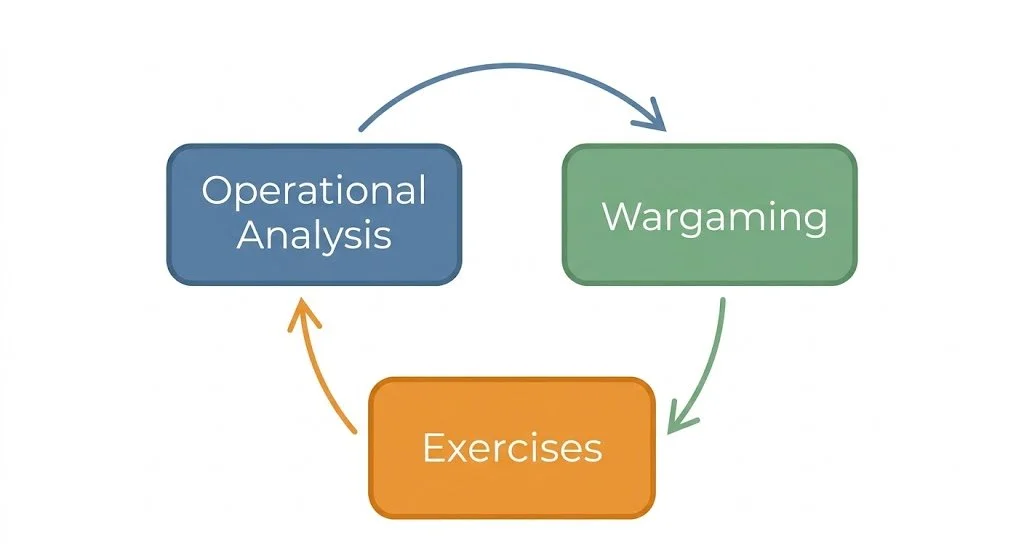
Figure 1: The Cycle of Research (credit: Arturo Iannace, GIE Foundation)
Whereas the first typology, operational analysis, is based on quantitative modeling of events wargaming, as we have seen, focuses on human interaction; finally, exercises are training simulations, often operating under far stricter parameters than those provided for wargames, focusing on consolidating a team’s skills, cohesion, and performance. Each of the three elements can contribute to the other: operational analysis develops models that give the input for wargaming activities; these transforms those inputs, via human interaction and decisionmaking, into an output in the form of results to players’ actions; these results may be used to frame exercise requirements and parameters; and finally, exercise results may feed back into the refinement of operational analysis models, starting the cycle all over again (Figure 2).
It is clear that this Cycle of Research has been developed to function primarily inside a military framework. Then the question is: could it be adapted fruitfully for functioning also outside of that framework, in the wider context of a civilian state apparatus? The answer must be positive.
The use of quantitative models is nothing new in political science and, of course, in economics and sociology. And as wargaming is the focus of this commentary, we are left with exercises. This point is likely trickier. In specific cases (the chief example being that of disaster relief or rapid emergency response), a tradition concerning the implementation of exercises on the field already exists. It may be possible to imagine the use of exercises also in other contexts. An example may be the implementation of tailored exercises for contrasting the spread of a set of fake news; or regarding cyber defense operations during elections. However, given also the different organizational principles of civilian bureaucracies compared to the military, it necessarily follows that the use of exercises will be less widespread. (Davis, 2017)
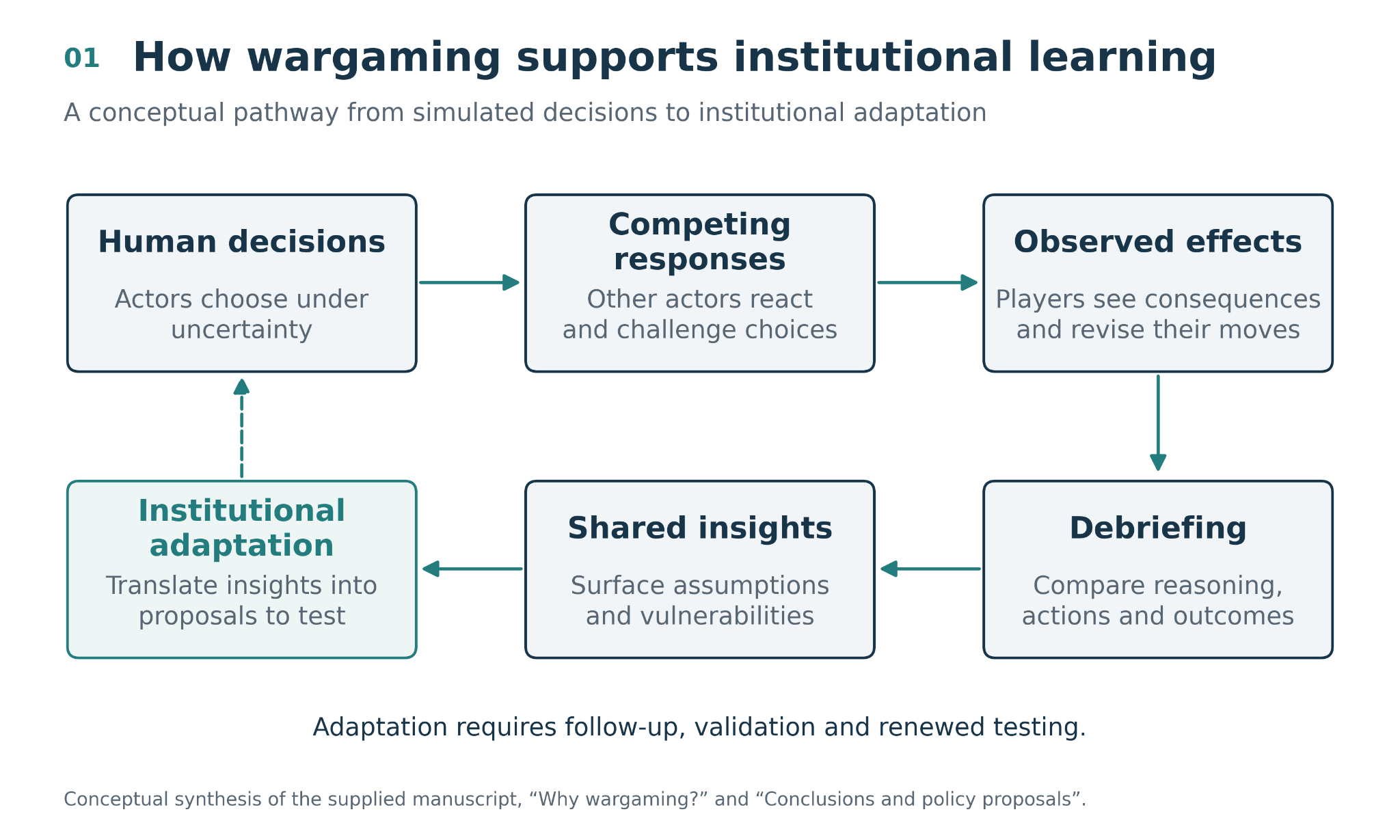
Figure 2: How wargaming supports institutional learning (Credit: Arturo Iannace, GIE Foundation)
In this case, we may imagine a simplified version of the Cycle of Research to be implemented by civilian administrations, where exercises play a less prominent role. In turn, this elevates the role of wargaming. The reason is not just methodological, it concerns the desired final output too: threats to democratic societies cross-cut ministerial and administrative lines, meaning that cooperation between wildly diverse institutions would be required for the exercises to be effective. An example may be the collaboration between fiscal administrations and police forces for countering money-laundering operations. While this kind of cooperation is, of course, of critical importance in real operations, the organization and implementation of targeted exercises would require an amount of effort and resources, especially for those institutions not already used to them, that would arguably overcome their usefulness except in some specific cases, to be selected on an ad hoc basis.
This leaves wargaming as the most effective and efficient tool, in terms of resources required and potential results delivered. Naturally, the organization of a wargame needs to follow specific rules and steps. Each step requires careful examination and choices (Figure 3). The first element required is a sponsor: an institution or organization requesting the wargame to be realized. After that, it will be necessary to outline the purpose and the learning objectives of the wargame, together with its prospective audience. Only after these elements are set in stone will it be possible to move on to planning, design and, finally, implementation. From this cursory exposition it is already possible to see how the decision to use wargaming as a tool for research and analysis translates into a serious, steady commitment.
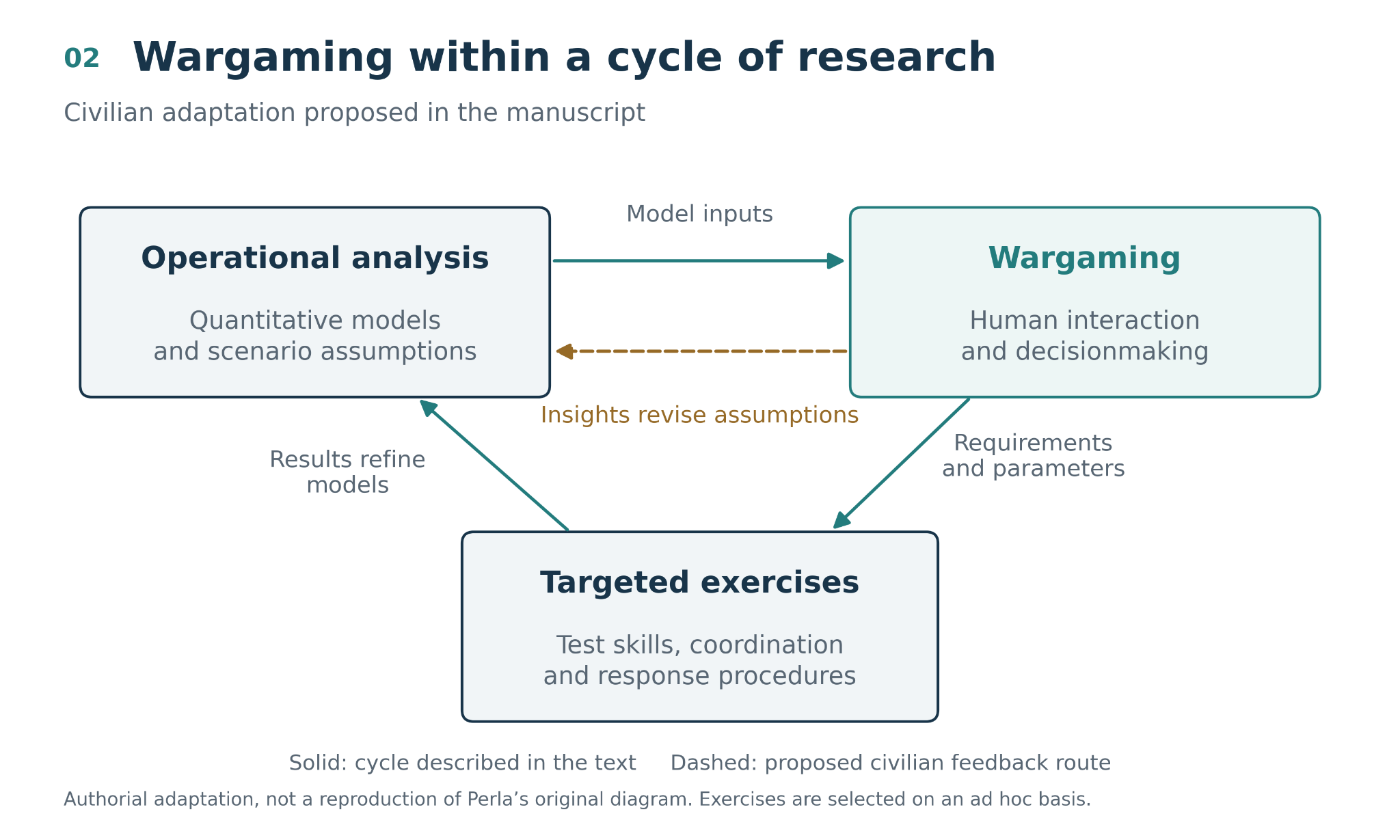
Figure 3: Wargaming within a research cycle (Credit: Arturo Iannace, GIE Foundation)
A proposal for implementing wargaming in the state apparatus
The key word here is sponsor.
The implementation of wargaming for researching issues related to democratic resilience requires, first of all, a drastic change in the mindset of those institutions which should sponsor it. Wargaming is based on a long tradition of civilian-military cooperation. Institutions and think-tanks such as the RAND Corporation, have combined military and civilian expertise in the design and development of their wargaming activities. Consultancy firms such as Booz Allen Hamilton implemented wargaming in their activities with both defense and business customers. (Herman, 2009)
However, when dealing with institutional resilience this combination of civilian and military expertise is arguably not enough. The core issue, again, is sponsorship.
While it is reasonable to expect those institutions and organizations most concerned with defense (such as, though not exclusively, the armed forces) keeping their role at the forefront of wargaming activity, it is necessary to expand the number and variety of sponsors in order to have the opportunity truly to implement wargaming as an effective tool to boost institutional resilience.
This means that it is necessary for an array of organizations such as ministries and state agencies to become aware of what wargaming can do for them, and how.
In other words, the first step towards a full implementation of wargaming throughout a state apparatus, is to raise awareness as to its merits, its potentialities, and also its inevitable shortfalls.
Bureaucratic organizations are usually notable for their resistance to change and innovation. However, this should not be used as an excuse for inaction. After all, military institutions are bureaucracies as well. In fact, it means that the introduction of wargaming needs to proceed on a step-by-step basis.
Upon those organizations already adept in the use of wargaming, that is mainly military and defense-related ones, should fall the burden for allowing, at least at first, their know-how and expertise to be made available to those other administrations and agencies requesting or requiring them.
At the same time, however, it will be necessary to build a proper, relatively separate structure, with two concomitant goals:
To train new experts, and to disseminate the abovementioned know-how and expertise.
To coordinate the wargaming activities throughout the state apparatus, fostering collaboration at different levels between institutions, including a strong connection with its military and defense counterpart.
Concerning the last point, it is important to highlight that extreme caution and attention will be needed in order to avoid not only unnecessary duplications in activities, but also, and perhaps more importantly, a harmful contrast between a civilian-based and a military-based wargaming structure. Collaboration and cooperation will be of the essence, as will be coordination.
The ideal end state of the process will be a situation in which state agencies, departments and ministries will either have their own group of experts (coordinated through the abovementioned structure) or will be able and willing to have them available for the design and development of wargames specifically suited for their interests and needs. In other words, a situation in which those same institutions will be able and willing to become sponsors of their own wargames.
It is at this point that Perla’s Cycle of Research becomes relevant; wargames alone can only solve part of the problem, and only when properly designed and integrated into the wider cycle. Wargames may allow decisionmakers and stakeholders to find out about the ‘Black Swan’ in the room, but they will never give them the whole picture.
This means that sponsor institutions need also be involved with the rest of the cycle. After all, it is in those same institutions that the wargame designers and experts may more easily find the know-how on the specific field and issues that their own wargame will address (not to mention the data sets they need to design the scenario). (Burns et al., 2015)
This will require further adaptation from the institutions involved, including the willingness to share that know-how. On the other hand, wargame designers and experts need to be brutally honest concerning what it will be possible to achieve with, and what will lie outside the purview of, the wargaming activity, refusing to indulge in the idea of wargaming as a jack-of-all-trades. As Perla aptly wrote: “What wargaming is not is usually even less obvious than what it is. First and foremost, wargaming is not analysis [...]. It is not a technique for producing a rigorous, quantitative or logical dissection of a problem or for defining precise measures of effectiveness by which to compare alternative solutions. Nor is wargaming real.” (Perla, 1990).
Once these limits are accepted by sponsors and designers alike, wargaming can really become a tool that institutions in our democracies may usefully and fruitfully use for tackling the most dangerous challenges that lie ahead of them.
There are potentialities in the application of wargaming, in the form of teaching but also creating learning opportunities for institution. In this context, the use of a serious form of gaming can help draw on diverse expertise within an organisation, spread institutional knowledge, and build resilience for the challenges ahead.
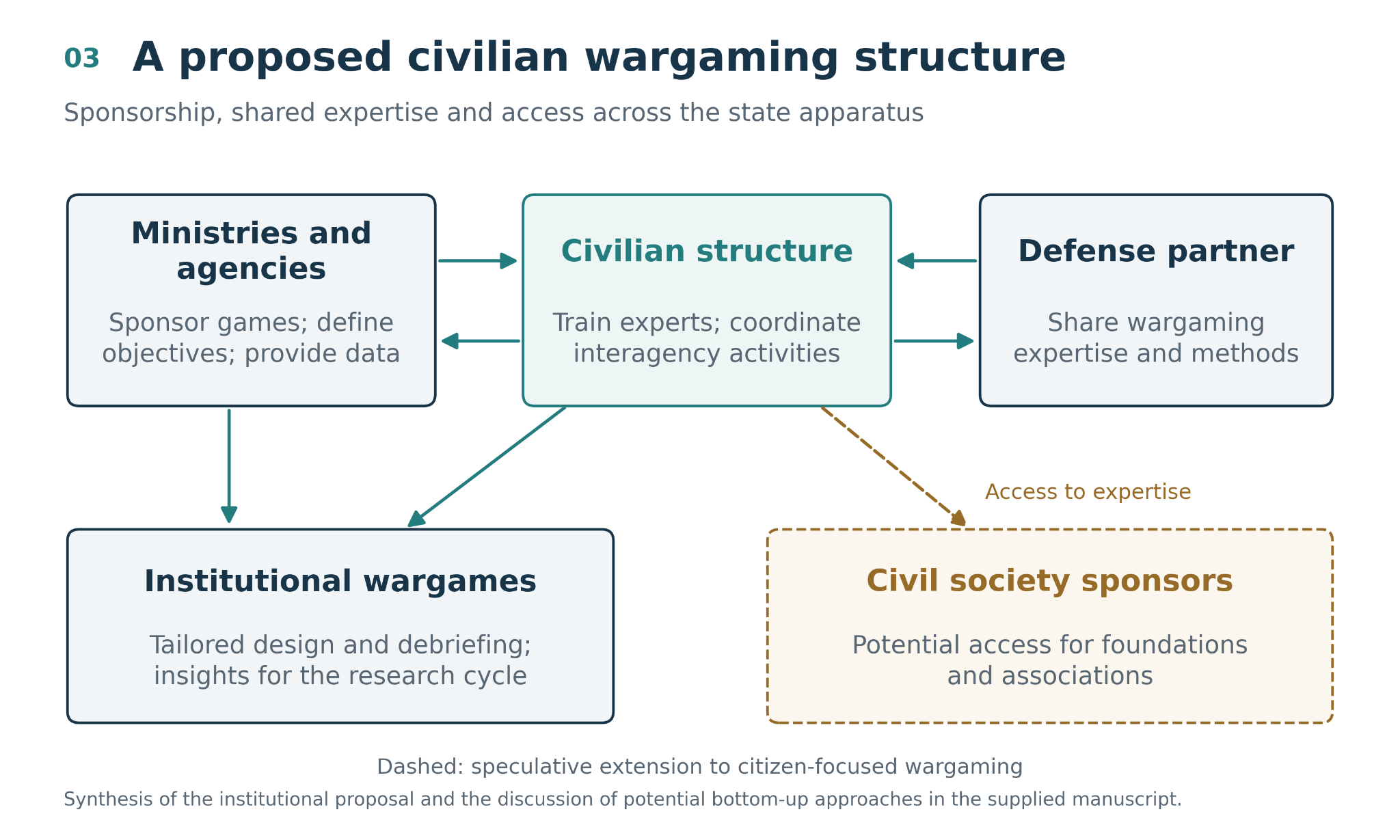
Figure 4: Proposed civilian wargaming structure (Credit: Arturo Iannace, GIE Foundation)
Wargaming outside of institutions? Hypotheses and shortfalls of potential bottom-up approaches
Until now, we have focused our attention on institutions and organizations. We have mentioned state agencies, ministries, departments. In other words, we have seen what wargaming could do for the state apparatus. Nonetheless, it is important to remember that democracy is as much embedded in institutions as it is in processes.
This is particularly evident in the case of specific kinds of threats. For example, fake news are most effectively employed when targeting groups of citizens, more than specific state institutions. Their danger lies in the opportunity they offer to malign actors to disrupt and/or manipulate the democratic process those citizens take part in.
Naturally, the identification and analysis of threats to democratic processes also belong to institutions and organizations of the state apparatus. However, could wargaming be used effectively also in strengthening those processes and in enhancing the defense that citizens may erect against those same threats? In other words, could they be used in something that resembles a bottom-up approach?
The answer to this question remains necessarily speculative. We have seen that among the requirements for an effective wargaming activity we have both a sponsor and a clear objective.
Sponsors would not be hard to find in a bottom-up approach: it is possible to envision entities such as foundations and associations (even political parties) taking the lead in promoting and sponsoring wargaming activities specifically targeted at citizens who are not members of the state apparatus. In turn, finding the objective of these activities will require, as already clearly demonstrated, a process of research and analysis that would not be affordable, in terms of sheer resources, for most of those potential sponsors - which limits their number considerably.
Then, there is the issue of the audience to address. While citizens could and should be considered decisionmakers themselves, particularly when dealing with specific democratic processes such as elections, their field of decision is necessarily different from that of political leaders or administrators, and this fact should be taken into account when sponsoring and, later, designing a wargame targeting citizens outside of institutions and administrations.
In this case, realistic expectations concerning the objectives (particularly in terms of learning) achievable through wargaming would be key for success. It is likely that the best result a wargaming activity at this level may achieve would consist mainly in awareness raising and behavior enhancement.
Finally, the feasibility of a bottom-up approach seems also to further validate the desirability of the civilian wargaming structure outlined in the previous paragraph, as sponsors from civil society may more easily gain access to the necessary know-how and expertise through it.
Policy Recommendations
Further steps toward the implementation of wargaming (and other forms of serious game) in the civilian state apparatus, the civil society, of our democratic realities, will necessarily need to be both more focused and more specific.
There are steps that needs to be taken into account, which can help operationalize these tools and make them at service of the democratic resilience of the European Union and its reality:
Investments. There is a need to invest in this form of content, among the EU institutions and Member States authorities. Working groups in European institutions, most notably the EU Policy Lab - the European Commission's internal innovation unit - and the Helsinki-based European Centre of Excellence for Countering Hybrid Threats (Hybrid CoE), have begun demonstrating the applicability of serious games and wargaming to policy design and hybrid threat preparedness respectively (EU Policy Lab, 2025; Hybrid CoE, 2024). The investments should never be fully public or private, but they must leverage on the mixed needs and partnerships which wargaming could foster. Programmes as the existing HORIZON can support the development of competences and R&D specialized for wargaming and its application.
An objective. These tools will need a clear scope in the European context, and there is no shortage of candidate scenarios. Russia's invasion of Ukraine produced a cascade of compounding shocks to the Union - from misinformation campaigns and energy price crises to the electoral reinforcement of far-right parties across multiple Member States - any one of which could serve as the basis for a rigorous wargaming exercise. Beyond the immediate geopolitical context, the convergence of pressures that our research on democratic instability has identified - technological acceleration, geopolitical fragmentation, and systemic institutional stress - creates precisely the kind of complex, cross-cutting scenario environment in which wargaming's strength as a learning tool is most valuable. Policy evaluation and horizon-scanning through wargaming can, and should, become a standing instrument in the EU's strategic toolbox.
Partnerships. The EU cannot and should not develop this capacity in institutional isolation. Member States, academic institutions, defence research bodies, and civil society organisations all hold knowledge that no single institution commands - about specific threat vectors, local political dynamics, and the granular realities of how democratic institutions actually function under pressure. The European Defence Agency, the Hybrid CoE, and RAND Europe have all demonstrated that the most productive wargaming initiatives are those that draw on exactly this kind of cross-sectoral intelligence (Herman, 2009; Hybrid CoE, 2024). Partnerships are not merely a desirable feature of effective wargaming - they are a methodological requirement.
Tests. Wargames designed in the abstract and never stress-tested against real institutional conditions are of limited value. The European Defence Agency's hybrid threat tabletop exercises, which have brought together officials from Member State ministries, EU institutions, and NATO since 2016, offer a model worth building on: controlled, scenario-based, and evaluated against measurable learning objectives (European Defence Agency, 2016). A similar approach - structured pilots run within EU institutions and willing Member State administrations, with results rigorously collected and assessed - would allow the field to develop an evidence base for what works, rather than proceeding on assumption.
Sharing. Institutional resistance to new methodologies is not a European pathology - it is a universal feature of bureaucratic organisation. The answer is not to wait for consensus but to build it incrementally, through demonstrated results. Pilots should be followed by structured dissemination - workshops, practitioner networks, and published evaluations - that allow institutions not yet engaged to understand what wargaming can and cannot achieve, on the basis of evidence rather than advocacy. The Hybrid CoE's model of publishing after-action assessments and making course materials available to Participating States is a template worth following at broader EU level.
Wargaming, as practice, can be seen as a tool powerful enough to help predict “Black Swans” but, more generally, to forecast developments and change in the real world that needs to be better understood before it can be addressed through policy. The first step is to identify a set of issues or topics for an initial round of experimentation, whose results could be collected and validated rigorously, and whose insights could be put into actionable proposals with verifiable outcomes.
This step will be of particular importance in building trust and confidence towards this tool. As already mentioned, it is to be expected that the introduction of wargaming may be met with some resistance, in terms of organizational and institutional adaptation. Awareness- and confidence-building become thus of primary importance. Also, sponsors and designers/experimenters alike must always be honest concerning what a wargame can and what it cannot achieve, overcoming the unavoidable tendency to glorify an innovation in order for it to be adopted.
The investment, however, is worth making. The idea that wargaming may be a powerful tool for learning is gaining traction among International Relations scholars and security practitioners (Mainardi, 2022). Democratic societies need to adapt and react quickly to an environment where threats lurk in the shadow of ambiguity, undetectability, and unpredictability. Wargaming can help shed light on that shadow, as it has done for decades in the realm of military defense. Just for that, it is a tool that deserves a chance. Democratic institutions have survived serious threats before - but they did so because they retained the capacity to anticipate, adapt, and respond before rupture became inevitable. In an environment of accelerating and compounding pressures, wargaming offers something rare well beyond military life and into civilian and government structures: A structured method for stress-testing that capacity before it is needed, rather than discovering its limits when it is already too late.
Figures
Figure 1: The Cycle of Research (Credit: Arturo Iannace, GIE Foundation)
Figure 2: How wargaming supports institutional learning (Credit: Arturo Iannace, GIE Foundation)
Figure 3: Wargaming within a research cycle (Credit: Arturo Iannace, GIE Foundation)
Figure 4: Proposed civilian wargaming structure (Credit: Arturo Iannace, GIE Foundation)
References
Betz & Smith, 2025: Betz, David and Smith, M.L.R., “Reflections on Homeland Insecurity: The Strategic Anatomy of Civil Wars to Come,” Military Strategy Magazine, Exclusive Article, 25 September 2025. https://doi.org/10.64148/msm.exclusive.13666
Burns et al., 2015: Burns, S., & al., War Gamers Handbook: A Guide for Professional War Gamers, Naval War College, Newport (RI), 2015.
Caffrey, 2019: Caffrey, Matthew B. Jr, On Wargaming. How Wargames Have Shaped History and How They May Shape the Future, Naval War College Press, Newton (RI), 2019.
Davis, 2017: Davis, Paul K., Illustrating a Model-Game-Model Paradigm for Using Human Wargames in Analysis, working paper, RAND Corporation, Santa Monica (CA), 2017.
Feduzi, 2025: Feduzi, A., Unknowns e Black Swans negli studi sulla difesa, Collana del Laboratorio di Wargaming “Si Vis Pacem Para Ludum”, vol. III, Roma, 2025.
Herman, 2009: Herman, M., Wargaming for Leaders. Strategic Decision Making from the Battlefield to the Boardroom, McGraw Hill, New York et al., 2009.
Mainardi, 2022: Mainardi, Benjamin E., “Towards Better Civilian Strategic Education: A Case for Tabletop Wargames,” Military Strategy Magazine, Volume 8, Issue 1, summer 2022, pages 36-41. https://doi.org/10.64148/msm.v8i1.5
Perla, 1990: Perla, P., The Art of Wargaming. A Guide for Professionals and Hobbyists, United States Naval Institute, Annapolis (MD), 1990.
Perla, 2016: Perla, P., Operation Research, Systems Analysis, and Wargaming: riding the cycle of research, in P. Harrigan, M. G. Kirschenbaum (eds.), Zones of Control. Perspectives on Wargaming, The MIT Press, Cambridge (MA), 2016, pp. 159-182.
Perla, 2022: Perla, P. (2022). Wargaming and The Cycle of Research and Learning. Scandinavian Journal of Military Studies, 5(1), pp. 197–208. DOI: https://doi.org/10.31374/sjms.124
Croissant, A. and Lott, L. (2025): 'Democratic Resilience in the Twenty-First Century: Search for an Analytical Framework and Explorative Analysis', Political Studies. doi: 10.1177/00323217251345779. Available at: https://journals.sagepub.com/doi/10.1177/00323217251345779
European Defence Agency (2016): 'EDA presents hybrid threat exercise findings to Defence Ministers.' Brussels: EDA, 19 April 2016. Available at: https://eda.europa.eu/news-and-events/news/2016/04/19/eda-presents-hybrid-threat-exercise-findings-to-defence-ministers
EU Policy Lab (2025): 'A most delightful way to get work done: serious games for policymaking.' European Commission Joint Research Centre, 20 November 2025. Available at: https://policy-lab.ec.europa.eu/stories/most-delightful-way-get-work-done-serious-games-policymaking-2025-11-20_en
Hybrid CoE (2024): 'Wargaming courses focus on resilience of critical infrastructure.' Helsinki: European Centre of Excellence for Countering Hybrid Threats. Available at: https://hybridcoe.fi/news/wargaming-courses-focus-on-resilience-of-critical-infrastructure