
European Resilience
European Resilience complements our Drivers of Instability Commentary program, focusing on exploring the governance challenges facing European democratic institutions in changing geopolitical, environmental, and technological circumstances.
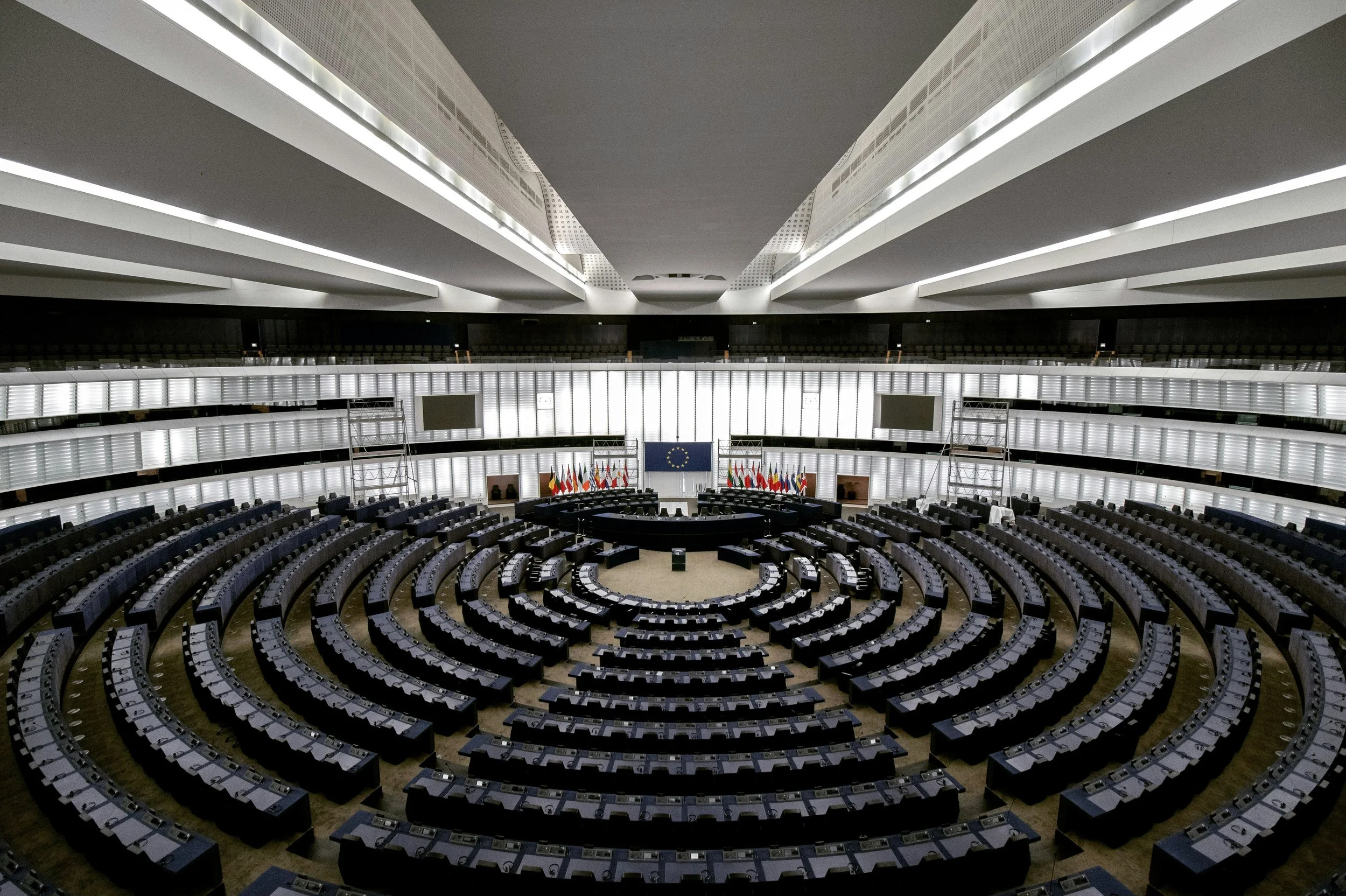
Parlement européen Strasbourg, France by Frederic Köberl (@internetztube)
Europe's democratic institutions were built for a different world. They now face simultaneous pressures - geopolitical competition, defence and security, the governance of new technologies, and the fragmentation of the information environment - that test their legitimacy, coherence, and capacity in ways their architects did not anticipate. Our European Resilience series examines these pressures across the domains where they are most acute. The question running through all of it is the same - whether and how European democratic institutions can adapt quickly enough, and on terms that preserve rather than erode the democratic foundations they rest on.
Decisions about defence integration, data sovereignty, space governance, and public communication are being made - and need to be made - in shifting geopolitical, technological and systemic circumstances, and at a pace that outstrips the established norms of democratic deliberation. The legitimacy of these decisions - and the resilience of the institutions making them - is not guaranteed.
How European institutions sustain democratic legitimacy and public trust while responding to civilisational pressures that demand rapid, coordinated action is one of the great questions of the 21st century. European Resilience looks at where governance is working, where it is failing, and where targeted policy intervention can make a material difference to stability and resilience in Europe.
This program is led by Davide E. Iannace, in collaboration with Sara Pane, Maia Sacchetto, Kristina Bilimenko and Arturo Iannace.

The Circular Economy Act is a Critical Test for Europe's Industrial and Environmental Future
The EU's upcoming Circular Economy Act is meant to change how Europe produces and consumes. But recycling alone cannot deliver a circular economy. The share of recycled materials in the EU economy has barely moved in fifteen years, and Europe still consumes roughly twice what is sustainable.
As competition for raw materials grows, an economy that relies on extracting and importing ever more of them is exposed to supply shocks, price spikes and pressure from the countries that control those resources. That instability hits households and industry first, and over time it erodes trust in the democracies that govern them. Get the Act right, and Europe can build a more resilient economy and set the standard that the rest of the world, selling into Europe's single market, will have to follow. This commentary sets out what the Act needs: a binding target to reduce material consumption, reuse and repair placed ahead of recycling, and economic incentives that stop favouring virgin resources.
From the Page to the Podcast: Our Contributors in Conversation
GIE Foundation is proud to partner with and sponsor L4T - The Podcast, hosted by Rosalia D'Agostino and Giacomo de Gregorio.
Following the publication of each new Commentary in our European Resilience series, our researchers join L4T to discuss their findings, the policy implications, and the broader questions their work raises.
Watch our contributors on the podcast below.
Davide E. Iannace and Maia Sacchetto on L4T podcast discussing Orbit without Order: The Costs of Fragmented Space Governance