
The Right to be Anonymous: The Risks of AI-Powered Wearable Tech
By Cristina Oliva Patrick, in collaboration with the Geopolitical Insight & Education Foundation
Introduction
Technology that connects the world may perhaps seem, in a certain sense, antithetical to the idea of privacy, which can be conceived as a sort of curated disconnectedness. Whether this needs to be true is a question for philosophers; whether the story of technology advancing at the expense of privacy is our lived reality seems much more readily answerable. One need not envision a fantastical future Skynet to see this; it’s demonstrable in the mass data-capture on purchases, habits and search queries of the tech giants of today, to the ubiquity of location data-sharing, to the proliferation of CCTV and even satellite surveillance at the disposal of governments and private companies. It has become a truism to observe that privacy is threatened by technology in the 21st century (Zuboff, 2019).
With the rise of wearable technology, yet another privacy barrier seems under threat of extinction. Products like Google Glass and Metaglasses are simultaneously unobtrusive, readily available, and perfectly situated to capture huge amounts of highly personal data about both the user and - crucially - non-users that interact with a user (Sui et al, 2023). While it may be an overclaim to say they are uniquely deleterious to privacy - indeed, they have stiff competition from the sorts of data smartphones, CCTV and search engines collect, to say nothing of what LLMs and other AI agents may collect soon - it still isn’t hard to see how wearables may be very particularly threatening to anonymity in public (IHS Markit, 2022). If many members of the public that any individual interacts with are, purposefully or not, recording every face that swims into view, this is a grave potential threat to the right to be anonymous indeed.
The concept of wearable technology - even as eyewear - that delivers information directly to the wearer is not new; in fact it was invented in the 1960s, when Ivan Sutherland developed the first head-mounted display capable of rendering graphics in the wearer's field of view, a system so bulky it had to be suspended from the ceiling(Even Realities, 2026). Decades of incremental progress followed: Augmented reality became a defined research field in the 1990s, early commercial attempts emerged in the 2000s, and the first wave of mainstream consumer interest arrived with Google Glass in the early 2010s (Even Realities, 2026). What is new, rather, is the combination of miniaturized hardware and artificial intelligence that has made the newer generation of smart glasses more capable, capable enough that the policy questions their predecessors raised but never resolved have now become urgent.
The defining feature of these devices is an asymmetry of power in private and public spaces. The person wearing the glasses knows they are recording but everyone around them, the stranger on the sidewalk, the coworker in a meeting, the person attending a protest, might not be able to notice the light on the glasses which signal the device is recording. If you add facial recognition on top of this, you now have a device of mass surveillance.
This commentary argues that this asymmetry is the central issue and it is not a minor side effect to be managed later. The saying goes: The best time to prepare is yesterday. At the very least, our window to set rules for this technology is open now; we have the opportunity to regulate while it is still emerging, rather than after it has become ubiquitous. Indeed, the stakes are also not confined to privacy in the conventional sense. The right to move through public space without being identified, tracked, or profiled is foundational to democratic participation - to the freedom of assembly, to the ability to protest without consequence, to the basic civic condition of being able to exist in public life without that existence being recorded and cross-referenced against a database. Democratic civil society depends in significant part on the belief of citizens that their rights to express their democratic opinions will be protected, and will not disadvantage them unduly. If that condition erodes, the potential harms to society are vast; in fact, they touch on the fundamental viability of democratic civil society itself.
There are a number of parallels between the rollout of wearable AI tech and social media, from the marketing of the technology on interconnectivity, to a perceived unwillingness by its purveyors to assume responsibility for misuse of its capabilities - and indeed not least the fact that many of the actual companies are the same. We can thus draw rough parallels between the difficulties of post-facto regulation attempts for social media, and the potential trajectory of wearable AI tech; it behooves us not to make the same mistakes again.
The Current Landscape
Until recently, much of the debate around facial recognition enabled eyewear could be dismissed as speculative, a discussion about what devices might eventually be capable of, rather than what they actually do.
Meta has spent the last several years building a market for AI enabled glasses through partnerships with established eyewear brands, including RayBan and Oakley. (Meta, 2023; Meta, 2025)
These products are designed to look and feel like ordinary sunglasses while connecting to the internet, recording the wearer's surroundings, and processing that information through AI. The people captured in that footage, often without realizing it, are bystanders with no relationship to the product and no way to opt out.
The next step in that trajectory became public in early 2026, when an internal company memo describing plans to add a facial recognition "name tag" feature to these glasses was reported by the New York Times (2026). The feature would allow a wearer to look at a stranger and have the glasses identify them, potentially surfacing information drawn from that person's presence on Meta's platforms, including details about their work, interests, relationships, or other aspects of their digital footprint. The wearer would receive this information passively, without the person being identified ever knowing a scan occurred.
The response to this leaked information was immediate and broad. The American Civil Liberties Union (ACLU) of Massachusetts, through its "Eyewear, Not Spywear" campaign, is leading a coalition of roughly 75 organizations in publicly calling on Meta to abandon the feature entirely, describing it as a serious threat to privacy and personal safety (ACLU of Massachusetts, 2026). As Kade Crockford, Director of the Technology for Liberty Program at the ACLU of Massachusetts, put it, “the public has not consented to this scale of intrusion, and the prospect is both dangerous and dystopian” (ACLU of Massachusetts, 2026). The campaign has also pointed to the practical reality of the sorts of misuses such a feature could reasonably enable: Stalkers and abusive partners gaining a tool to identify and track targets, scam artists harvesting personal information from strangers in public, and government actors using consumer devices as a distributed identification network without any of the oversight that would normally apply to government surveillance tools (ACLU of Massachusetts, 2026).
This episode is instructive for two reasons: First, it confirms that the scenario this commentary is concerned with, a consumer device that silently identifies bystanders and links that identification to a profile of personal information is a feature that a major technology company has actively developed and was prepared to offer. Second, it illustrates the limits of relying on public pressure and voluntary corporate restraint as a regulatory strategy. A coalition of dozens of organizations was required simply to generate enough pressure to potentially delay or reconsider a single feature from a single company (Belfer Center, 2023). That is not a sustainable model for governing an entire category of technology as it scales across manufacturers, product lines, and jurisdictions. It is the same dynamic that played out repeatedly with social media platforms: Civil society organizations responding reactively, feature by feature, company by company, after a capability has already been built and is ready for deployment.
The legislative response taking shape in Massachusetts, where lawmakers are considering the Massachusetts Consumer Data Privacy Act, points toward the kind of structural approach this commentary advocates for: Rules that apply to the collection of biometric data itself, rather than rules that depend on individual companies choosing not to offer a feature once it already exists (ACLU of Massachusetts, 2026). The remainder of this commentary builds on that foundation, arguing for a framework that does not rely on any single company's restraint, in any single jurisdiction, at any single point in time. As the scale of the technology is ubiquitous, so must be the response (see Figure 1).
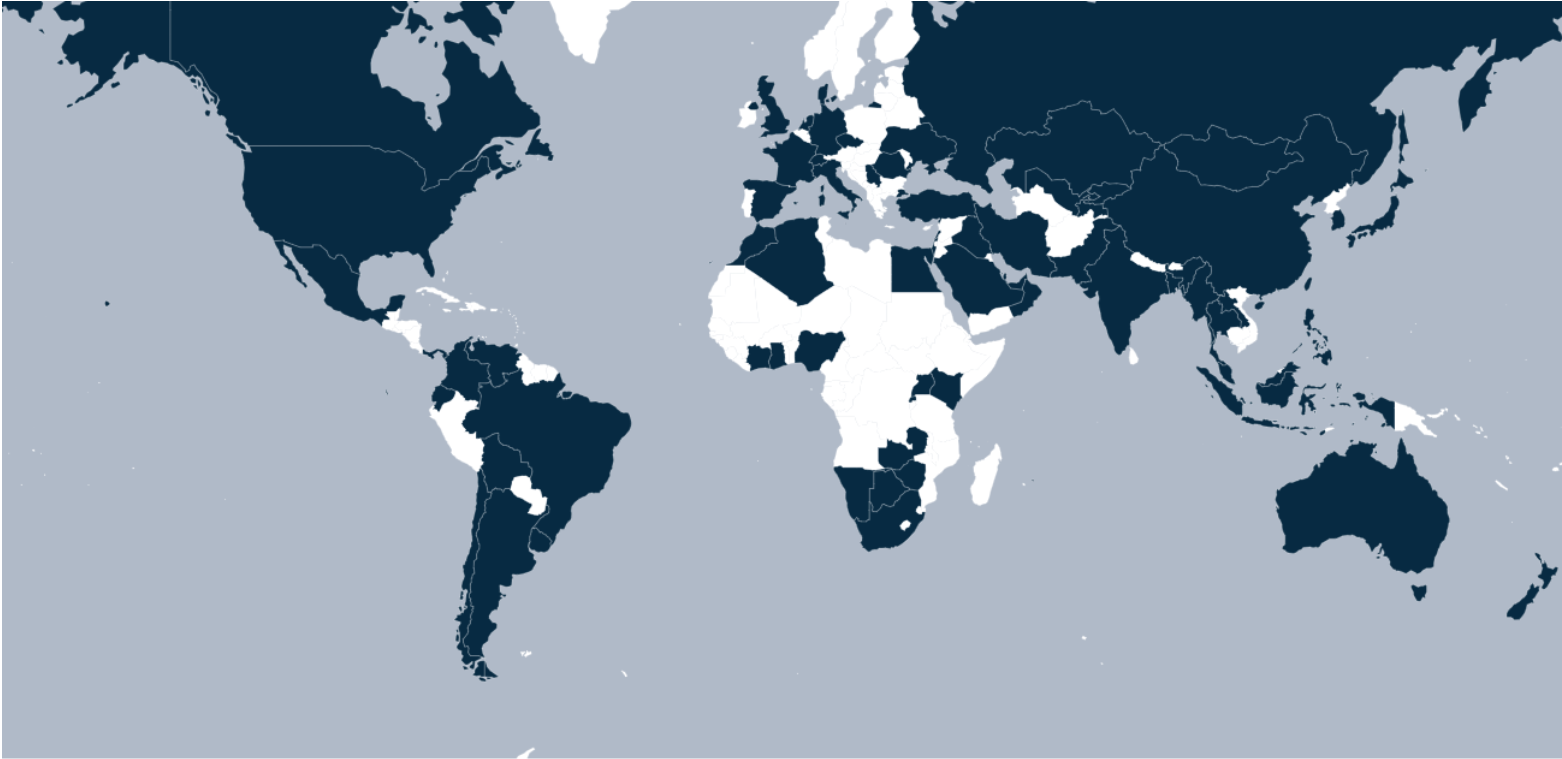
Figure 1: Countries currently using AI-driven mass surveillance technology, as per the Carnegie Endowment for International Peace (2026).
A Familiar Pattern
The regulatory history of social media offers a useful and uncomfortable example. Platforms were allowed to scale for over a decade before society seriously grappled with their effects on privacy, mental health, political discourse, and child safety (Gibbs and Carter, 2023). By the time meaningful regulatory proposals arrived, the technology was embedded in daily life, business models were built around the status quo, and any attempt to impose limits was met with arguments that it was too late or too disruptive to change course (Moe and Syvertsen, 2023). The cost of early inaction was not avoided. It was simply deferred, and it grew larger in the process.
There is a recognizable rhythm to how this unfolds: A new capability is introduced, often framed as an improvement rather than a fundamental change. It is adopted gradually, while regulators and the public are still forming an understanding of what the underlying technology even does. By the time the implications become widely understood, the feature has already been normalized for millions of users, and the cost of removing it, both in terms of user expectations and corporate revenue tied to the feature, has grown to the point where regulators are negotiating from a position of weakness rather than strength (Government of Australia, 2023). Facial recognition in consumer eyewear is following the early stages of that same rhythm: framed as a convenience feature, an extension of an existing product line, something that sounds, on first description, like a natural evolution of technology that already exists. And the economic argument against rolling back the technology will be similar, too; the market for facial recognition technology stood at $10bn in 2026, but is slated to double by 2030, and treble before 2035. (See Figure 2).
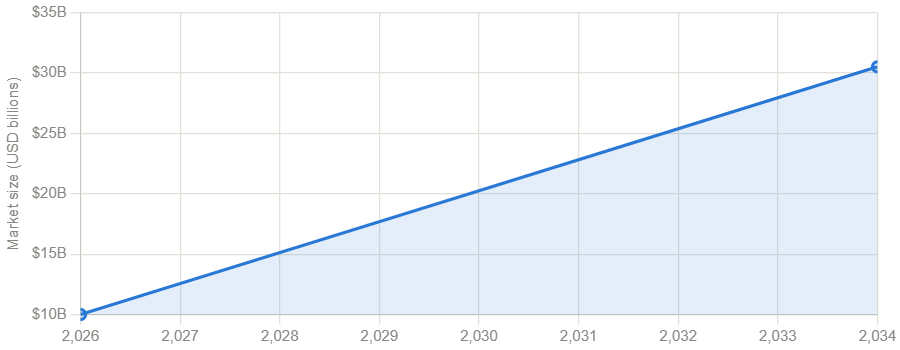
Figure 2 - Facial recognition technology market size projection by year. Source: Fortune Business Insights (2026).
Smart glasses with facial recognition are at an earlier stage of that curve than social media was when meaningful regulatory debate finally began. Adoption is still limited relative to the scale these products are aiming for. The underlying technology, while mature enough to deploy, has not yet been embedded into the daily routines of hundreds of millions of people. The market has not yet normalized identification of bystanders as an accepted feature of public life, and this is precisely the moment when regulation is most effective.
Public attitudes to facial recognition already reflect an intuitive grasp of this distinction. Americans broadly accept the technology when deployed by law enforcement for security purposes, but that acceptance drops sharply as the use case shifts toward private and commercial actors - falling to 30% for employer attendance tracking and just 15% for advertiser use (see Figure 3). Consumer wearables with identification capability sit squarely in the territory the public is least comfortable with, operated by private individuals with no accountability structure and no defined purpose limitation. The regulatory window that exists now is also, in an important sense, a window of public mandate.
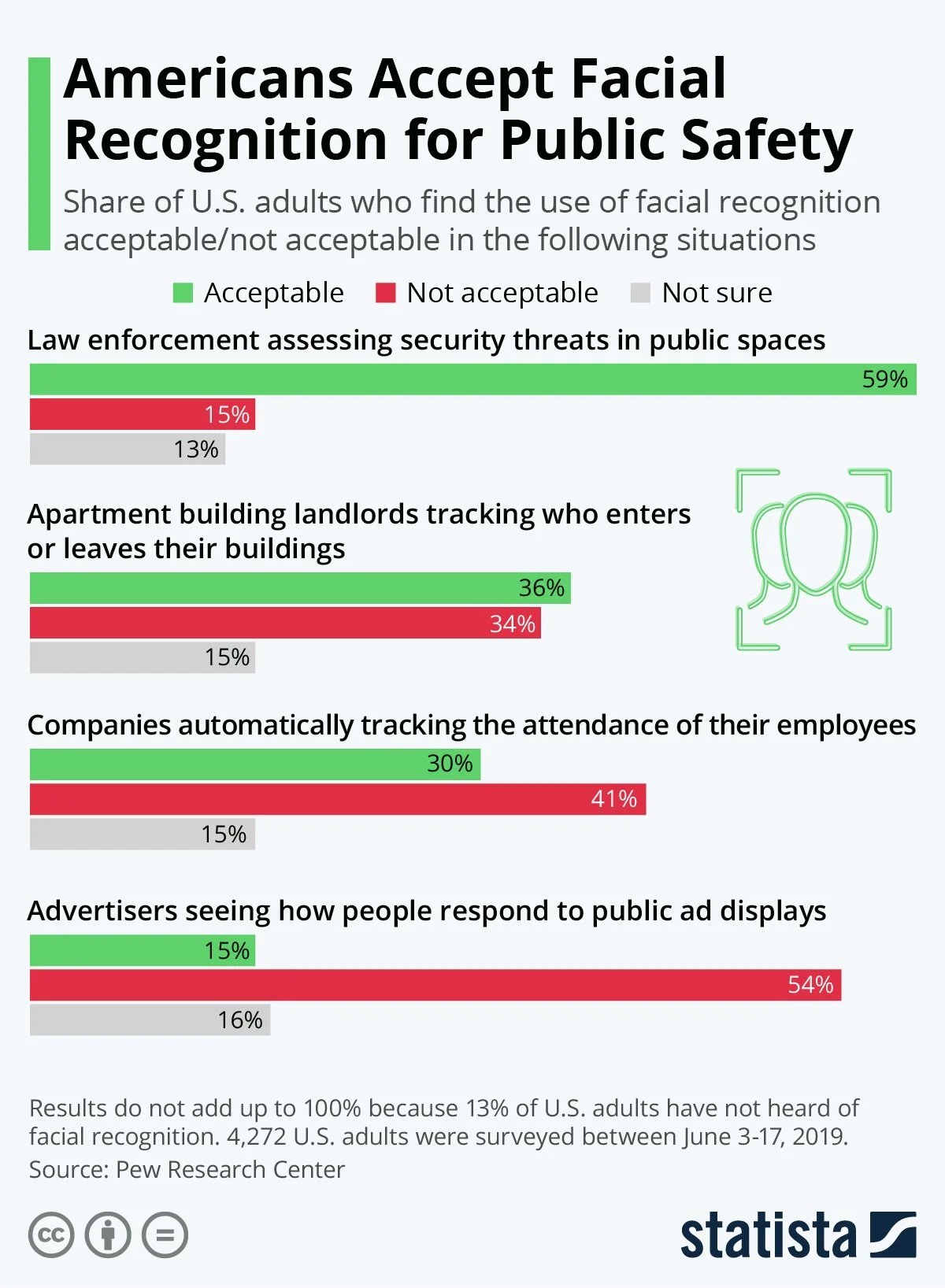
Figure 3 - Public Attitudes to Facial Recognition: Americans' Acceptance by Use Case. Source: Pew Research Center, 2019, via Statista.
Waiting until these devices are common, until facial recognition is a standard feature rather than an emerging one, until millions of people have built habits around glasses that can identify the people around them, would repeat the same mistake at a larger scale and with higher stakes. Unlike a social media feed, which operates primarily on a screen and within a user's own digital environment, this technology operates directly on physical bodies in physical space.
There is a substantial body of research on what happens to democratic participation when surveillance becomes ambient. Daragh Murray's analysis of retrospective facial recognition in UK policing documents how the removal of anonymity in public space produces chilling effects that extend well beyond the individuals directly identified - modifying behaviour, suppressing political activity, and interfering with how citizens develop identity and engage politically (Murray, 2024). The European Journal of Risk Regulation has further documented that simply knowing surveillance is possible is sufficient to deter protest participation, with consequences for democratic pluralism that extend beyond any individual case (Galli & Malgieri, 2025). Consumer wearables with facial recognition would extend this dynamic from state-operated infrastructure to every individual present in a public space.
Thus, the harms are not confined to an app or a platform that a person can choose not to use. They extend to anyone who walks down a street, attends a public event, or simply exists within range of someone else's glasses.
An Uneven Distribution of Risk
While the loss of anonymity in public space is a concern for everyone, it is not a concern that falls evenly. Facial recognition enabled wearables pose a qualitatively different threat to people who are already more exposed to surveillance, profiling, or targeted harm, and any policy discussion that treats this as a generic privacy issue affecting an undifferentiated public risks missing where the real damage will concentrate.
For immigrants, a stranger's glasses identifying them and cross referencing that identity against other available data is a possible extension of existing patterns of immigration enforcement and community monitoring into new forms. A device that allows any individual to identify someone and potentially access information about their background fundamentally changes the risk calculus of simply being present in public for people whose immigration status, or that of family members, makes them vulnerable to that kind of exposure (NPR, 2026; Asad, 2023 as cited in UCI, 2026).
For people from historically underserved or over policed communities, normalized public facial recognition compounds an already disproportionate burden of surveillance. These communities have long experience with surveillance technologies that are deployed unevenly, tested disproportionately in their neighborhoods, and accompanied by error rates that fall hardest on exactly the populations least equipped to contest a misidentification, with error rates of up to 35% for women with dark skin compared to just 1% for white men in commercial systems, (Buolamwini & Gebru, 2018) and false positive rates for Asian and African American faces running anywhere from 10 to 100 times higher than for white faces depending on the algorithm tested (Grother et al., 2019), as per the Gender Shades project run by the MIT Media Lab (MIT, 2018) (See Figure 4). A consumer device that puts a version of that capability into the hands of any individual, with none of the (already limited) accountability structures that apply to institutional use of facial recognition, removes even the minimal recourse that currently exists (Freedom House, 2025).
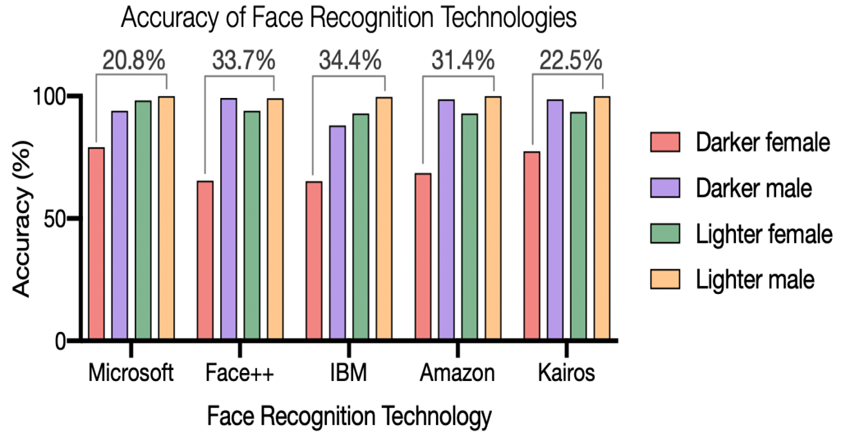
Figure 4 - Gender Shades: Facial Recognition Error Rates by Skin Type and Gender across Commercial Systems. Source: Buolamwini, J. and Gebru, T. (2018), Gender Shades Project, MIT Media Lab, as reproduced in Taiuru, K. (2024).
For women in particular, the ability for any stranger to identify, record, and potentially track them removes a layer of practical safety that anonymity in public may provide. The ACLU's warnings about this technology specifically named stalkers and abusive partners as among the most obvious beneficiaries of a feature that can identify a person and surface information about their life from a glance. These are not hypothetical risks. In 2024 and 2025, private actors used facial recognition tools to identify student protesters at US universities, with information submitted to immigration authorities in attempts to pressure visa revocations. Anti-mask laws introduced during the same period produced documented chilling effects: students reporting they stayed home from demonstrations, avoided organising, or declined to attend rallies out of fear of identification (ACLU, 2025). This is the practical reality of what consumer-grade facial recognition enables - not a speculative harm, but a pattern already in evidence.
Put simply, this describes one of the most common and well documented patterns of technology facilitated abuse, now equipped with a tool that operates passively, requires no specialized equipment beyond a consumer product, and leaves no obvious trace that the person being targeted could discover or prove (Banks and Andersson, 2023).
For activists and protesters, the right to participate in public demonstration has historically depended on a degree of anonymity within a crowd. Real time identification of individual protesters by other attendees, counter protesters, or bystanders fundamentally changes the risk of exercising that right. The chilling effect of this extends well beyond any single person identified. When attendance at a protest carries the risk of being individually identified and having that identification linked to a broader profile, by anyone present with the right glasses, the practical effect is to suppress participation broadly, regardless of whether any individual case of identification leads to direct harm. The Columbia Journal of Transnational Law has made this point in direct terms: governments need not use facial recognition frequently to chill associational freedoms - the potential for its use is sufficient. When one protester is identified and that identification is known, every subsequent protest attendance carries the same risk for everyone present (Columbia Journal of Transnational Law, 2025). Consumer wearables operated by private individuals, with no oversight or accountability structure, extend that chilling effect beyond the state entirely.
These represent some of the clearest examples of how a technology marketed as a personal convenience can function as a tool of surveillance, one whose costs are disproportionately absorbed by people who already have the least power to opt out of public life. A regulatory framework that does not explicitly account for this distribution of risk, that treats the harm as evenly spread and therefore manageable through general purpose privacy protections, will fail the people who are most exposed.
Addressing the Innovation Argument
A predictable objection to this kind of framework is that it would stifle innovation, that banning facial recognition in consumer wearables would prevent legitimate, beneficial uses of the underlying technology, and that the answer to potential misuse is better design, not prohibition.
This objection deserves a direct response, because it is the same argument that was made, repeatedly, during the period when social media regulation was being debated and delayed. The argument that a technology has beneficial applications is true of nearly every technology with surveillance capability, and it has rarely been a sufficient reason to allow that technology to be deployed against unconsenting third parties in public space without legal limits. Facial recognition technology itself is not the subject of this commentary, that would require another debate. What is at issue here is specifically the deployment of that capability through consumer devices, operated by private individuals, against members of the public who have no relationship to the device, no knowledge of how it is being used, and no recourse if it is misused.
There is also a difference between a technology's potential and its likely use in practice. The "name tag" feature was not framed by its developers primarily as a tool for, say, helping someone recall the name of an acquaintance they have met before, even though that is the kind of benign use case often invoked in these discussions. It was a general purpose identification capability, and general purpose identification capabilities, once built, tend to be used for whatever their broadest possible application allows, not merely their most benign one. A policy framework needs to be built around realistic patterns of use.
Finally, it is worth noting that a ban on this specific capability does not foreclose innovation in wearable technology generally. Smart glasses can offer translation, navigation, accessibility features, photography, and a wide range of other functions without identifying the people around the wearer. The argument here is that one specific capability, the non consensual identification of bystanders, represents a category of harm serious enough that it should not be left to product design choices or post deployment restrictions.
Policy Recommendations
A governance response that relies on guidance, voluntary industry commitments, self regulation, or takedown requests issued only once harm has already occurred will not address a problem of this nature. The Meta example demonstrates this clearly: It took a leaked internal memo, investigative journalism, and a coalition of dozens of organizations to generate public pressure around a single feature from a single company. That is not a model that scales to an entire category of devices from multiple manufacturers, operating across jurisdictions with different enforcement capacities.
A meaningful policy response needs to establish clear legal obligations at the point of design and deployment, not as an afterthought, and not as something that depends on a particular company's willingness to self-regulate in response to public pressure. It also needs to account explicitly for the democratic stakes. A framework that treats this purely as a consumer privacy question - a matter of data rights and corporate accountability - will underweight the civic dimension. The right to anonymity in public space is a precondition for the exercise of freedoms of assembly and expression that democratic societies depend on. Any governance response that does not explicitly protect that right, for everyone present in public space regardless of their relationship to the device being used, is not addressing the problem in full.
Three elements are central to such a framework.
A ban on facial recognition as a feature of consumer wearable devices. This is the most direct and effective intervention available. Rather than attempting to regulate the downstream uses of facial recognition data once it has already been collected, matched against an identity, and potentially stored or transmitted, the technology itself should not be permitted to operate on unconsenting third parties through consumer devices in public or semi public spaces. This draws a clear, enforceable line, rather than relying on a patchwork of use restrictions that are difficult to monitor and easy to circumvent once the underlying capability exists on the device. A "name tag" style feature, regardless of which company builds it or what safeguards are claimed around its use, should not be a feature that a consumer eyewear product is permitted to have. The capability itself is the harm, not merely its misuse.
Strict limits on data collection at the outset. Even setting facial recognition aside, the broader category of wearables able to record raises questions about what data can be captured, retained, and processed in the first place. Regulation should require data minimization by default: devices should not retain biometric data, should not build identity profiles of bystanders, and should not transmit raw footage of identifiable third parties to cloud processing systems without a clear legal basis and an enforceable retention limit. The default posture of these devices toward bystanders should be one of non collection. This distinction matters because once data exists, it creates ongoing risk, through breaches, secondary uses, government requests, or simple scope creep, regardless of how carefully the original use case was defined. The Massachusetts Consumer Data Privacy Act represents one model for this kind of approach, by establishing baseline rights over biometric and personal data that do not depend on a particular product's marketing promises (ACLU of Massachusetts, 2026).
Genuine, meaningful consent requirements. Where any data involving third parties is collected, processed, or stored, consent obligations need to be real, not theoretical. This means consent cannot be satisfied by a clause buried in a terms of service agreement that the bystander never sees and never agreed to, by a settings toggle the wearer can disable, or by a software update that introduces new capabilities after a device has already been purchased and is in use. Consent that the affected person cannot reasonably know about, access, or act on is not consent. Any framework that allows consent to be established through opt out mechanisms invisible to the person being recorded is not providing a genuine protection, it is providing a legal shield for the manufacturer.
The Jurisdictional Issue
Beyond these three pillars, an effective framework also needs enforcement mechanisms with real consequences, including the ability for individuals to bring claims when these protections are violated, rather than relying solely on regulatory agencies that may be underresourced relative to the scale of the companies they are overseeing. It also needs to apply regardless of where a company is headquartered or where a device is manufactured, since a ban or restriction that only applies within a single state or country will do little to prevent the same capability from being deployed elsewhere and then imported. The three elements described above are necessary. They are not sufficient on their own, because the most significant limitation of any single jurisdiction's response is structural: a restriction that applies only within one state or country will not prevent the same capability from being built, sold, and used elsewhere.
The current regulatory landscape illustrates this clearly; the EU AI Act, which entered into force in August 2024 and becomes fully applicable in August 2026, prohibits real-time remote biometric identification in publicly accessible spaces for law enforcement purposes, and bans the untargeted scraping of facial images to create or expand facial recognition databases (European Union, 2024). These are meaningful prohibitions. But private sector uses of facial recognition remain subject to GDPR rather than an outright ban, and enforcement has been uneven - Clearview AI owes over €100 million in unpaid European fines and has not paid a cent. The EU has the most comprehensive framework in existence, and it has not yet demonstrated the enforcement capacity to match it.
In the United States, the picture is more fragmented, and indeed there are no national-level comprehensive AI laws operating in the US as of writing at all. Many states have rushed to fill the gap: Illinois's Biometric Information Privacy Act, enacted in 2008, remains the most stringent state-level biometric privacy law in the country, requiring written consent before biometric data can be collected and granting individuals a private right of action (Illinois General Assembly, 2008). Texas and Washington have enacted biometric laws but both lack private rights of action. Colorado, Connecticut, and Virginia include biometric protections within broader consumer privacy frameworks, again without specific enforcement mechanisms for biometric violations (Recording Law, 2026). At the federal level, the Facial Recognition Act of 2025 was introduced in the 119th Congress but applies only to law enforcement use - leaving consumer devices entirely outside its scope (Congress.gov, 2025). The result is a patchwork in which the protections available to any individual depend primarily on their state of residence, while the devices themselves are manufactured and sold nationally and internationally.
Varying standards across jurisdictions create not only gaps in protection but opportunities for regulatory arbitrage. A device manufactured in one country, sold through an app store operated in another, and used in a third creates enforcement questions that no single national framework has yet resolved (Tracol, 2025). Companies face compliance obligations that vary by country, by state, and by product category - and where obligations are weakest, the incentive to locate the relevant operations accordingly is real.
Two responses to this are worth developing alongside the domestic measures above.
The first is market-access regulation: Requiring that any consumer wearable device sold or operated within a jurisdiction comply with that jurisdiction's biometric standards, regardless of where it is manufactured or where its data is processed. The EU's product safety framework provides a precedent - products must meet EU standards to enter the EU market, regardless of origin. The same logic can be applied to biometric capability in consumer devices.
The second is international coordination. The Council of Europe's Convention 108+, already ratified by non-EU member states, provides an existing framework on which multilateral coordination on consumer device standards could build (Council of Europe, 2018). Aligning facial recognition regulation with such frameworks would not resolve all jurisdictional questions, but it would begin to close the gaps that purely domestic approaches leave open.
Conclusion
The case for acting now rests on a simple observation: regulatory windows close quickly once a technology becomes embedded in daily life, and the cost of closing that window late is borne disproportionately by people who already carry the heaviest burden of surveillance. The Meta "name tag" episode demonstrates that this is no longer a future scenario to be theorized about. It is a capability that has already been built, that a major technology company was prepared to deploy at scale, and that was only paused, because of an unusual combination of a leak, press coverage, and a large coalition of advocacy organizations mobilizing in a short window of time. That combination will not always be available, and it should not be the primary mechanism by which the public is protected from this kind of capability.
A ban on facial recognition in consumer wearables, paired with strict data minimization requirements and consent obligations that cannot be hidden in settings menus or default-enabled by software updates, would establish the kind of clear legal foundation needed before this technology becomes normalized. The work already underway, including campaigns like the ACLU of Massachusetts's "Eyewear, Not Spywear" effort and the broader push for comprehensive consumer data privacy legislation, points toward what this foundation could look like. What is needed now is for that foundation to be built at the scale of the problem, before facial recognition in consumer eyewear moves from a leaked memo to a standard feature.
The alternative, waiting to see how the technology develops and addressing problems as they emerge, is not a neutral choice. It is a choice to let the costs of inaction fall on the people least equipped to bear them, and to repeat, with a technology that operates on bodies in physical space rather than on screens, a regulatory failure we have already lived through once.
Figures
Figure 1: Carnegie Endowment for International Peace (n.d.) AI Global Surveillance Technology. [Available here]
Figure 2 - Facial recognition technology market size projection by year.[Available here]
Figure 3: Public Attitudes to Facial Recognition: Americans' Acceptance by Use Case. Source: Pew Research Center, 2019, via Statista. [Available here]
Figure 4: Figure 4 - Gender Shades: Facial Recognition Error Rates by Skin Type and Gender across Commercial Systems. Source: Buolamwini, J. and Gebru, T. (2018), Gender Shades Project, MIT Media Lab, as reproduced in Taiuru, K. (2024). [Available here]
References
ACLU (2025) 'Facial Recognition Technology Targets International Student Protesters'. [Available here]
ACLU of Massachusetts (2026) ACLU and 75 organizations sound alarm on Meta's plan to add facial recognition technology to Ray-Ban and Oakley eyeglasses [Press release]. April. [Available here]
ACLU of Massachusetts (2026) Coalition letter to Meta regarding facial recognition technology feature. April. [Available here]
ACLU of Massachusetts (2026) Eyewear, not spywear! Say no to Meta's facial recognition technology. April. [Available here]
ACLU of Massachusetts (2026) Data privacy now! Campaign for the Massachusetts Consumer Data Privacy Act (H.4746). June. [Available here]
Asad, A.L. (2023) Engage and Evade: How Latino Immigrant Families Manage Surveillance in Everyday Life. Princeton University Press. As cited in: Lashway, W. and Kofman, A. (2026) 'The Chilling Effect of ICE Enforcement: Evidence from Los Angeles', Working Paper, University of California Irvine. [Available here]
Banks, J. and Andersson, C. (2023) 'The role of technology in stalking and coercive control among young people', in Mellins, M., Wheatley, R. and Flowers, C. (eds) Young People, Stalking Awareness and Domestic Abuse. Cham: Palgrave Macmillan. [Available here]
Belfer Center for Science and International Affairs (2023) 'To break the standstill of social media governance, we need industry standards', Harvard Kennedy School, April. [Available here]
Buolamwini, J. and Gebru, T. (2018) 'Gender shades: Intersectional accuracy disparities in commercial gender classification', Proceedings of the 1st Conference on Fairness, Accountability and Transparency, Proceedings of Machine Learning Research, 81, pp. 77–91. [Available here]
Columbia Journal of Transnational Law (2025) 'A face in the crowd: Facial recognition technology and the value of anonymity'. [Available here]
Council of Europe (2018) Convention 108+ – Convention for the Protection of Individuals with regard to Automatic Processing of Personal Data. [Available here]
eSafety Commissioner, Australia (2023) Technology-Facilitated Abuse: Family, Domestic and Sexual Violence Literature Scan. [Available here]
European Union (2024) Regulation (EU) 2024/1689 of the European Parliament and of the Council laying down harmonised rules on artificial intelligence (AI Act). [Available here]
Even Realities (2026) 'Who invented smart glasses? The complete history & why they failed', April. [Available here]
Freedom House (2025) 'Trump's immigration crackdown is built on AI surveillance and disregard for due process'. [Available here]
Galli, F. and Malgieri, G. (2025) 'The use of facial recognition technologies in the context of peaceful protest: The risk of mass surveillance practices and the implications for the protection of human rights', European Journal of Risk Regulation. [Available here]
Gibbs, N. and Carter, A. (2023) Breaking the Standstill: A Risk-Centered Framework for Social Media Governance. Harvard Kennedy School Democracy and Internet Governance Initiative. [Available here]
Grother, P., Ngan, M. and Hanaoka, K. (2019) Face Recognition Vendor Test (FRVT) Part 3: Demographic Effects (NISTIR 8280). National Institute of Standards and Technology. [Available here]
IHS Markit (2022) Video Surveillance Intelligence Service. S&P Global Market Intelligence. As reported in: AnythingCounter (2025) 'How many surveillance cameras are installed every day?' [Available here]
Illinois General Assembly (2008, amended 2024) Biometric Information Privacy Act, 740 ILCS 14. [Available here]
Meta (2023) 'Introducing the new Ray-Ban | Meta smart glasses', Meta Newsroom, September. [Available here]
Meta (2025) 'Introducing Oakley Meta glasses: A new category of performance AI glasses', Meta Newsroom, June. [Available here]
Moe, H. and Syvertsen, T. (2023) 'Why has the EU been late in regulating social media platforms?', Javnost – The Public, 30(2). [Available here]
Murray, D. (2024) 'Police use of retrospective facial recognition technology: A step change in surveillance capability necessitating an evolution of the human rights law framework', Modern Law Review, 87, pp. 833–863. [Available here]
New York Times (2026) 'Meta's plans for facial recognition in smart glasses, leaked memo shows', February. [Available here]
NPR (2026) 'Police use facial recognition to identify immigrants in the field', 19 June. [Available here]
Pew Research Center (2019) 'More than half of U.S. adults trust law enforcement to use facial recognition responsibly', 5 September. [Available here]
Recording Law (2026) 'Illinois biometric privacy laws: Collection, consent and penalties'. [Available here]
Sui, A., Sui, W., Liu, S. and Rhodes, R. (2023) 'Ethical considerations for the use of consumer wearables in health research', Digital Health, 9. [Available here]
Tracol, X. (2025) 'The use of facial recognition technologies by law enforcement authorities in the US and the EU: Towards a convergence on regulation?', Technology and Regulation, 2025, pp. 289–315. [Available here]
US Congress (2025) H.R.4695 – Facial Recognition Act of 2025, 119th Congress. [Available here]
Zuboff, S. (2019) The Age of Surveillance Capitalism: The Fight for a Human Future at the New Frontier of Power. New York: Public Affairs.