
The Stakes are Not Academic: How a Broken Science System Threatens Democratic Governance
Written by Dinesh Natesan, Emma L. D. Lieker, Sruthi S. Balakrishnan, and Bennett Iorio
“What marks out modern science is not the conduct of experiments (alchemists conducted plenty of experiments), but the formation of a critical community capable of assessing discoveries and replicating results.” So said David Wootton, renowned historiographer of the scientific revolution (Wootton 2015). Modern science has become one of civilization's most consequential public institutions - our democracies depend on it to guide policy, manage risk, and maintain public trust. However, this system is in crisis due to severe stress on three fronts: scientific publishing, artificial intelligence (AI), and governance inertia.
Scientific publishing - a system evolved to communicate scientific knowledge - has been reengineered into a measurement instrument morphing incentives to reward novelty over rigour, volume of output over depth, and visibility over reproducibility (Munafò et al. 2020). AI has accelerated these output efforts, leading to a volume explosion of scientific articles published without providing meaningful advancements in the system’s mechanisms of knowledge consolidation, self-correction through peer review, and replication of discoveries (Sousa et al. 2026; Hanson et al. 2024; Hao et al. 2026). And while AI volume explosion is a relatively new problem scientists are facing, many other pressing problems have been uncorrected for decades despite being broadly recognized (Seglen 1997; American Society for Cell Biology 2012). The system's governance inertia has outlasted decades of harsh criticism and has now formed into a persistent generalized crisis that slowly erodes and degrades the epistemic foundation of democratic governance.
This commentary maps those failures, explains how they interlock, and identifies leverage points to change policy.
Science is Democratic Infrastructure
When policymakers decide how to respond to a pandemic, price a carbon market, regulate an emerging technology, or assess an infrastructural, financial, or institutional risk, they rely, ultimately, on science (Sarewitz and Pielke 2007). Although this reliance does not always occur directly or cleanly, and often takes place under considerable political mediation, epistemic trust in science - the idea that it can in principle settle what is true - remains in society. Behind every significant decision, there is a body of scientific evidence that either informs it or whose absence makes the decision harder and more costly to get right (Edler et al. 2022). In this sense, the scientific ecosystem - the interlocking system of knowledge production, peer validation, publication, and expert translation - functions as critical societal infrastructure. It is as foundational to democratic governance as a functioning judiciary or a free press (Kenny et al. 2017).
This point deserves more stress than it usually receives. When commentators discuss problems in scientific publishing, the conversation tends to remain within the walls of academia: predatory journals, impact factor metrics, the replication crisis (American Society for Cell Biology 2012; Baker 2016). These are real concerns, but framing them as internal professional disputes drastically understates the political stakes. When the infrastructure of scientific knowledge degrades - when the research record fills with unreliable findings, when the incentive system filters out whole categories of important but unrewarding work, when policymakers cannot trust the expert synthesis they receive - the downstream effects are felt in regulation, in public health, in climate policy, and in every domain where evidence informs policy.
Unfortunately, that degradation is already underway.
The Central Failure
To understand why the scientific publishing system behaves the way it does, it is necessary to understand what it was originally designed to do, and what it has been repurposed to do instead.
Academic journals began as vehicles for registration, dissemination, and preservation of scientific knowledge (Mabe 2009). Scientists needed a reliable way to share findings with peers across distances and institutions while establishing precedence of discovery; journals were invented to provide exactly that. Describing scientific knowledge in print allowed journals to be preserved, effectively becoming an archive of scientific knowledge.
The structure of a scientific article (introduction, methods, results, discussion, what is now called IMRaD) was a format adapted to that communicative purpose. It evolved close to its current form in the late nineteenth and early twentieth centuries, when scientific communities were small, progress was slow by modern standards, and generalist readers were still plausible.
Over the course of the twentieth century, a second function was layered onto this communicative infrastructure: evaluation. As scientific institutions grew and became more bureaucratic, they needed scalable ways to assess the productivity and quality of individual researchers (Haustein and Larivière 2015). Scientific articles, informally called papers, became the unit of account. Where a paper was published - which journal and with what impact factor - became a proxy for quality (Saha et al. 2003). How many papers a researcher had published and how many citations these publications accrued became a proxy for productivity. Publication count and citation metrics became the primary inputs into hiring decisions, promotion reviews, and funding allocations (Niles et al. 2020; Rice et al. 2020; McKiernan et al. 2019).
This conflation - using a communication mechanism as an evaluation mechanism - is the root failure from which most other problems in the system emerge. Publishing was never designed to serve both functions simultaneously, and asking it to do so creates irreconcilable tensions. Once publication is the primary instrument of career evaluation, the behaviour of scientists changes in ways that serve the evaluation function at the expense of the communicative one (Fire and Guestrin 2019). Positive results are publishable in ways that null results are not (Franco et al. 2014). Volume is rewarded over depth; incremental findings that can be published quickly are prioritised over long-horizon work that may not produce publishable outputs for years (Li et al. 2024).
The mRNA vaccine case illustrates this starkly. Katalin Karikó spent decades working on messenger RNA as a therapeutic platform, pursuing a line of research that the system's incentive structure consistently penalised: uncertain timelines, no obvious near-term clinical application, difficult to publish in high-impact journals. Her grant applications were repeatedly rejected and she was demoted (Smith and Brilliant 2024). The work that eventually underpinned the COVID-19 vaccines was, by the metrics the scientific system uses to evaluate itself, essentially invisible until it was not (Garde and Saltzman 2020). This is a structural feature of a system that cannot reliably identify the value of research until that research has already been delivered. Long-horizon work is penalized by design. In this sense, our academic institutions and thus, our democratic societies, lose the capacity to invest intelligently in transformative science over the long term.
The conflation of communication and evaluation also short-circuits what might be called the ideal epistemic loop (Fig. 1). In a well-functioning scientific system, knowledge production feeds into knowledge communication, which enables knowledge consolidation - the integration of new findings with existing understanding. This in turn informs the priorities of future production. Evaluation and funding should sit outside this loop, shaping long-term direction without distorting the epistemic process within. Ideally, that long-term direction is set by what the translation of knowledge into policy, technology, or new research requires (Fig. 1, right). What has happened instead is that the funding and evaluation loop has collapsed inward, overloading the communication stage and starving the consolidation stage. Scientists are, in aggregate, spending less time on each paper they read and reading a shrinking fraction of what is published (Tenopir et al. 2009, 2015). The system is optimised for output (Fig. 1, left), not for understanding or even utilizing (Fire and Guestrin 2019).
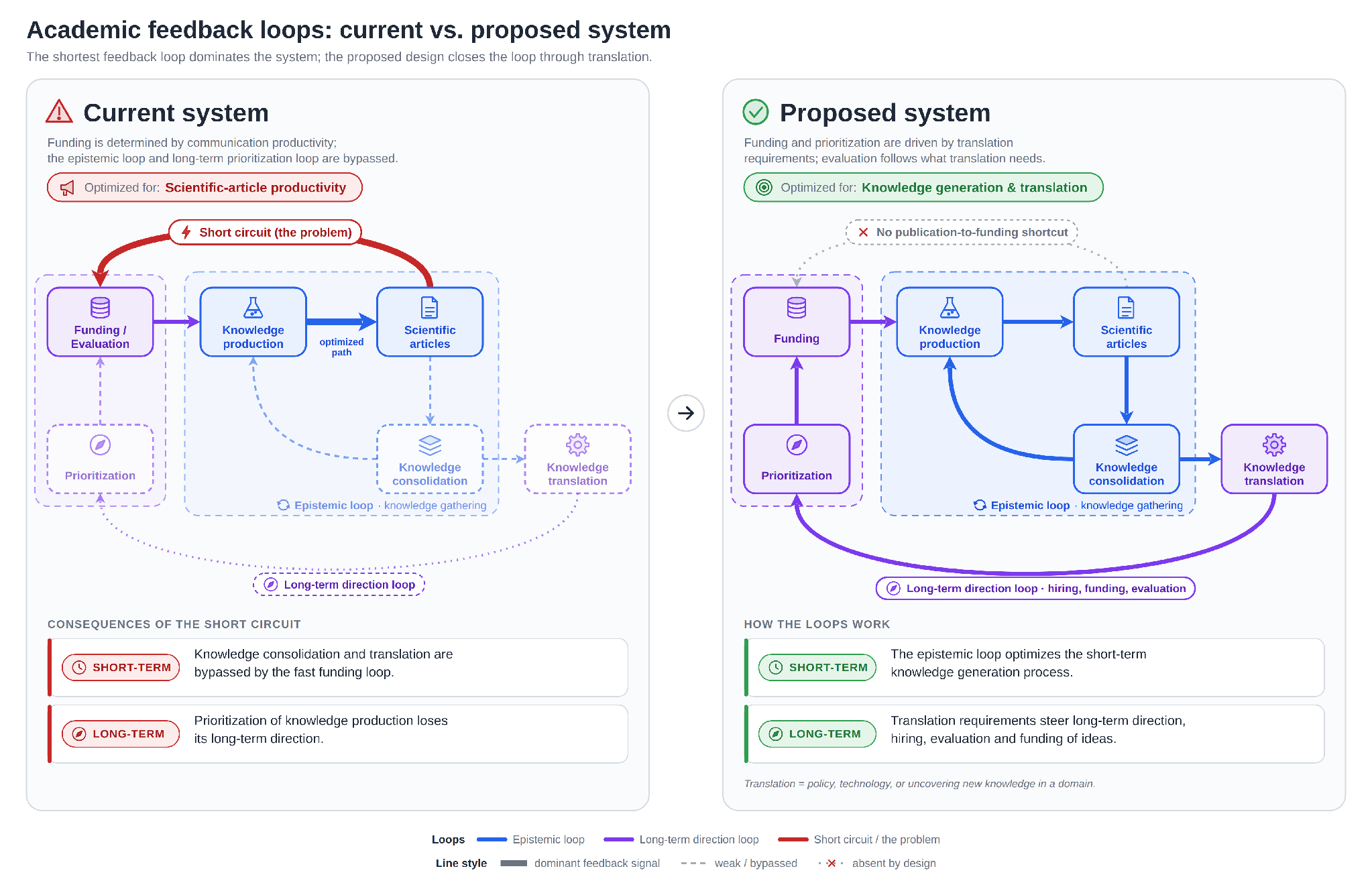
Figure 1. Academic feedback loops in the current and a proposed system.
Left: in the current system, funding and evaluation respond mainly to article output (red “short circuit”), so the epistemic loop and the long-term direction loop are weakened or bypassed (dashed lines).
Right: in the proposed system there is no direct publication-to-funding shortcut. Consolidated knowledge feeds translation (into policy, technology, or new knowledge), which steers prioritisation, hiring, evaluation, and funding. Solid lines: dominant feedback signal; dashed: weak or bypassed; dotted with ×: absent by design.
The Cascade, or, How One Failure Drives the Rest
The conflation of communication and evaluation does not produce a single problem; it generates a cascade. Each failure in the downstream system can be traced, at least partly, back to this root misalignment.
1. Volume Explosion and Cognitive Overload
Globally, publication rates in STEM fields have more than doubled over a twenty-year window, from 1.24 million to 3.34 million science and engineering articles per year between 2003 and 2022, with growth rates accelerating in some subfields (Schneider and Alexander 2023). Scientists try to cope with the increases in volume by reading more papers (Tenopir et al. 2009, 2015), but the increases in reading rates are a fraction of the growth rates of publication (Fig. 2). Additionally, the time spent reading a scientific article has been decreasing over the last decade (Tenopir et al. 2009, 2015), consistent with increases in volume reducing the time spent reading per paper. No individual researcher can meaningfully process this volume.
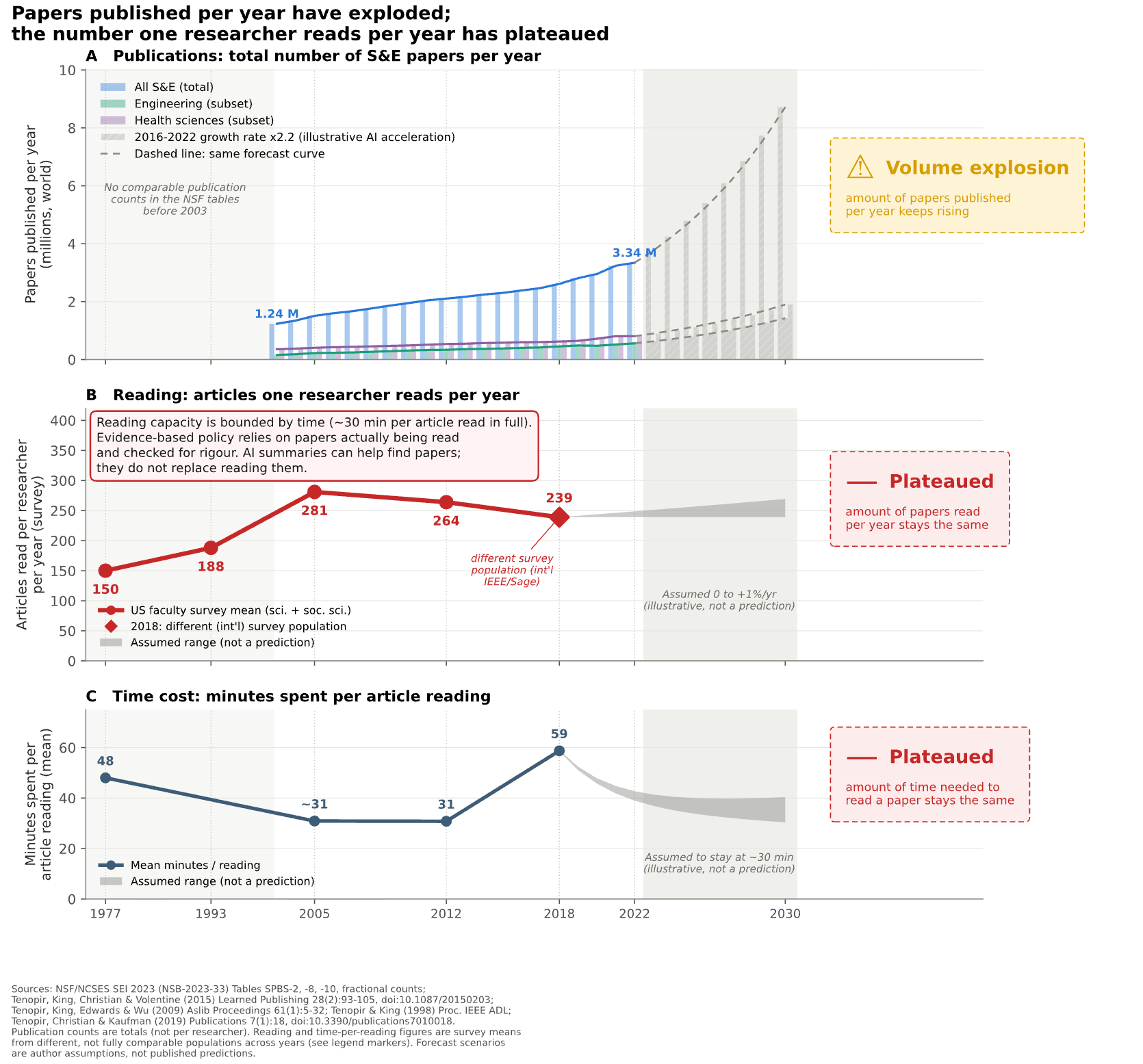
Figure 2. Publication output has grown far faster than what a researcher reads.
(A) Science and engineering articles published worldwide per year, 2003–2022 (NSF/NCSES Science & Engineering Indicators 2023, NSB-2023-33, Tables SPBS-2, -8, -10; fractional counts; engineering and health sciences are subsets of the total). Output rose from 1.24 to 3.34 million articles per year. Hatched bars and dashed lines after 2022 show an illustrative scenario (2016–2022 growth rate × 2.2 to represent AI acceleration), not a forecast.
(B) Mean number of articles read per researcher per year in surveys of US university faculty (1977–2012; Tenopir et al. 2009, 2015) and in an international IEEE/Sage survey (2018, diamond; Tenopir, Christian and Kaufman 2019) that is not directly comparable.
(C) Mean minutes spent per article reading in the same surveys; the 2018 mean (59 min) comes from a strongly right-skewed distribution (median 30 min). Grey bands after the last observation are assumed ranges, not predictions. The time axis is compressed before 2003.
Researchers increasingly rely on summaries of summaries - abstract digests, review articles, algorithmic recommendations - all of which introduce further layers between the scientist and the primary evidence (Brainard 2023; Zakkas et al. 2024). When a scientist's model of their own field is assembled from second-hand synthesis rather than direct engagement with primary evidence, both the quality of new research and the reliability of expert judgement are put at risk (Bawden and Robinson 2009).
The volume explosion also affects corrective mechanisms such as peer review, which has struggled to cope with increasing publication rates. “Reviewer fatigue” has become increasingly common as scientists face the burden of evaluating scientific integrity for an ever-growing volume of articles (Routledge et al. 2025). As a result, it is getting harder to recruit reviewers (Publons 2018; Tropini et al. 2023). Although this effect is also driven by other factors like a lack of reward and recognition for reviewing articles and under-representation of scientists from the Global South, the increase in volume strains an already fragile system (Aczel et al. 2025; Publons 2018).
Finally, increases in volume have a direct effect on the quality of published scientific articles. Fields of science with large numbers of papers see a funneling to well-established ideas and new papers have a low probability of disrupting existing notions (Chu and Evans 2021). This is true both across fields as well as scientists. “Productive scientists”, i.e., scientists who publish large volumes of papers, are less disruptive with their research (Li et al. 2024). As a result, the quality of science suffers (Sarewitz 2016), making it harder for scientists to pick insightful papers amongst the huge volume.
2. The Disincentivization of Replication Studies
A critical component of science is the reproducibility of results. When provided with a scientific article describing a novel finding, other scientists should be able to follow the methodology and obtain the same or similar results as described in the paper. These studies, often called replication studies, where scientists repeat experiments to test if its results hold, are among the most epistemically valuable contributions science can produce.
The importance of replication studies is underscored by how science is typically performed. Novel findings are often hunches that scientists test using small exploratory studies. Although these findings report statistically significant results, they are constrained by the scope of the experiments and need to be rigorously tested in a wide range of conditions (Fig. 3). In the absence of such testing, the probability of the first findings being reproducible is quite low (Ioannidis 2005; Button et al. 2013). In psychology, a landmark study by the Open Science Collaboration found that replication effects were, on average, half the magnitude of the original findings, and only 36% of replications reached the statistical significance reported in the original papers (Open Science Collaboration 2015). A lack of reproducibility also exists in machine learning (Semmelrock et al. 2025), social sciences (Camerer et al. 2018), behavioral sciences (Tyner et al. 2026), economics (Camerer et al. 2016), political sciences (Brodeur et al. 2026), preclinical cancer research (Begley and Ellis 2012; Errington et al. 2021) and drug discovery (Prinz et al. 2011). The issue, seen across scientific fields, is often dubbed the “reproducibility/replication crisis” (Baker 2016).
Despite the importance of replication studies, they are among the least rewarding to conduct under the current incentive structure (Fig. 5) (Munafò et al. 2020). They are rarely published in high-impact journals; they add nothing to a researcher's novelty profile; and they are time-consuming relative to career return (Nosek et al. 2012). The result is a scientific record with far less internal checking than a healthy knowledge system requires.
The replication crisis - the finding that a significant proportion of published results in psychology, medicine, and other fields cannot be reproduced - is in part a product of this structural disincentive. It is also a direct result of the central failure, i.e., using the communication of “novel results” as an evaluation measure and thereby disincentivizing important but routine reproducibility research.
3. The Disappearance of Null Results
The evaluation-driven incentive structure does not merely reward novel/publishable results - it actively suppresses entire categories of scientific information (Nosek et al. 2012). Null results are findings showing that a hypothesis was not supported, or that an intervention did not work, or that two variables are not correlated as expected. These are genuinely important. They define the boundaries of what is and is not true (Fig. 3). They prevent other researchers from wasting resources pursuing dead ends. In a well-designed knowledge system, null results would be communicated systematically alongside positive findings.
In the current system, they are not. The asymmetry is stark. Positive results, which confirm a hypothesis or demonstrate an effect, are publishable, whereas null results are typically not published or face considerably higher barriers to publication (Mervis 2014). This creates what is sometimes called the file-drawer problem: a large body of negative evidence that exists in the notes and hard drives of researchers around the world but never enters the scientific record (Franco et al. 2014; Rosenthal 1979). The published literature is thus systematically biased toward positive findings in ways that misrepresent the actual state of evidence (Fanelli 2010; Franco et al. 2014; Scheel et al. 2021) .
The incentives against publishing null results directly influence the quality and rigor of science. Less rigorous research designs and analysis methods, which can often be executed in short timescales, also have higher false positive rates (Simmons et al. 2011; Nuzzo 2014). The search for positive results naturally selects for “bad science” over slow, rigorous science and directly feeds into the reproducibility crisis (Smaldino and McElreath 2016).
When systematic reviews and meta-analyses - the synthesis products that most directly inform clinical guidelines and public policy - draw on biased literature, their conclusions are likely biased as well (Ioannidis 2016). Policymakers acting on scientific consensus are actually drawing from a distorted picture of what science has established (Fig. 3) (Turner et al. 2008; Sena et al. 2010). The distortion is not the result of intentional fraud - it is baked into the structural incentives of the system (Nosek et al. 2012).
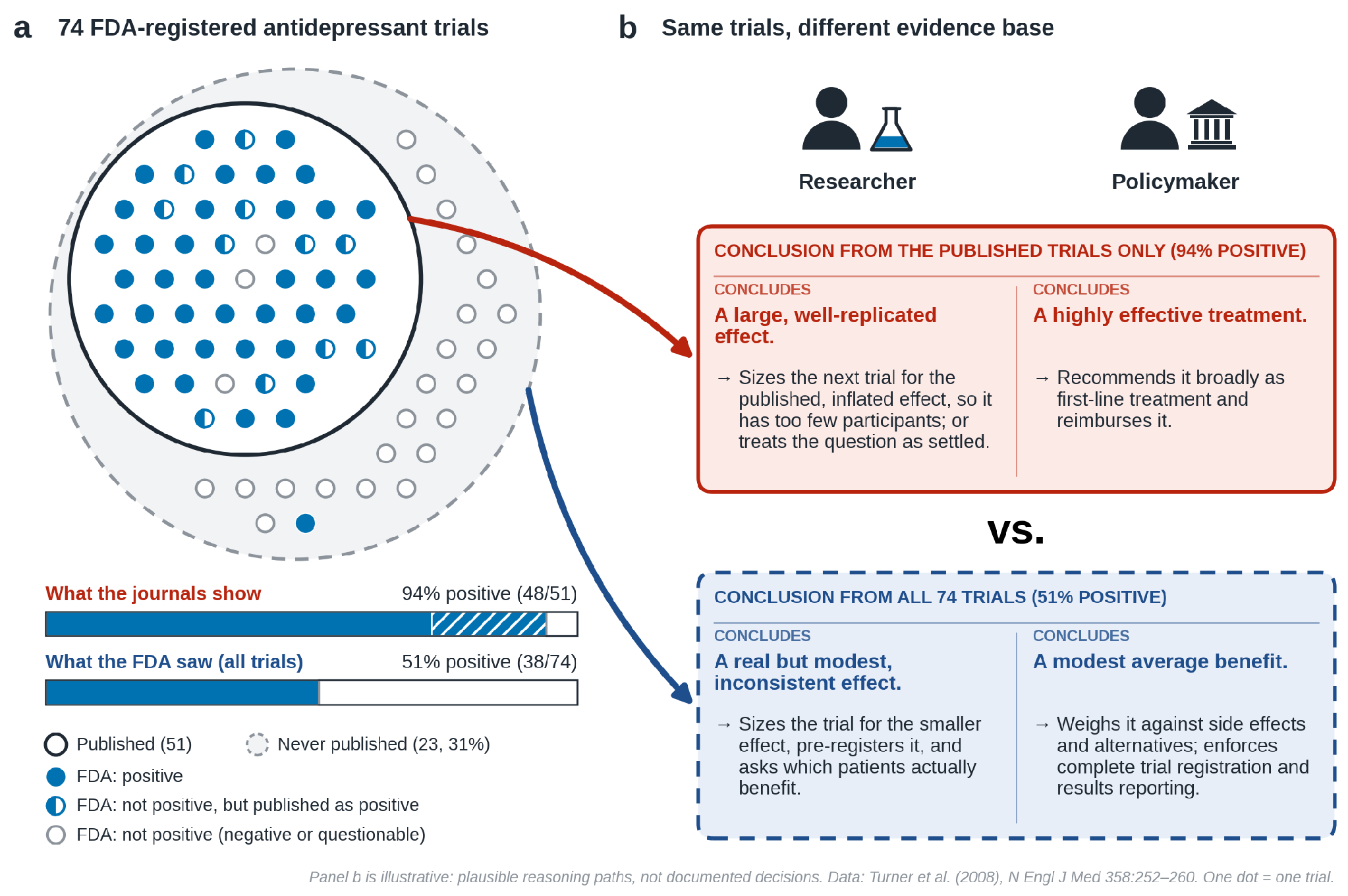
Figure 3. Publication bias changes what the evidence appears to show.
(a) All 74 antidepressant trials registered with the US Food and Drug Administration (FDA) for 12 drugs (Turner et al. 2008); one dot per trial. The FDA judged 38 trials positive and 36 negative or questionable. Of the latter, 22 were never published and 11 were published as positive, so 48 of the 51 published trials (94%) appear positive, against 38 of 74 (51%) in the complete FDA record.
(b) What a researcher and a policymaker would plausibly conclude from the published trials alone versus all trials. The decision paths are illustrative, not documented decisions.
4. Labour Precarity and Selection for the Wrong Traits
The pipeline from PhD to permanent academic position is long, narrow, and uncertain (Fig. 4). In most research-intensive countries, the number of PhD graduates and postdoctoral researchers far exceeds the number of permanent academic posts available (Larson et al. 2014). Thus, most researchers who enter the system will leave it before securing stable employment, creating a protracted window - of often a decade or more - during which career survival depends on producing visible, publishable, and citable outputs (The Scientific Century 2010; Nordling 2023; Tripodi et al. 2025; Hirsch 2005; Rice et al. 2020; McKiernan et al. 2019).
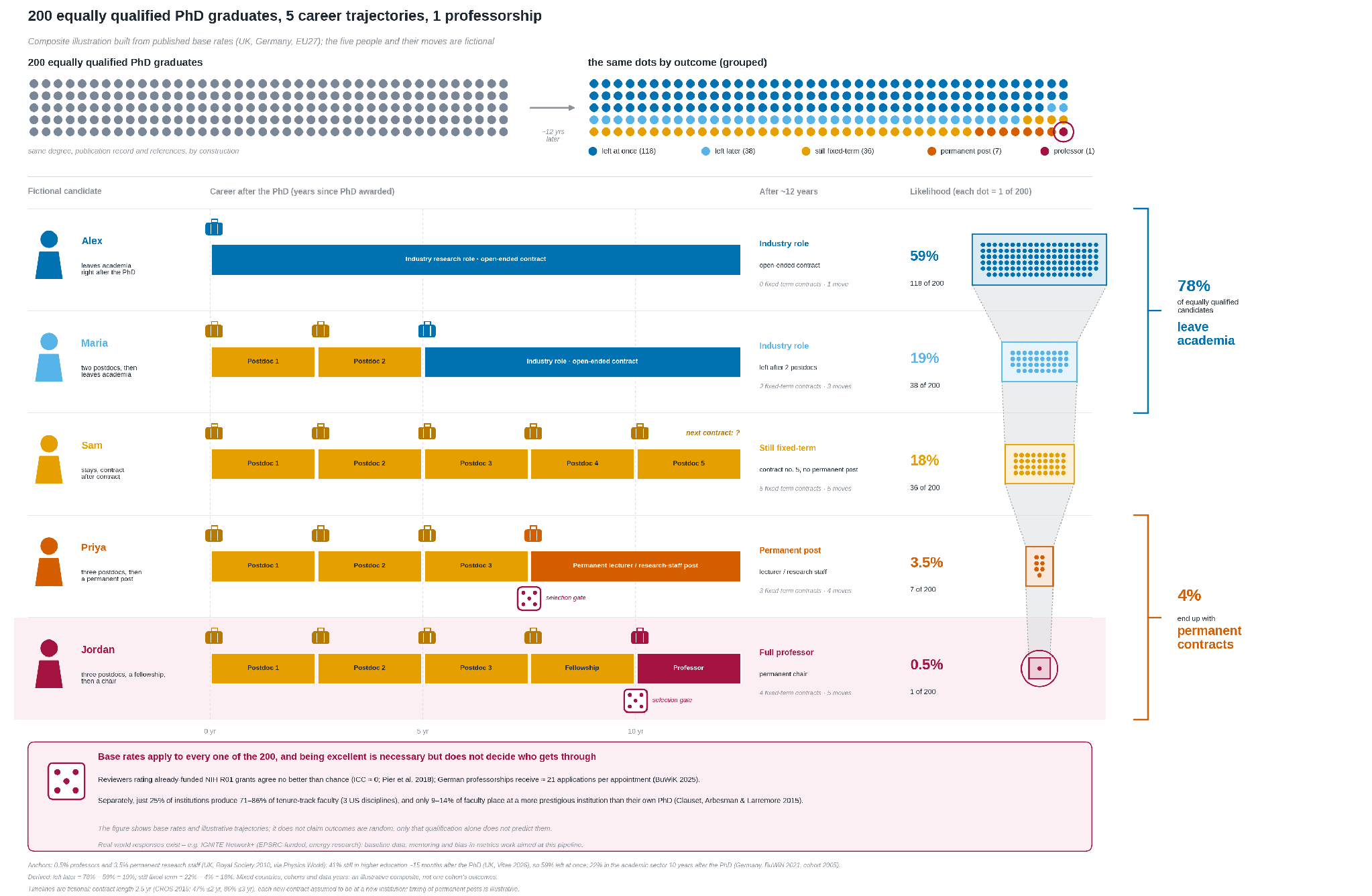
Figure 4. Two hundred equally qualified PhD graduates, five career trajectories, one professorship.
Composite illustration built from published base rates: about 0.5% of UK science PhD graduates become professors and 3.5% obtain other permanent research posts (The Scientific Century 2010). The five candidates and their timelines are fictional, and the base rates mix countries and cohorts. Leaving academia is not necessarily a failure, but the post-PhD route to a permanent post is narrow.
Prioritizing productivity, i.e., publishing scientific articles that are novel and citable, has adverse effects on the types of research directions scientists take. Long-horizon projects are rationally avoided while safe hypotheses and rapid publication cycles are favoured over intellectual risk-taking (Veugelers et al. 2022; Franzoni et al. 2022). Curiosity-driven exploration, methodological innovation, and genuine intellectual risk-taking are penalised by the structure within which careers play out.
There is also a selection effect: the conditions that make for a successful academic career - institutional pedigree (Fleming et al. 2023), early publication or funding luck (Tregellas et al. 2018), tolerance for sustained precarity (Hemprich-Bennett et al. 2021) - are not the same as the conditions that make for excellent scientific thinking (Weber 2025). This is compounded by Matthew effect (cumulative advantage): applicants who only just make it past the funding threshold, i.e., those who have early funding luck, are more likely to obtain subsequent funding than those who were just below the threshold (Traag et al. 2025). The scientific workforce that emerges from this filter is not representative of the full distribution of scientific talent, and the knowledge system it produces reflects that narrowing (Fig. 5) (Smaldino and McElreath 2016).
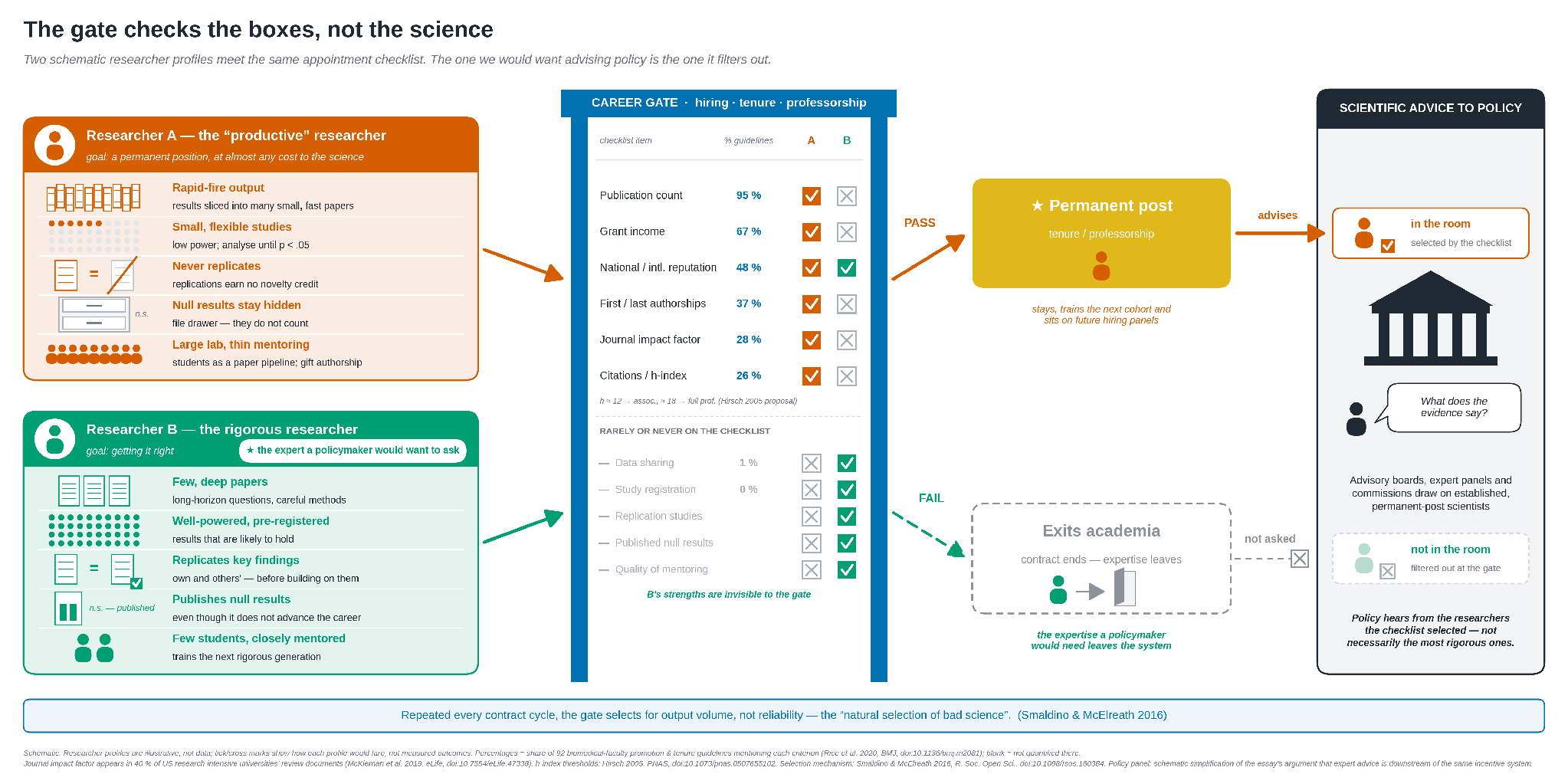
Figure 5. The career gate checks the boxes, not the science.
Two schematic researcher profiles meet the same appointment checklist. Percentages give the share of promotion and tenure guidelines from 92 biomedical faculties that mention each criterion (Rice et al. 2020): peer-reviewed publications 95%, grant income 67%, national or international reputation 48%, authorship position 37%, journal impact factor 28%, citations 26%, data sharing 1%, study registration 0%. Replication studies, published null results, and mentoring quality were not quantified. The journal impact factor appears in 40% of review documents at US research-intensive universities (McKiernan et al. 2019); h-index thresholds follow (Hirsch 2005). The “productive” profile (A) passes the gate and later advises policy; the rigorous profile (B) is filtered out. Profiles and outcomes are illustrative, not measured; the selection mechanism follows Smaldino and McElreath (2016).
5. AI is an Accelerant
The cost of producing a plausible scientific paper - one that looks, structurally and linguistically, like a scientific paper - has dropped sharply. Writing introductions, synthesising existing literature, producing discussion sections that contextualise findings: these are precisely the tasks that large language models (LLMs) perform well, but generate the least epistemic value in the current paper format. The result is a further acceleration of the volume problem (Fig. 6). The bottleneck on paper production has shifted from the effort of writing to the effort of conducting research, and in subfields where data generation is itself cheap, that constraint is also weakening (De Angelis et al. 2023; Suchak et al. 2025).
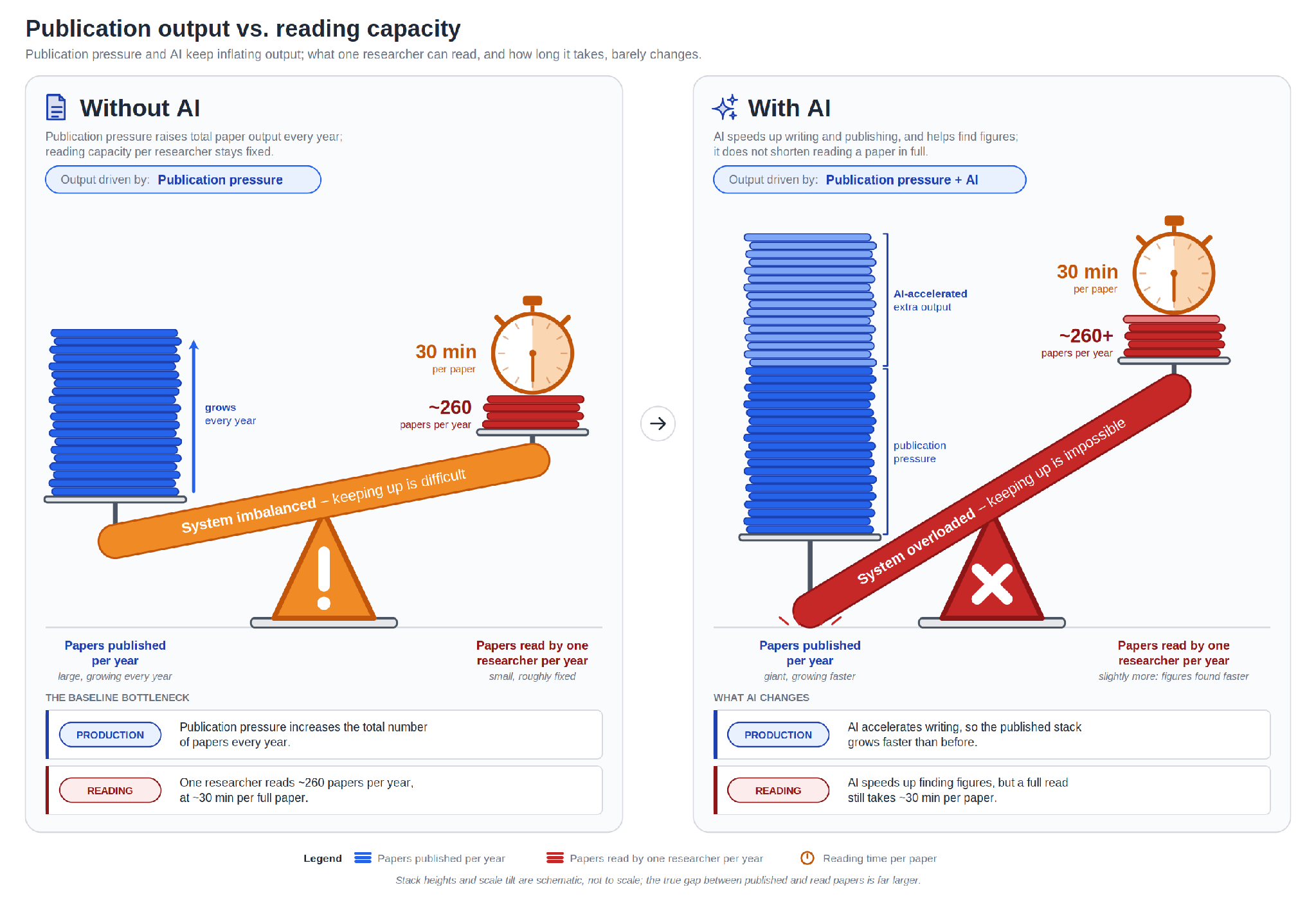
Figure 6. Publication output versus reading capacity, without and with generative AI.
Publication pressure increases the number of papers published each year, while one researcher reads roughly 260 papers a year at about 30 minutes per paper (Tenopir et al. 2015). Generative AI accelerates writing, and therefore output, but does not shorten the time needed to read a paper in full. Stack heights and tilt are not to scale; the real gap between papers published and papers read is far larger (see Fig. 2).
Paper mills - commercial operations that produce fraudulent or low-quality academic papers for purchase - already existed before generative AI (Parker et al. 2024; Kincaid 2023). AI tools have dramatically lowered their production costs while simultaneously improving the quality of generated papers (Sousa et al. 2026). The detection of AI-generated content in the scientific literature remains technically difficult, especially as models improve and as the line between AI-assisted and AI-generated writing becomes harder to locate in practice (Weber-Wulff et al. 2023). Publishers, journal editors, and peer reviewers are not equipped to handle the volume and sophistication of AI-assisted submissions that the system is now receiving (Liverpool 2023).
There is a second, and somewhat more subtle effect. AI tools are being used defensively by working scientists, often to cope with the volume of literature that is impossible to read in full, to generate first drafts of writing, or to summarise papers too numerous to engage with directly (Hilkenmeier et al. 2025). This is rational behaviour under the constraints of the current system. But it further increases the distance between scientists and primary evidence, and further homogenises the intellectual inputs to research (Hao et al. 2026). When researchers form their models of their field partly from AI-generated summaries of AI-assisted papers, the epistemic feedback loops that a healthy knowledge system depends on are weakened in ways that are difficult to measure and hard to reverse (Messeri and Crockett 2024).
Why the System Does Not Fix Itself
The failures described above are not new. The perverse incentives of publish-or-perish have been a subject of commentary for at least five decades (Lofthouse 1974; Noble 1989; Seglen 1997). The problems with impact factor as a quality proxy were clear long before the San Francisco Declaration on Research Assessment formalised that consensus in 2012. Why, given broad awareness of these problems, has the system not reformed?
The answer lies in a combination of structural inertia and coordination failure. A small number of large commercial publishers (Elsevier, Springer Nature, Wiley, etc.) collectively publish the majority of peer-reviewed scientific literature (Hanson et al. 2024; Larivière et al. 2015). Their business model has historically been, and in many cases remains, based on charging universities for access to the research that those universities' own employees produce, pay to publish, and peer-review for free. Elsevier's parent company RELX reported an adjusted operating margin of 38.1% for its Scientific, Technical & Medical division in 2025 (RELX 2026). Publishers have limited commercial incentive to reform a system that generates substantial revenue precisely because it is expensive, restricted, and prestige-stratified.
Researchers recognise the problems but operate within an evaluation framework that they did not design and cannot individually change. Publishing in high-impact journals, accumulating citations, and building a record of prolific output remain the prerequisites for career advancement at most institutions (Tregellas et al. 2018; Rice et al. 2020; McKiernan et al. 2019; Hirsch 2005; Tripodi et al. 2025). A researcher who unilaterally opts out of these metrics, who spends years on a replication study and publishes in an open-access venue of modest prestige, is not reforming the system; they are disadvantaging themselves within it (Fig. 5).
Policymakers who might be in a position to change these incentives lack structured accounts of the system, and face many other priorities they may deem more urgent. Thus, the translation of expert dissatisfaction into legislative or regulatory action has been minimal relative to the scale of the problem. This may eventually prove self-defeating, as a degraded evidence base silently undermines every other priority on their agenda that depends on science being right.
An infamous example of inadequate policy is a 2024 German government reform attempting to tackle the fixed-contract precarity in academia (Fig. 4). German law dictates that post-PhD researchers at academic institutions can only be employed under fixed-term contracts for a maximum of 6 years. When those 6 years pass, the employer is forced to choose between offering the researcher a permanent position (often not available) or letting them go. In reality, this marks the end of the academic career for many talented researchers simply because the institution had no open permanent positions.
The cabinet approved a draft cutting this time limit from 6 years to 4 (with 2 further years allowed only with a binding permanent-position commitment), justified by the ministry as giving early-career researchers more clarity on their prospects. They failed, however, to address the availability issue of permanent positions, leaving institutions with little choice but to let their staff go regardless of performance. Consequently, academic unions and early-career advocates rejected the "clarity" reasoning, arguing it merely compressed an already punishing timeline. The draft stalled amid the 2025 change in government, and the proposal under consideration as of mid-2026 retains the original six-year limit - but the episode illustrates how even a policy response to a well-documented problem in science can stall for years, while the underlying incentive structure remains untouched.
What the Science-to-Policy Pipeline Loses
The foregoing analysis might appear to be an internal critique of academic practice; it is not. Each of the failures described has direct consequences for the reliability of scientific input into governance (Fig. 7).
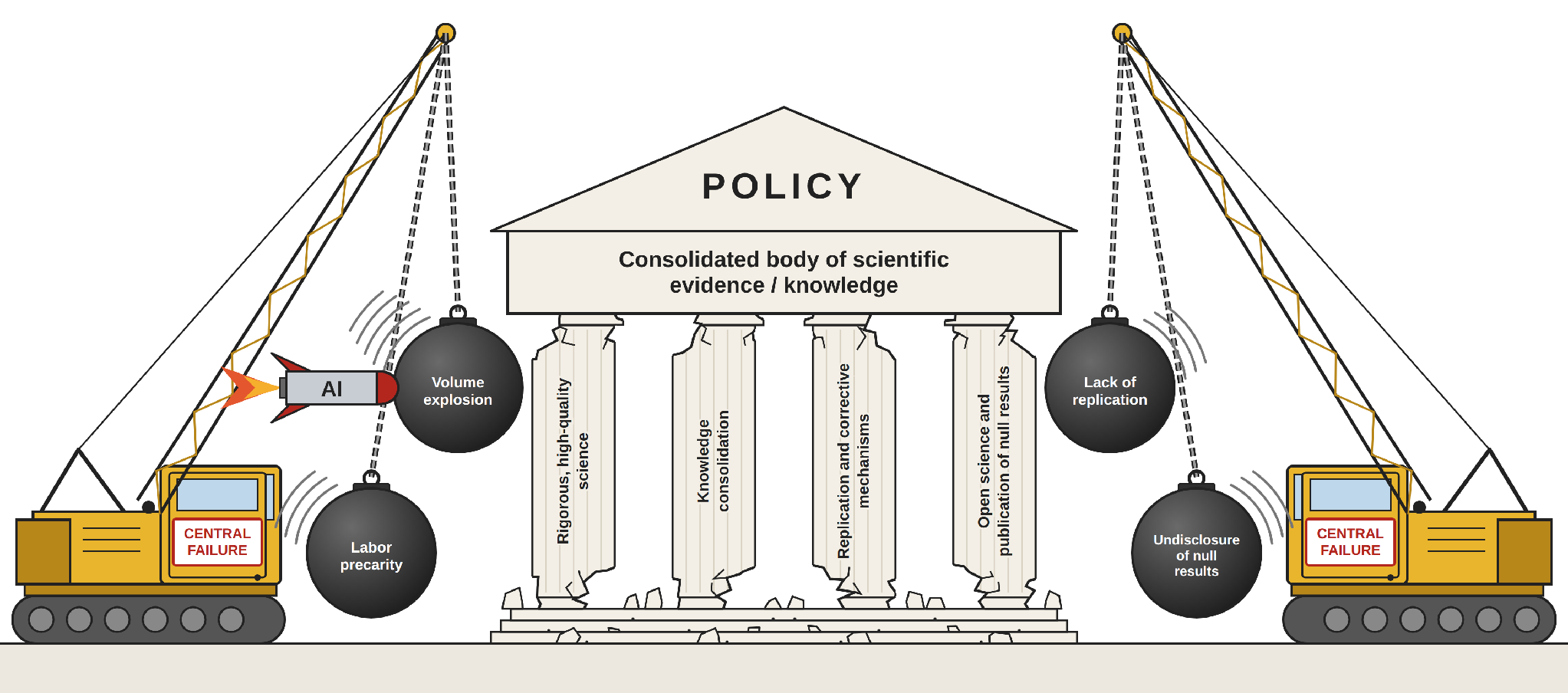
Figure 7. The central failure undermines the pillars on which evidence-informed policy rests.
Driven by the conflation of communication and evaluation (the '”central failure”), volume explosion (accelerated by AI), labour precarity, lack of replication, and non-disclosure of null results erode the pillars that hold up the consolidated body of scientific evidence used in policy: rigorous, high-quality science; knowledge consolidation; replication and corrective mechanisms; and open science with publication of null results.
The most direct mechanism is through systematic reviews and meta-analyses: the synthesis that most directly informs clinical guidelines and regulatory decisions (Haddaway and Pullin 2014; Bangdiwala 2024). When the literature researchers synthesize is biased toward positive findings, inflated by unreplicated results, and skewed by the selective reporting, the policy conclusions derived from that synthesis are unreliable in ways that are difficult for non-specialists to detect (Fig. 3). A regulatory decision grounded in an unreplicated finding is fragile in ways that only become visible when the decision has already been made.
The problem compounds with expert consensus. When policymakers commission scientific advice, they are accessing the judgments of researchers shaped by the same incentive-distorted knowledge system (Fig. 3; Fig 5). Expert opinion is downstream of biased literature.
The cumulative effect is an erosion of public trust (Coyle and Kenny 2025; West and Bergstrom 2021). The replication crisis and several high-profile cases of scientific fraud have received extensive media coverage (“Retractions by Nobel Prize Winners” 2024; Marcus 2026). When amplified by actors with vested interests in undermining scientific authority (on questions such as climate change, vaccine safety, or pharmaceutical risk) the credibility of scientific expertise in public discourse is under active and sustained threat.
Democracies that cannot sustain public trust in scientific knowledge are less able to mobilise collective responses to risks that science identifies. This is a governance vulnerability of the first order.
The Reform Horizon
Reform efforts in scientific publishing have not been absent, but are partial, slow, and insufficiently coordinated. And when reform has been implemented, it has not been communicated with the public - there is mounting evidence to show that public trust in science increases when reform efforts are communicated well (Methner et al. 2023; Evans and Fetterman 2026). It is worth surveying what has been tried, where it has worked, and what the structural limits are.
Open access has been the most prominent reform movement of the past two decades, and it has achieved real and serious progress. The proportion of peer-reviewed scientific literature available without paywalls has grown substantially; major public funders in the UK, Europe, and the United States have introduced open access mandates for research they fund. Open access addresses the access problem - who can read the literature - but it does not directly address the incentive problem. A system in which all journals are open access but prestige hierarchies, citation metrics, and publication-count evaluations remain unchanged is not fundamentally a different system.
Preprints have become an important part of the research landscape in physics, mathematics, and, since the pandemic, biology and medicine (Hoy 2020). Posting a preprint, which is a version of a paper before it has undergone peer review, makes findings available immediately, without waiting for the publication process. Preprints accelerated the dissemination of COVID-19 research at a critical moment (Fraser et al. 2021). But they also demonstrated the risks of a system without editorial gatekeeping: preprints were widely cited in policy and public discourse before peer review had identified their limitations and, in several prominent cases, consequential policy decisions were influenced by findings that subsequent review found to be unreliable (O’Mathúna 2022; Perlis et al. 2023).
Registered reports represent a more structurally significant innovation (Nosek et al. 2018). In a registered report, a journal commits to publishing a study based on the quality of its design and question - before the data have been collected. This removes publication bias directly: whether the results turn out to be positive or null is irrelevant to the publication decision, which was made on the merits of the design. Registered reports are now offered by more than 300 journals, and evidence suggests they produce higher methodological quality and lower rates of confirmed hypotheses than standard publications. This is a sign that they are capturing a less biased picture of what research actually finds (Liu et al. 2026; Soderberg et al. 2021; Scheel et al. 2021). Their adoption remains, however, a small fraction of total scientific publishing.
A more fundamental rethinking of the architecture of scientific communication has been proposed to directly address the redundancies built into current paper formats, the invisibility of replication, the static nature of published claims, and the severing of findings from subsequent evidence. Replacing the paper as the fundamental unit of scientific knowledge with structured knowledge graphs - a network of unique nodes representing methods, empirical results, and theoretical claims connected by evidence relationships - where replication adds weight to existing nodes, peer review becomes continuous and traceable, and retraction propagates automatically through dependent claims, offers promise (Natesan and Balakrishnan 2026).
Antecedents exist: the Open Research Knowledge Graph (ORKG) decomposes papers into structured components and generates comparative summaries across contributed studies, though the project relies on manual curation by researchers, for which the current incentive system offers little reward (Jaradeh et al. 2019).
A reform of this magnitude comes with significant challenges. Converting centuries of closed, unstructured literature is a formidable legal, technical, and costly undertaking. Distributed infrastructure introduces governance problems, including GDPR compliance and the risk that apparent decentralisation simply hands control to whoever maintains the dominant client. Most critically, a knowledge graph in which replication and curation work are invisible to hiring committees and funding bodies does not solve the incentive problem; it merely relocates it.
None of these objections are fatal to the reform direction, but they do point to the requirement for deliberate institutional design, not just technical innovation. The history of scientific publishing reform suggests that purely technical solutions, however elegant, are insufficient without aligned changes in how research is evaluated and rewarded.
Policy Recommendations
Scientific publishing reform has historically been treated as a matter for the research community and for voluntary action by journals and publishers. Given the structural incentives described above, voluntary action is insufficient. The failures that the system exhibits - resistance to self-correction, concentration among a small number of commercial publishers, misaligned evaluation metrics - are governance problems, and they require governance solutions. Public funders, research assessment bodies, and governments all have levers that have not yet been meaningfully deployed (Fig. 8).
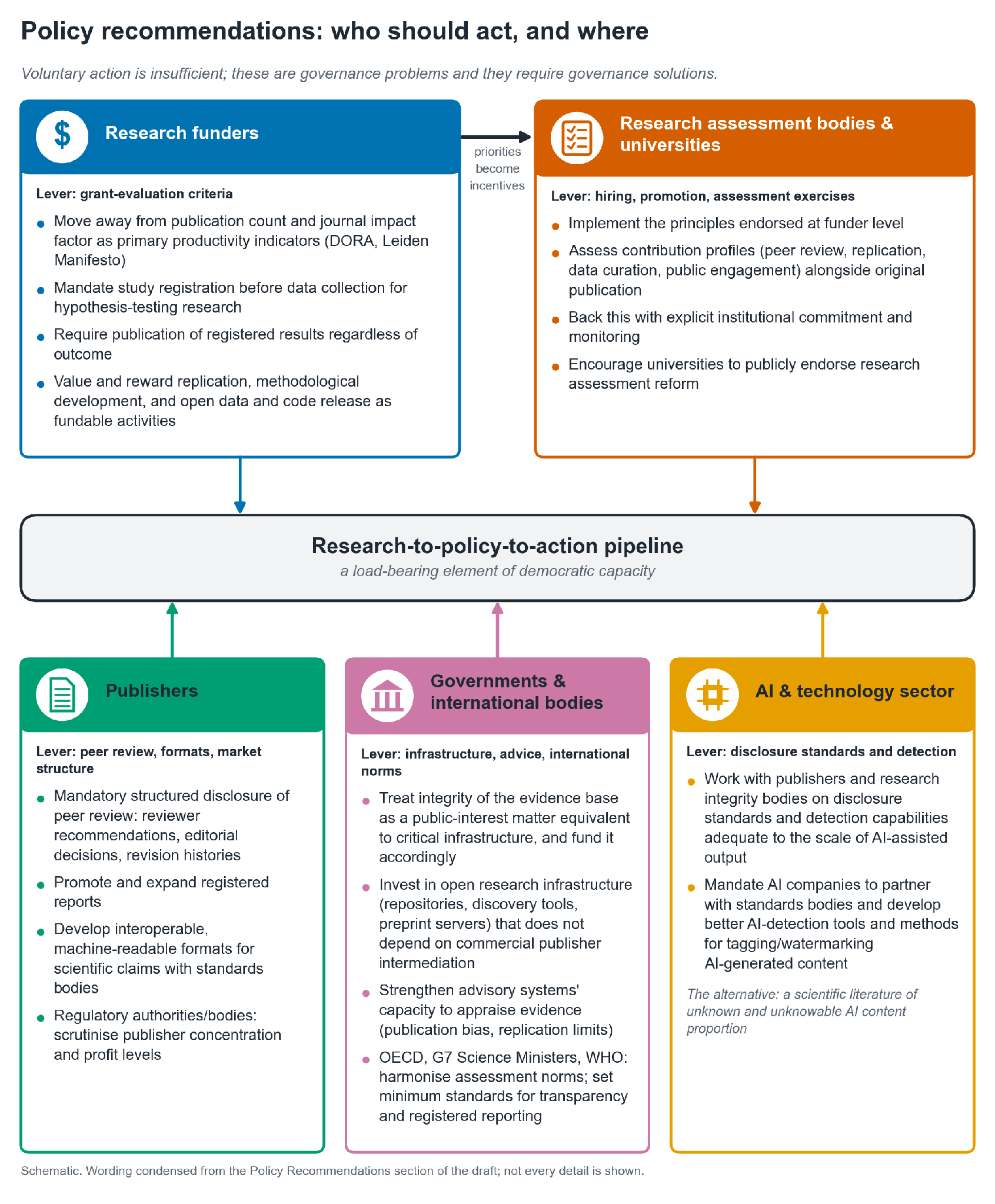
Figure 8. Policy recommendations: who should act, and where.
Research funders set grant-evaluation criteria, whose priorities become researcher incentives through research assessment bodies and universities. Together with publishers, governments and international bodies, and the AI and technology sector, they act on the research-to-policy-to-action pipeline. Wording condensed from the Policy Recommendations section; schematic.
1. For Research Funders
Public and philanthropic funders control the most direct lever in the system: the criteria by which they evaluate grant applications. A sustained shift away from publication count and journal impact factor as primary productivity indicators - already endorsed in principle by the San Francisco Declaration on Research Assessment and the related Leiden Manifesto for Research Metrics (Hicks et al. 2015) but inconsistently implemented - would change researcher behaviour at the level of individual career calculation. Mandating the registration of studies prior to data collection as a condition of funding for hypothesis-testing research, and requiring the publication of registered results regardless of outcome, would directly address publication bias. Funders should also explicitly value and reward replication work, methodological development, and open data and code release as fundable activities.
2. For Research Assessment Bodies and Universities
Research assessment exercises, like the UK's Research Excellence Framework, analogues in other countries, and the institutional processes that translate them into hiring and promotion decisions, are the intermediaries through which funder priorities become researcher incentives (Pinar and Unlu 2020). These bodies have an obligation to implement the principles endorsed at the level of funding policy. Assessing researchers on contribution profiles that include peer review work, replication studies, data curation, and public engagement alongside, rather than as a secondary category to, original publication requires explicit institutional commitment and monitoring. Universities that publicly endorse research assessment reform while continuing to operate internal promotion processes based on traditional metrics are not contributing to change - they are performing it.
3. For Publishers
Publishers, commercial and not-for-profit, academic and trade, should adopt mandatory structured disclosure of peer review processes, including information about reviewer recommendations, editorial decisions, revision histories, and corrections made to citations/models following paper retractions (Studd et al. 2026). Journals that operate registered report programmes should actively promote and expand them. Major publishers should work with standards bodies (groups that develop consensus-based, generalizable best practices) to develop interoperable, machine-readable formats for scientific claims that would facilitate knowledge graph approaches and enable better automated synthesis. Such methods would also allow for the removal of retracted studies from the bibliographies of other papers. The concentration of the publishing market and the profit levels it has sustained are not compatible with the public interest function that the scientific literature is supposed to serve; regulatory scrutiny of this sector is overdue and should be taken seriously by competent authorities.
4. For Governments and International Bodies
National research councils and science ministries should treat the integrity of the scientific evidence base as a matter of public interest equivalent to other forms of critical infrastructure and fund it accordingly. This includes sustained investment in open research infrastructure like repositories, discovery tools, and preprint servers that do not depend on commercial publisher intermediation. It also includes investment in the capacity of government scientific advisory systems to critically appraise the evidence they receive, including systematic awareness of publication bias and replication limitations and transparency in how they convert scientific evidence to policy recommendation.
Internationally, the Organisation for Economic Co-operation and Development, the G7 Science and Technology Ministers, and the World Health Organisation each have roles in harmonising research assessment norms and establishing minimum standards for scientific transparency. The lack of coordination between national research assessment systems creates arbitrage opportunities that undermine reform: if one country's universities shift to contribution-based assessment while others do not, researchers face career incentives to move toward less-reformed systems. International minimum standards for research transparency and registered reporting would reduce this risk.
5. For the AI and Technology Sector
The deployment of generative AI tools in scientific writing and literature synthesis is happening at a pace that outstrips the capacity of the publishing and research community to respond (Dwivedi et al. 2026; Lund et al. 2023). AI developers have a responsibility to work with publishers and research integrity bodies to develop disclosure standards and detection capabilities adequate to the scale of AI-assisted scientific output. Examples include mandatory requirements for AI companies to partner with standards bodies and develop better AI-detection tools, tagging/watermarking AI-generated content, and so on. The alternative - a scientific literature of unknown and unknowable AI content proportion - is incompatible with the epistemic standards that policy use of science requires.
These problems in scientific publishing are neither new nor obscure. They are well-documented, broadly recognised within the research community, and structurally entrenched (Khanduja 2025; Buck and Litvak 2026; Hausmann et al. 2016). What has been insufficiently appreciated, at least in public and policy discourse, is how they directly affect democratic governance. A scientific knowledge system that is biased toward positive findings, penalises long-horizon work, cannot integrate replication into its incentive structure, and is currently being stress-tested by AI-generated volume is not an abstract professional problem. It is a degradation of the epistemic infrastructure that capable governance depends on.
The AI moment is, paradoxically, also an opportunity. The pressures that generative AI places on the current system are forcing a conversation about its foundations that has been deferred for decades. Publishers are being asked, more insistently than before, to address AI disclosure and integrity (Frangou et al. 2025). Research funders are under pressure to clarify what they value.
The stakes are not academic. Democracies that cannot produce reliable scientific knowledge, or that cannot translate what they know into coherent policy, are less resilient and less effective than those that can. The research-to-policy-to-action pipeline is a load-bearing element of democratic capacity (Fig. 8). Repairing it is not a matter for journals and academic departments alone; it is a matter of public governance, and it should be treated as such.
References
Aczel, Balazs, Ann-Sophie Barwich, Amanda B. Diekman, et al. 2025. “The Present and Future of Peer Review: Ideas, Interventions, and Evidence.” Proceedings of the National Academy of Sciences 122 (5): e2401232121. https://doi.org/10.1073/pnas.2401232121.
American Society for Cell Biology. 2012. “San Francisco Declaration on Research Assessment (DORA).” DORA. https://sfdora.org/read/.
Baker, Monya. 2016. “1,500 Scientists Lift the Lid on Reproducibility.” Nature 533 (7604): 452–54. https://doi.org/10.1038/533452a.
Bangdiwala, Shrikant I. 2024. “The Importance of Systematic Reviews.” International Journal of Injury Control and Safety Promotion 31 (3): 347–49. https://doi.org/10.1080/17457300.2024.2388484.
Bawden, David, and Lyn Robinson. 2009. “The Dark Side of Information: Overload, Anxiety and Other Paradoxes and Pathologies.” Journal of Information Science 35 (2): 180–91. https://doi.org/10.1177/0165551508095781.
Begley, C. Glenn, and Lee M. Ellis. 2012. “Raise Standards for Preclinical Cancer Research.” Nature 483 (7391): 531–33. https://doi.org/10.1038/483531a.
Brainard, Jeffrey. 2023. “Can AI Help Scientists Surf a Paper Flood?” Science 382 (6673): 866–67. https://doi.org/10.1126/science.adn0184.
Brodeur, Abel, Derek Mikola, Nikolai Cook, et al. 2026. “Reproducibility and Robustness of Economics and Political Science Research.” Nature 652 (8108): 151–56. https://doi.org/10.1038/s41586-026-10251-x.
Buck, Stuart, and Paul Litvak. 2026. “We Can Create the Future of Science Right Now.” June 8. https://newsletter.goodscienceproject.org/p/we-can-create-the-future-of-science.
Camerer, Colin F., Anna Dreber, Eskil Forsell, et al. 2016. “Evaluating Replicability of Laboratory Experiments in Economics.” Science 351 (6280): 1433–36. https://doi.org/10.1126/science.aaf0918.
Camerer, Colin F., Anna Dreber, Felix Holzmeister, et al. 2018. “Evaluating the Replicability of Social Science Experiments in Nature and Science between 2010 and 2015.” Nature Human Behaviour 2 (9): 637–44. https://doi.org/10.1038/s41562-018-0399-z.
Chu, Johan S. G., and James A. Evans. 2021. “Slowed Canonical Progress in Large Fields of Science.” Proceedings of the National Academy of Sciences 118 (41): e2021636118. https://doi.org/10.1073/pnas.2021636118.
Coyle, Diane, and Michael Kenny. 2025. “How to Get Science Back into Policymaking.” Nature 648 (8093): 275–77. https://doi.org/10.1038/d41586-025-03978-6.
De Angelis, Luigi, Francesco Baglivo, Guglielmo Arzilli, et al. 2023. “ChatGPT and the Rise of Large Language Models: The New AI-Driven Infodemic Threat in Public Health.” Frontiers in Public Health 11 (April). https://doi.org/10.3389/fpubh.2023.1166120.
Dwivedi, Yogesh K., Tegwen Malik, Laurie Hughes, and Mousa Ahmed Albashrawi. 2026. “Scholarly Discourse on GenAI’s Impact on Academic Publishing.” Journal of Computer Information Systems 66 (5): 661–76. https://doi.org/10.1080/08874417.2024.2435386.
Edler, Jakob, Maria Karaulova, and Katharine Barker. 2022. “Understanding Conceptual Impact of Scientific Knowledge on Policy: The Role of Policymaking Conditions.” Minerva 60 (2): 209–33. https://doi.org/10.1007/s11024-022-09459-8.
Errington, Timothy M., Maya Mathur, Courtney K. Soderberg, et al. 2021. “Investigating the Replicability of Preclinical Cancer Biology.” eLife 10 (December): e71601. https://doi.org/10.7554/eLife.71601.
Evans, Nicholas D., and Adam K. Fetterman. 2026. “Shedding Light on Public Perceptions of Scientists Who Engage in Wrongness Admission amidst a Failed Replication.” Public Understanding of Science 35 (3): 276–94. https://doi.org/10.1177/09636625251372820.
Fanelli, Daniele. 2010. “Do Pressures to Publish Increase Scientists’ Bias? An Empirical Support from US States Data.” PLOS ONE 5 (4): e10271. https://doi.org/10.1371/journal.pone.0010271.
Fire, Michael, and Carlos Guestrin. 2019. “Over-Optimization of Academic Publishing Metrics: Observing Goodhart’s Law in Action.” GigaScience 8 (6): giz053. https://doi.org/10.1093/gigascience/giz053.
Fleming, Gabriella Coloyan, Anita D. Patrick, Dustin Grote, et al. 2023. “The Fallacy of ‘There Are No Candidates’: Institutional Pathways of Black/African American and Hispanic/Latino Doctorate Earners.” Journal of Engineering Education 112 (1): 170–94. https://doi.org/10.1002/jee.20491.
Franco, Annie, Neil Malhotra, and Gabor Simonovits. 2014. “Publication Bias in the Social Sciences: Unlocking the File Drawer.” Science 345 (6203): 1502–5. https://doi.org/10.1126/science.1255484.
Frangou, Sophia, Umberto Volpe, and Andrea Fiorillo. 2025. “AI in Scientific Writing and Publishing: A Call for Critical Engagement.” European Psychiatry 68 (1): e98. https://doi.org/10.1192/j.eurpsy.2025.10061.
Franzoni, Chiara, Paula Stephan, and Reinhilde Veugelers. 2022. “Funding Risky Research.” Entrepreneurship and Innovation Policy and the Economy 1 (January): 103–33. https://doi.org/10.1086/719252.
Fraser, Nicholas, Liam Brierley, Gautam Dey, et al. 2021. “The Evolving Role of Preprints in the Dissemination of COVID-19 Research and Their Impact on the Science Communication Landscape.” PLOS Biology 19 (4): e3000959. https://doi.org/10.1371/journal.pbio.3000959.
Garde, Damian, and Jonathan Saltzman. 2020. “The Story of mRNA: How a Once-Dismissed Idea Became a Leading Technology in the Covid Vaccine Race.” STAT, November 10. https://www.statnews.com/2020/11/10/the-story-of-mrna-how-a-once-dismissed-idea-became-a-leading-technology-in-the-covid-vaccine-race/.
Haddaway, Neal R., and Andrew S. Pullin. 2014. “The Policy Role of Systematic Reviews: Past, Present and Future.” Springer Science Reviews 2 (1–2): 179–83. https://doi.org/10.1007/s40362-014-0023-1.
Hanson, Mark A., Pablo Gómez Barreiro, Paolo Crosetto, and Dan Brockington. 2024. “The Strain on Scientific Publishing.” Quantitative Science Studies 5 (4): 823–43. https://doi.org/10.1162/qss_a_00327.
Hao, Qianyue, Fengli Xu, Yong Li, and James Evans. 2026. “Artificial Intelligence Tools Expand Scientists’ Impact but Contract Science’s Focus.” Nature 649 (8099): 1237–43. https://doi.org/10.1038/s41586-025-09922-y.
Hausmann, Laura, Sean P. Murphy, and the Publication Committee of the International Society for Neurochemistry (ISN). 2016. “The Challenges for Scientific Publishing, 60 Years On.” Journal of Neurochemistry 139 (S2): 280–87. https://doi.org/10.1111/jnc.13550.
Haustein, Stefanie, and Vincent Larivière. 2015. “The Use of Bibliometrics for Assessing Research: Possibilities, Limitations and Adverse Effects.” In Incentives and Performance: Governance of Research Organizations, edited by Isabell M. Welpe, Jutta Wollersheim, Stefanie Ringelhan, and Margit Osterloh. Springer International Publishing. https://doi.org/10.1007/978-3-319-09785-5_8.
Hemprich-Bennett, Dave, Dani Rabaiotti, and Emma Kennedy. 2021. “Beware Survivorship Bias in Advice on Science Careers.” Nature 598 (7880): 373–74. https://doi.org/10.1038/d41586-021-02634-z.
Hicks, Diana, Paul Wouters, Ludo Waltman, Sarah de Rijcke, and Ismael Rafols. 2015. “Bibliometrics: The Leiden Manifesto for Research Metrics.” Nature 520 (7548): 429–31. https://doi.org/10.1038/520429a.
Hilkenmeier, Frederic, Marie Pelzer, Christian Stierle, and Jakob Fink-Lamotte. 2025. “Evaluating the AI Tool ‘Elicit’ as a Semi-Automated Second Reviewer for Data Extraction in Systematic Reviews: A Proof-of-Concept.” Social Science Computer Review, December 3, 08944393251404052. https://doi.org/10.1177/08944393251404052.
Hirsch, J. E. 2005. “An Index to Quantify an Individual’s Scientific Research Output.” Proceedings of the National Academy of Sciences 102 (46): 16569–72. https://doi.org/10.1073/pnas.0507655102.
Hoy, Matthew B. 2020. “Rise of the Rxivs: How Preprint Servers Are Changing the Publishing Process.” Medical Reference Services Quarterly 39 (1): 84–89. https://doi.org/10.1080/02763869.2020.1704597.
Ioannidis, John P. A. 2005. “Why Most Published Research Findings Are False.” PLOS Medicine 2 (8): e124. https://doi.org/10.1371/journal.pmed.0020124.
Ioannidis, John P. A. 2016. “The Mass Production of Redundant, Misleading, and Conflicted Systematic Reviews and Meta-Analyses.” The Milbank Quarterly 94 (3): 485–514. https://doi.org/10.1111/1468-0009.12210.
Jaradeh, Mohamad Yaser, Allard Oelen, Kheir Eddine Farfar, et al. 2019. “Open Research Knowledge Graph: Next Generation Infrastructure for Semantic Scholarly Knowledge.” arXiv:1901.10816. Preprint, arXiv, August 1. https://doi.org/10.48550/arXiv.1901.10816.
Khanduja, Aishwarya. 2025. “The Economy of Knowing.” December 23. https://newsletter.goodscienceproject.org/p/the-economy-of-knowing.
Kincaid, Ellie. 2023. “Hindawi Reveals Process for Retracting More than 8,000 Paper Mill Articles.” Retraction Watch, December 19. https://retractionwatch.com/2023/12/19/hindawi-reveals-process-for-retracting-more-than-8000-paper-mill-articles/.
Larivière, Vincent, Stefanie Haustein, and Philippe Mongeon. 2015. “The Oligopoly of Academic Publishers in the Digital Era.” PLOS ONE 10 (6): e0127502. https://doi.org/10.1371/journal.pone.0127502.
Larson, Richard C., Navid Ghaffarzadegan, and Yi Xue. 2014. “Too Many PhD Graduates or Too Few Academic Job Openings: The Basic Reproductive Number R0 in Academia.” Systems Research and Behavioral Science 31 (6): 745–50. https://doi.org/10.1002/sres.2210.
Li, Heyang, Claudio J. Tessone, and An Zeng. 2024. “Productive Scientists Are Associated with Lower Disruption in Scientific Publishing.” Proceedings of the National Academy of Sciences 121 (21): e2322462121. https://doi.org/10.1073/pnas.2322462121.
Liu, Zheng, X. T. XiaoTian Wang, Zhonghan Wang, Weijin Yan, and Mengzhen Hu. 2026. “Registered Reports in Psychology across Scholarly Citations and Public Dissemination: A Comparative Metaevaluation of More than a Decade of Practice.” The American Psychologist 81 (2): 254–69. https://doi.org/10.1037/amp0001503.
Liverpool, Layal. 2023. “AI Intensifies Fight against ‘Paper Mills’ That Churn out Fake Research.” Nature 618 (7964): 222–23. https://doi.org/10.1038/d41586-023-01780-w.
Lofthouse, Stephen. 1974. “Thoughts on ‘Publish or Perish.’” Higher Education 3 (1): 59–80. https://doi.org/10.1007/BF00153992.
Lund, Brady D., Ting Wang, Nishith Reddy Mannuru, Bing Nie, Somipam Shimray, and Ziang Wang. 2023. “ChatGPT and a New Academic Reality: Artificial Intelligence-Written Research Papers and the Ethics of the Large Language Models in Scholarly Publishing.” Journal of the Association for Information Science and Technology 74 (5): 570–81. https://doi.org/10.1002/asi.24750.
Mabe, Michael A. 2009. “Scholarly Publishing.” European Review 17 (1): 3–22. https://doi.org/10.1017/S1062798709000532.
Marcus, Adam. 2026. “Now, 240: More than a Decade Later, Journals Are Still Retracting Joachim Boldt’s Papers.” Retraction Watch, July 15. https://retractionwatch.com/2026/07/15/joachim-boldt-retractions-journals-more-than-decade-later/.
McKiernan, Erin C., Lesley A. Schimanski, Carol Muñoz Nieves, Lisa Matthias, Meredith T. Niles, and Juan P. Alperin. 2019. “Use of the Journal Impact Factor in Academic Review, Promotion, and Tenure Evaluations.” eLife 8 (July): e47338. https://doi.org/10.7554/eLife.47338.
Mervis, Jeffrey. 2014. “Why Null Results Rarely See the Light of Day.” Science 345 (6200): 992–992. https://doi.org/10.1126/science.345.6200.992.
Messeri, Lisa, and M. J. Crockett. 2024. “Artificial Intelligence and Illusions of Understanding in Scientific Research.” Nature 627 (8002): 49–58. https://doi.org/10.1038/s41586-024-07146-0.
Methner, Nicole, Barbara Dahme, and Claudia Menzel. 2023. “The ‘Replication Crisis’ and Trust in Psychological Science: How Reforms Shape Public Trust in Psychology.” Social Psychological Bulletin 18 (November): 1–15. https://doi.org/10.32872/spb.9665.
Munafò, Marcus R., Christopher D. Chambers, Alexandra M. Collins, Laura Fortunato, and Malcolm R. Macleod. 2020. “Research Culture and Reproducibility.” Trends in Cognitive Sciences 24 (2): 91–93. https://doi.org/10.1016/j.tics.2019.12.002.
Natesan, Dinesh, and Sruthi S. Balakrishnan. 2026. “Reimagining Scientific Publishing.” Google Docs, May 1. https://docs.google.com/document/d/1tkxOH0pI1v_bkJ_PCVeRG2gttDlyE8XxdAl3Oq5fgfg/edit?usp=sharing.
Niles, Meredith T., Lesley A. Schimanski, Erin C. McKiernan, and Juan Pablo Alperin. 2020. “Why We Publish Where We Do: Faculty Publishing Values and Their Relationship to Review, Promotion and Tenure Expectations.” PLOS ONE 15 (3): e0228914. https://doi.org/10.1371/journal.pone.0228914.
Noble, Keith Allan. 1989. “Publish or Perish: What 23 Journal Editors Have to Say.” Studies in Higher Education 14 (1): 97–102. https://doi.org/10.1080/03075078912331377642.
Nordling, Linda. 2023. “Falling behind: Postdocs in Their Thirties Tire of Putting Life on Hold.” Nature 622 (7984): 881–83. https://doi.org/10.1038/d41586-023-03296-9.
Nosek, Brian A., Charles R. Ebersole, Alexander C. DeHaven, and David T. Mellor. 2018. “The Preregistration Revolution.” Proceedings of the National Academy of Sciences 115 (11): 2600–2606. https://doi.org/10.1073/pnas.1708274114.
Nosek, Brian A., Jeffrey R. Spies, and Matt Motyl. 2012. “Scientific Utopia: II. Restructuring Incentives and Practices to Promote Truth Over Publishability.” Perspectives on Psychological Science 7 (6): 615–31. https://doi.org/10.1177/1745691612459058.
Nuzzo, Regina. 2014. “Scientific Method: Statistical Errors.” Nature 506 (7487): 150–52. https://doi.org/10.1038/506150a.
O’Mathúna, Dónal P. 2022. “Ivermectin and the Integrity of Healthcare Evidence During COVID-19.” Frontiers in Public Health 10 (March). https://doi.org/10.3389/fpubh.2022.788972.
Open Science Collaboration. 2015. “Estimating the Reproducibility of Psychological Science.” Science 349 (6251): aac4716. https://doi.org/10.1126/science.aac4716.
Parker, Lisa, Stephanie Boughton, Lisa Bero, and Jennifer A. Byrne. 2024. “Paper Mill Challenges: Past, Present, and Future.” Journal of Clinical Epidemiology 176 (December): 111549. https://doi.org/10.1016/j.jclinepi.2024.111549.
Perlis, Roy H., Kristin Lunz Trujillo, Jon Green, et al. 2023. “Misinformation, Trust, and Use of Ivermectin and Hydroxychloroquine for COVID-19.” JAMA Health Forum 4 (9): e233257. https://doi.org/10.1001/jamahealthforum.2023.3257.
Pinar, Mehmet, and Emre Unlu. 2020. “Evaluating the Potential Effect of the Increased Importance of the Impact Component in the Research Excellence Framework of the UK.” British Educational Research Journal 46 (1): 140–60. https://doi.org/10.1002/berj.3572.
Prinz, Florian, Thomas Schlange, and Khusru Asadullah. 2011. “Believe It or Not: How Much Can We Rely on Published Data on Potential Drug Targets?” Nature Reviews Drug Discovery 10 (9): 712–712. https://doi.org/10.1038/nrd3439-c1.
Publons. 2018. Publons’ Global State Of Peer Review 2018. 0 ed. Publons. https://doi.org/10.14322/publons.GSPR2018.
RELX. 2026. Results For The Year To 31 December 2025. https://www.rns-pdf.londonstockexchange.com/rns/6771S_1-2026-2-11.pdf.
“Retractions by Nobel Prize Winners.” 2024. Retraction Watch, October 2. https://retractionwatch.com/retractions-by-nobel-prize-winners/.
Rice, Danielle B., Hana Raffoul, John P. A. Ioannidis, and David Moher. 2020. “Academic Criteria for Promotion and Tenure in Biomedical Sciences Faculties: Cross Sectional Analysis of International Sample of Universities.” Research. BMJ 369 (June): m2081. https://doi.org/10.1136/bmj.m2081.
Rosenthal, Robert. 1979. “The File Drawer Problem and Tolerance for Null Results.” Psychological Bulletin (US) 86 (3): 638–41. https://doi.org/10.1037/0033-2909.86.3.638.
Routledge, Daniel, Nonia Pariente, and On Behalf of the PLOS Biology Staff Editors. 2025. “On Improving the Sustainability of Peer Review.” PLOS Biology 23 (3): e3003127. https://doi.org/10.1371/journal.pbio.3003127.
Sarewitz, Daniel. 2016. “The Pressure to Publish Pushes down Quality.” Nature 533 (7602): 147–147. https://doi.org/10.1038/533147a.
Sarewitz, Daniel, and Roger A. Pielke. 2007. “The Neglected Heart of Science Policy: Reconciling Supply of and Demand for Science.” Environmental Science & Policy, Reconciling the Supply of and Demand for Science, with a Focus on Carbon Cycle Research, vol. 10 (1): 5–16. https://doi.org/10.1016/j.envsci.2006.10.001.
Scheel, Anne M., Mitchell R. M. J. Schijen, and Daniël Lakens. 2021. “An Excess of Positive Results: Comparing the Standard Psychology Literature With Registered Reports.” Advances in Methods and Practices in Psychological Science 4 (2): 25152459211007467. https://doi.org/10.1177/25152459211007467.
Schneider, Benjamin, and Jeffrey Alexander. 2023. “Publications Output: U.S. Trends and International Comparisons.” National Science Foundation, December 11, NSB-2023-33. https://ncses.nsf.gov/pubs/nsb202333/executive-summary.
Seglen, Per O. 1997. “Why the Impact Factor of Journals Should Not Be Used for Evaluating Research.” BMJ 314 (7079): 497.1. https://doi.org/10.1136/bmj.314.7079.497.
Semmelrock, Harald, Tony Ross-Hellauer, Simone Kopeinik, et al. 2025. “Reproducibility in Machine-Learning-Based Research: Overview, Barriers, and Drivers.” AI Magazine 46 (2): e70002. https://doi.org/10.1002/aaai.70002.
Sena, Emily S., H. Bart van der Worp, Philip M. W. Bath, David W. Howells, and Malcolm R. Macleod. 2010. “Publication Bias in Reports of Animal Stroke Studies Leads to Major Overstatement of Efficacy.” PLOS Biology 8 (3): e1000344. https://doi.org/10.1371/journal.pbio.1000344.
Simmons, Joseph P., Leif D. Nelson, and Uri Simonsohn. 2011. “False-Positive Psychology: Undisclosed Flexibility in Data Collection and Analysis Allows Presenting Anything as Significant.” Psychological Science 22 (11): 1359–66. https://doi.org/10.1177/0956797611417632.
Smaldino, Paul E., and Richard McElreath. 2016. “The Natural Selection of Bad Science.” Royal Society Open Science 3 (9): 160384. https://doi.org/10.1098/rsos.160384.
Smith, Adam, and Clare Brilliant, hosts. 2024. Katalin Karikó. Nobel Prize Conversations. NobelPrize.org, May 23. https://www.nobelprize.org/prizes/medicine/2023/kariko/podcast/.
Soderberg, Courtney K., Timothy M. Errington, Sarah R. Schiavone, et al. 2021. “Initial Evidence of Research Quality of Registered Reports Compared with the Standard Publishing Model.” Nature Human Behaviour 5 (8): 990–97. https://doi.org/10.1038/s41562-021-01142-4.
Sousa, Sandro, Nick Rowcliffe, Bennett Iorio, and Tanya Perchyk. 2026. “Managing the Risks of Generative AI in Academic Publishing.” Geopolitical Insight and Education Foundation, June 30. https://www.giefoundation.net/responsible-ai-in-science/managing-the-risks-of-generative-ai-in-academic-publishing.
Studd, Hugo, Alison Avenell, Andrew Grey, and Mark J. Bolland. 2026. “Publishers’ Responses to Integrity Concerns – Does the Type of Notice Influence Subsequent Citations? A Cohort Study.” Preprint, medRxiv, February 27. https://doi.org/10.64898/2026.02.25.26346683.
Suchak, Tulsi, Anietie E. Aliu, Charlie Harrison, Reyer Zwiggelaar, Nophar Geifman, and Matt Spick. 2025. “Explosion of Formulaic Research Articles, Including Inappropriate Study Designs and False Discoveries, Based on the NHANES US National Health Database.” PLOS Biology 23 (5): e3003152. https://doi.org/10.1371/journal.pbio.3003152.
Tenopir, Carol, Donald W. King, Lisa Christian, and Rachel Volentine. 2015. “Scholarly Article Seeking, Reading, and Use: A Continuing Evolution from Print to Electronic in the Sciences and Social Sciences.” Learned Publishing 28 (2): 93–105. https://doi.org/10.1087/20150203.
Tenopir, Carol, Donald W. King, Sheri Edwards, and Lei Wu. 2009. “Electronic Journals and Changes in Scholarly Article Seeking and Reading Patterns.” Aslib Proceedings 61 (1): 5–32. https://doi.org/10.1108/00012530910932267.
The Scientific Century: Securing Our Future Prosperity. 2010. Royal Society.
Traag, Vincent, Emer Brady, Philippe Vincent-Lamarre, et al. 2025. “The Matthew Effect and Early-Career Setbacks in Research Funding—a Replication Study.” eLife 14 (October). https://doi.org/10.7554/eLife.109042.1.
Tregellas, Jason R., Jason Smucny, Donald C. Rojas, and Kristina T. Legget. 2018. “Predicting Academic Career Outcomes by Predoctoral Publication Record.” PeerJ 6 (October): e5707. https://doi.org/10.7717/peerj.5707.
Tripodi, Giorgio, Xiang Zheng, Yifan Qian, et al. 2025. “Tenure and Research Trajectories.” Proceedings of the National Academy of Sciences 122 (30): e2500322122. https://doi.org/10.1073/pnas.2500322122.
Tropini, Carolina, B. Brett Finlay, Mark Nichter, et al. 2023. “Time to Rethink Academic Publishing: The Peer Reviewer Crisis.” mBio 14 (6): e01091-23. https://doi.org/10.1128/mbio.01091-23.
Turner, Erick H., Annette M. Matthews, Eftihia Linardatos, Robert A. Tell, and Robert Rosenthal. 2008. “Selective Publication of Antidepressant Trials and Its Influence on Apparent Efficacy.” New England Journal of Medicine 358 (3): 252–60. https://doi.org/10.1056/NEJMsa065779.
Tyner, Andrew H., Anna Lou Abatayo, Mason Daley, et al. 2026. “Investigating the Replicability of the Social and Behavioural Sciences.” Nature 652 (8108): 143–50. https://doi.org/10.1038/s41586-025-10078-y.
Veugelers, Reinhilde, Jian Wang, and Paula Stephan. 2022. “Do Funding Agencies Select and Enable Risky Research: Evidence from ERC Using Novelty as a Proxy of Risk Taking.” Working Paper No. 30320. Working Paper Series. National Bureau of Economic Research, August. https://doi.org/10.3386/w30320.
Weber, Alexandra A. T. 2025. “From Pipeline to Network: We Need to Redefine Scientific Success.” PLOS Biology 23 (12): e3003531. https://doi.org/10.1371/journal.pbio.3003531.
Weber-Wulff, Debora, Alla Anohina-Naumeca, Sonja Bjelobaba, et al. 2023. “Testing of Detection Tools for AI-Generated Text.” International Journal for Educational Integrity 19 (1): 26. https://doi.org/10.1007/s40979-023-00146-z.
West, Jevin D., and Carl T. Bergstrom. 2021. “Misinformation in and about Science.” Proceedings of the National Academy of Sciences 118 (15): e1912444117. https://doi.org/10.1073/pnas.1912444117.
Zakkas, Pavlos, Suzan Verberne, and Jakub Zavrel. 2024. “SumBlogger: Abstractive Summarization of Large Collections of Scientific Articles.” In Advances in Information Retrieval, edited by Nazli Goharian, Nicola Tonellotto, Yulan He, et al. Springer Nature Switzerland. https://doi.org/10.1007/978-3-031-56027-9_23.